
They inspire many students to continue their journey of "soaring high" with their dreams and aspirations.
From the classroom to "real-world" experience
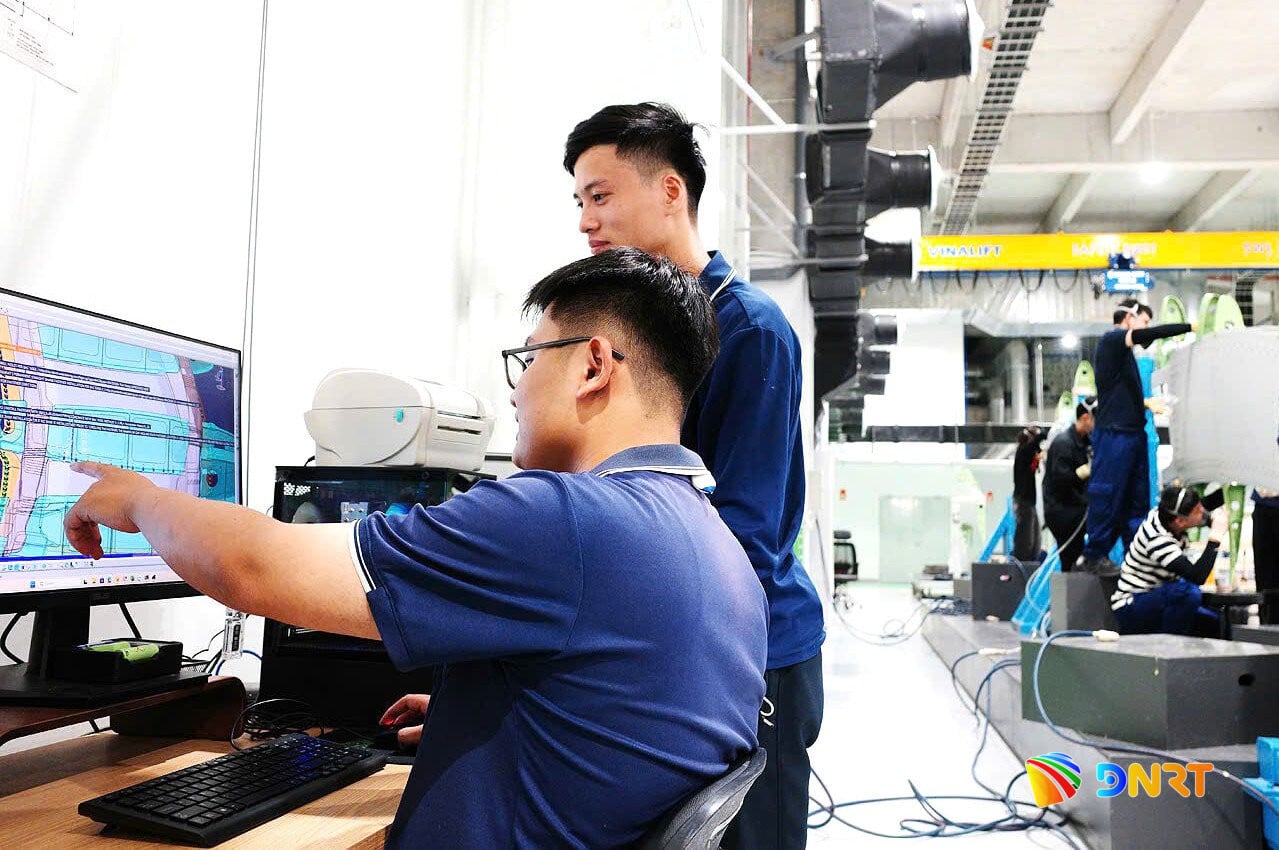
Looking at the current work of the young engineers at KP Aerospace Vietnam – a foreign-invested enterprise producing components for Boeing aircraft – it's hard to imagine that not long ago they were still sitting in lecture halls, beginning their studies in aerospace engineering with fundamental knowledge.
The early years of university focus on mathematics, physics, theoretical mechanics, strength of materials, and foundational subjects. From this foundation, students gradually approach aircraft structure, manufacturing and assembly technology, along with in-depth knowledge of the field of aerospace engineering.
Anh Van Viet Quoc Anh, a former student of the K20 cohort, majoring in Aerospace Engineering, said that the training program is structured according to a roadmap from foundation to specialization. According to him, it is important that students do not stop at receiving theoretical knowledge but are given opportunities to engage with reality through projects, scientific research, engineering competitions, visits, and internships at businesses.
These experiences help bridge the gap between the classroom and the production environment. Students gain a better understanding of what they will do after graduation , what businesses need from an engineer, and how the knowledge learned in class can be applied in real-world work.
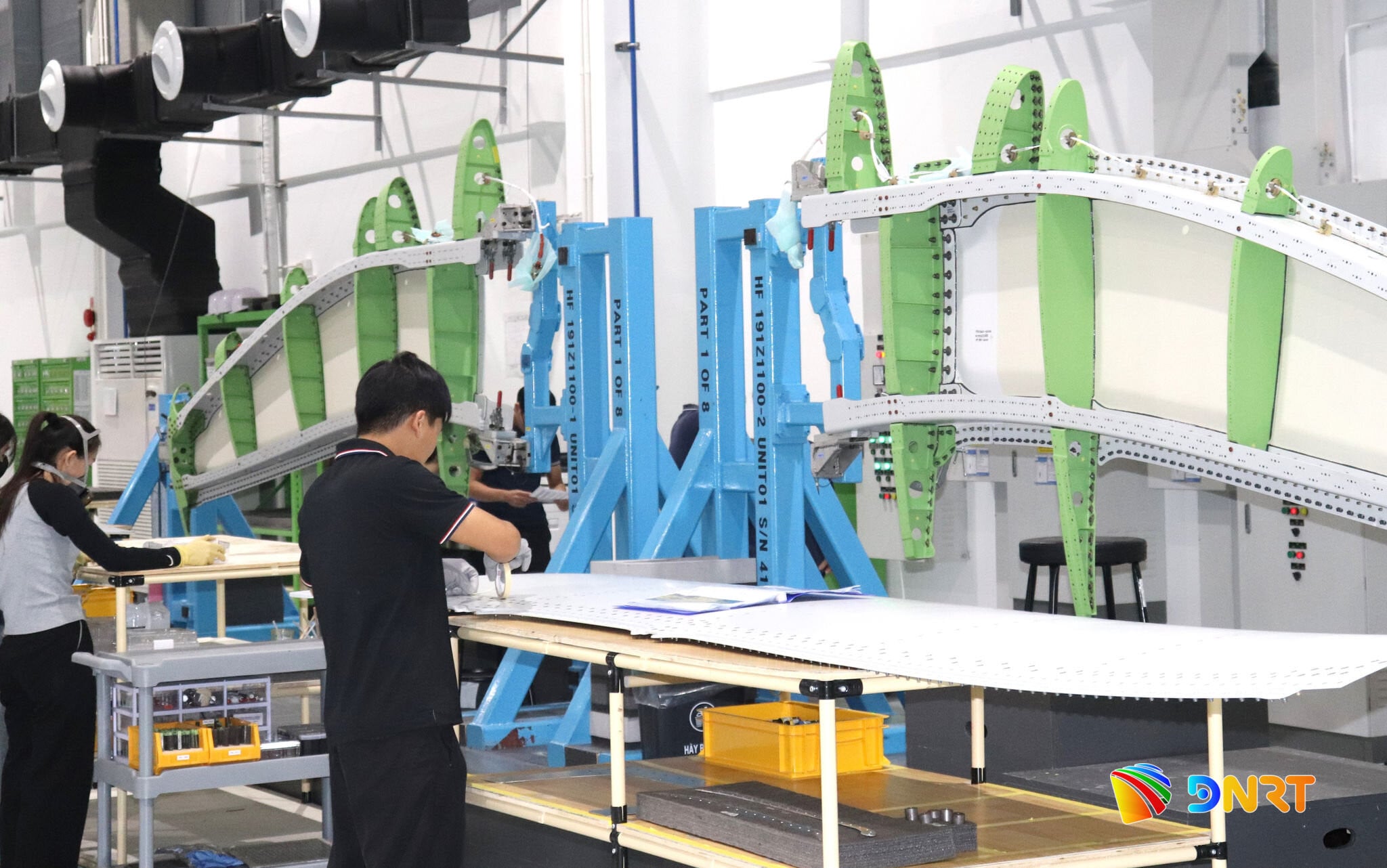
Currently, Quoc Anh works as a Production Management Engineer at KP Aerospace Vietnam. He received training in South Korea and had the opportunity to participate in the assembly line of the RAKED WING TIP 787 component for Boeing aircraft.
From an aerospace engineering student to an engineer involved in the component manufacturing chain for one of the world's largest aircraft manufacturers, for Quoc Anh, this is the result of a day-by-day accumulation of knowledge, professional skills, and the ability to adapt to a demanding work environment.
"Professional knowledge is a necessary condition, but to work long-term in FDI enterprises, adaptability, a learning spirit, and an innovative mindset are very important," Quoc Anh said.
Also a former student of the K20 cohort specializing in Aerospace Engineering, Nguyen Vo Huy Hoang is currently an Assembly Engineer at KP Aerospace Vietnam. He directly participates in assembling aircraft components, checking the condition of each part, reading and understanding technical manuals, and performing operations in the correct sequence.
“On the production line, there is no room for complacency. Even a seemingly small operation must be performed according to procedure. Inspection steps must be thorough, tools must be used correctly, and technical specifications must be strictly controlled. Behind every detail are stringent requirements for quality and safety,” Hoang shared.
Inspiring career paths
The stories of these young engineers become even more meaningful when they return to their alma mater – the place that nurtured their career dreams – to share their experience and, above all, inspire the next generation of students.
Having been invited back by the school many times to speak with younger students, Quoc Anh talked about things that were very relevant to them: how to study, which subjects to focus on, how to develop themselves, and what to prepare for their future careers.
“I’ve experienced firsthand the bewilderment students feel when first encountering such a vast and in-depth body of knowledge. Therefore, I not only share my professional experience but also want to help them maintain their passion for the field. My wish is to help them shape their thinking, enhance their skills and expertise early on; and quickly meet the stringent human resource standards of aerospace corporations worldwide,” Quoc Anh shared.
For Huy Hoang, returning to school held a similar meaning. He was invited to participate in career guidance programs for students. What he said wasn't abstract theory, but a realistic picture of the labor market, the work of an aerospace engineer, and what businesses truly need from employees.
Specifically for third-year and fourth-year students, Hoang shared information about job opportunities, internships at companies, research directions, and an international work environment.
According to Hoang, he once questioned his future and found the answers through practical experience. “Students may hear many times that they must learn English well while still in school. However, it's only when they are told that documents and even communication in the workplace must be in English that this requirement becomes more concrete. Students may be advised to do internships early. But when they hear about the first days in the factory, the initial awkwardness, and the skills they needed to acquire, preparing for reality becomes much more relatable,” Hoang explained.
Opening doors for aviation personnel.
Associate Professor Dr. Tao Quang Bang, Head of the Faculty of Mechanical Engineering, University of Technology (Da Nang University), said that the Aerospace Engineering major, under the Faculty of Mechanical Engineering, began admitting students in 2020. The cutoff score varies each year and depends on the admission method; in 2024, the cutoff score based on the high school graduation exam results was 24.85/30 points.
From 2026, in response to the increasing demand for human resources, especially as FDI enterprises in the aviation sector expand their investments in Da Nang , the school will open an additional Aviation Engineering program in collaboration with businesses, taught and learned in English, raising the total enrollment target to nearly 100 students per year.
Training aligned with business needs is a consistent approach, helping students develop professional skills and adapt to an international work environment.
In the two most recent graduating classes of the Aerospace Engineering major, many students have secured positions at major companies such as UACV, KPC Vina, HAECO, and Vietnamese companies like Viettel Aero, VAECO, and Vietjet.
This is a positive sign regarding the quality of training and its ability to meet workforce needs. The school focuses on equipping students with a strong professional foundation, practical skills, foreign language proficiency, and a professional work ethic, especially accuracy, discipline, and adherence to procedures; while also considering feedback from businesses as a crucial basis for program improvement. Currently, many courses are directly taught by experts and engineers from businesses, helping to connect knowledge with technology and the practical requirements of production.
“The Faculty also regularly organizes specialized workshops and seminars on soft skills, creating opportunities for students to access the professional environment right from their time in school. We continue to strengthen connections, inviting alumni currently working in businesses to return and share their experiences, participate in guiding practical exercises and projects,” Associate Professor Dr. Tao Quang Bang shared.
Source: https://baodanang.vn/cham-vao-giac-mo-hang-khong-3354099.html