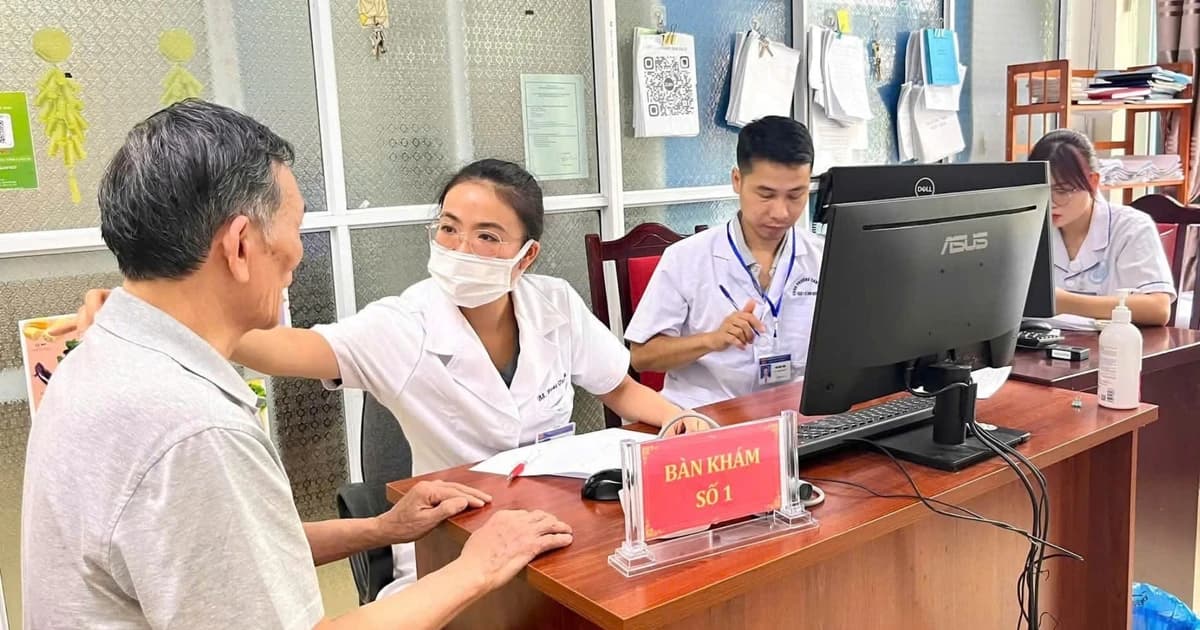



Doctors and nurses in the maternity ward congratulate the mother on her discharge from the hospital.
The pregnant woman, LTMN, (32 years old, residing in Pho Yen ward, Thai Nguyen), had a history of four previous normal deliveries. After giving birth at home, she was taken by her family to a lower-level medical facility for emergency treatment. There, she was diagnosed with hemorrhagic shock, with a very serious prognosis, and received two units of blood before being transferred to Thai Nguyen Central Hospital for emergency care.
Upon admission, the patient was lethargic, pale, with pale mucous membranes, a pulse of 120 beats/minute, and blood pressure of 80/50 mmHg. Examination revealed that the placenta had not detached and was retained in the uterine cavity, with significant vaginal bleeding from blood clots. Immediately, the Obstetrics Department activated a hospital-wide red alert, mobilizing various specialties for coordinated emergency care.
In the Anesthesia and Resuscitation Department, doctors performed artificial placental removal, controlled uterine contraction, and administered maximum doses of uterine contraction-enhancing medication. However, uterine contraction remained poor. The patient was diagnosed with grade III hemorrhagic shock, accompanied by coagulation disorders due to uterine atony, and did not respond to medical treatment.
Given the critical condition, the medical team consulted and decided to perform an emergency partial hysterectomy. After the surgery, the bleeding was controlled. The patient continued to receive blood transfusions, fresh plasma of the same blood type, and was closely monitored. After 5 days of treatment, the patient was conscious, responsive, and her vital signs were stable, so she was discharged from the hospital.
This case serves as a warning about the risk of postpartum hemorrhage, a complication that can develop very quickly and be life-threatening. Based on this case, doctors recommend: Close prenatal care, regular check-ups, and childbirth at a qualified medical facility are especially important for early detection of risks and limiting dangerous obstetric complications. In cases of abnormal delivery or signs of postpartum bleeding, the patient should be quickly taken to a medical facility for emergency treatment.
Source: https://thainguyen.gov.vn/y-te-giao-duc/cap-cuu-thanh-cong-san-phu-sinh-non-27-tuan-soc-mat-mau-sau-de-roi-297549