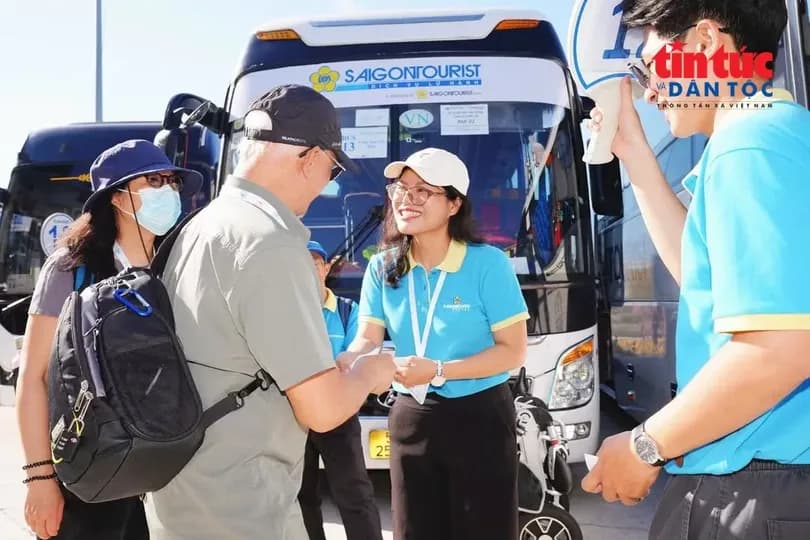
International tourists prioritize choosing reputable travel agencies to design safe and enjoyable itineraries in Vietnam.
Connecting strengths to expand the journey.
Ho Chi Minh City possesses all the necessary conditions to play a leading role in the development of medical tourism thanks to its concentration of specialized hospitals, travel agencies, accommodation facilities, and international flight routes. The expanding development space also allows the city to connect urban medical examinations with coastal resorts, health recovery, and cultural exploration. The challenge is to organize these advantages into integrated itineraries, clearly defining the responsibilities of each link in the chain.
Dr. Truong Thi Ngoc Lan, Deputy Director of the Institute of Traditional Medicine in Ho Chi Minh City, said that the Institute has participated in the medical tourism program since 2017. The unit focuses on academic tourism and health tourism, notably services for wellness, physical rehabilitation, and treatment of some common chronic diseases in accordance with its professional functions.
The institute has developed a healthcare model that harmoniously combines experience, relaxation, and treatment. Visitors can receive guidance on self-massage, practice Tai Chi, or learn fireless cupping techniques. The techniques are flexibly designed to suit different body areas, needs, and available time, making it easy for travel companies to integrate them into tours.
This approach allows medical tourism products to leverage the depth of Vietnamese identity, such as traditional medicine, medicinal herbs, and wellness culture. However, organizers must clearly separate relaxing experiences from specialized treatment techniques. Information provided should be transparent so that clients understand the nature of the service they choose and receive a medical assessment before treatment.

Doctors from the Ho Chi Minh City Institute of Traditional Medicine examine a patient. Photo: Provided by the hospital.
Expanding to neighboring areas, the Binh Chau region, with its natural hot springs nestled amidst pristine forests, offers additional options for rest and rejuvenation. Mr. Nguyen Hai Au, representative of Minera Hot Springs Binh Chau, shared that the mineral soaking and relaxation services here can be directly added to a post-health check-up itinerary if suitable for the visitor's health.
The core value of this integrated approach lies in the fact that customers don't have to independently search for and piece together individual services. In this journey, the hospital provides medical monitoring recommendations; the resort handles accommodation and nutrition; and the travel company coordinates transportation and experiential activities. For those undergoing treatment, any adjustments to the duration or intensity of exercise must adhere strictly to the doctor's recommendations.
In the Mekong Delta region, Mr. Sam Long Giang, Deputy Director of the Department of Culture, Sports and Tourism of Can Tho, noted that the locality could develop a line of healthcare products based on the regional hospital system and the characteristic riverine landscape. Activities such as relaxation and therapy combined with local medicinal herbs would allow Can Tho to design unique itineraries, extending tours for visitors after their medical check-ups in Ho Chi Minh City.

Visitors experience foot massage and acupressure services at Minera Hot Springs Binh Chau.
Can Tho hopes to strengthen links with hospitals and travel agencies in Ho Chi Minh City to expand services for tourists visiting the Mekong Delta. This cooperation must be based on specific assignments: a place for specialized treatment, a place for rehabilitation and convalescence, a transportation unit, and a support point. Each locality will leverage its own strengths within a unified product.
However, the effectiveness of regional collaboration must be measured by the actual user experience. Participating units need to closely monitor waiting times, adaptability to schedule changes, satisfaction levels, and post-operative support needs. This data helps identify weaknesses so that adjustments can be made in a timely manner before scaling up the model.
Quality needs to be standardized and promotional methods need to be unified.
From a management perspective, Ms. Bui Thi Ngoc Hieu, former Deputy Director of the Ho Chi Minh City Department of Tourism, believes that developing medical tourism is essentially a process of connecting disparate services into a well-organized operational chain. In this chain, the healthcare sector ensures expertise, quality, and patient safety; the tourism sector conducts market research, designs services, and creates suitable experiences. All coordination must stem from the actual needs of tourists.
Following this approach, Ho Chi Minh City plays a pioneering role in testing the standardized process for evaluation and refinement. Steps from information gathering, scheduling appointments, quoting prices, translation, to post-treatment care need to be standardized among all parties. Once the model runs smoothly, the city can share its experience with other localities with similar conditions.
From a market perspective, Mr. Nguyen Huu Y Yen, Vice President of the Ho Chi Minh City Tourism Association and President of the City's Travel Agency Branch, analyzed that the economic value of medical tourism lies in the entire journey. Patients undergoing treatment often stay for extended periods, travel with family members, and spend significantly on transportation, food, hotels, and accommodation. Therefore, the measure of effectiveness must be calculated based on the total value of expenditure and the level of satisfaction of each group of tourists.

International tourists are warmly welcomed by travel agencies at Vietnam's seaport gateways.
To retain this type of patient, hospitals and travel agencies must collaborate on product design from the outset. Hospitals possess strong expertise, while travel agencies understand market psychology. Both sides need to agree on a single point of contact to coordinate support throughout the process, from preparing documentation to returning home, while also standardizing accompanying services such as medical interpretation, insurance, and post-treatment follow-up.
At the macro level, Mr. Y Yen proposed focusing resources on developing key medical tourism centers, training specialized interpreters, and defining target markets for promotion. Overseas Vietnamese returning home for healthcare have very different needs from international visitors seeking intensive treatment or long-term rehabilitation. Therefore, product structure and marketing messages must be tailored specifically to each segment, closely aligned with actual needs.
Sharing the same view, Ms. Phan Yen Ly, Deputy Director of Penguin Tourism Company and a tourism product design expert in Ho Chi Minh City, believes that medical tourism needs to be placed within the overall national development strategy. The isolated efforts of a few hospitals or businesses are unlikely to create sustainable appeal on the international map. The product must be standardized and perfected before promotion so that customers are fully aware of their rights and the support process they will receive.

Vietnamese medical staff possess high professional skills, creating a competitive advantage in attracting international tourists.
To create momentum, Ms. Ly suggested that Ho Chi Minh City should select a few key areas such as screening, dentistry, and rehabilitation to develop pilot packages. The Department of Health and the Department of Tourism need to coordinate to issue a set of criteria for selecting hospitals, travel agencies, and accommodation establishments that meet the standards to participate. Each service package must publicly disclose in both Vietnamese and English the scope of technical services, estimated costs, potential additional charges, and contact points for resolving issues. The actual feedback from tourists after each trip will be the basis for refining the process before expanding the scale.
Lesson 4: Cost transparency to attract customers
Hoang Tuyet/News and Ethnic Groups Newspaper