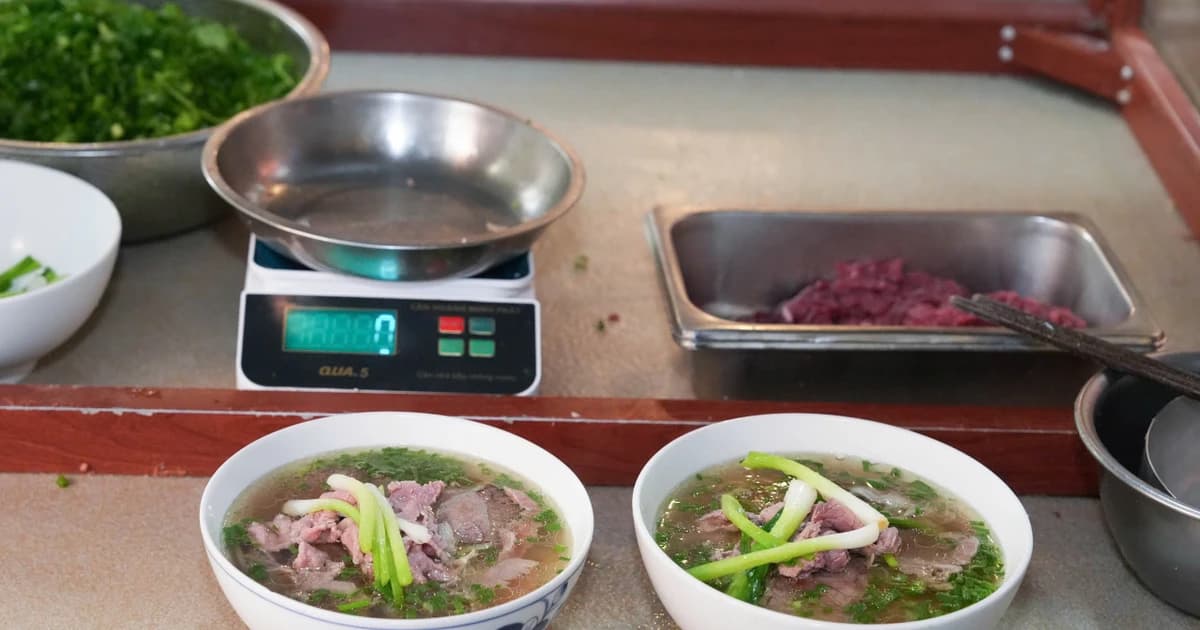

The reputation of delicious food is contributing to increasing the attractiveness and value of Vietnam as a tourist destination.
Before dawn, Hanoi is already bustling with life in its wholesale markets, eateries, and streets. International tourists not only enjoy dishes like banh cuon (steamed rice rolls), bun cha (grilled pork with vermicelli), pho bo (beef noodle soup), or egg coffee, but also learn about how locals select ingredients, prepare meals, and start their day. Through this, cuisine becomes a gateway to discovering the people, customs, and identity of the region.
Vietnamese food tells the story of Vietnamese culture.
In recent years, Vietnamese cuisine has consistently received recognition from international organizations, websites, and the tourism community. In 2025, Vietnam was honored by the World Culinary Awards as "Asia's Leading Culinary Destination".
In the same year, Vietnam ranked 4th in the top 15 most attractive cuisines in the world at the Condé Nast Traveller Readers' Choice Awards, with 96.67 points.
On the TasteAtlas 2025-2026 ranking, Vietnamese cuisine ranked 16th among the 100 best cuisines in the world. Familiar dishes such as beef pho, banh mi, Quang noodles, Southern Vietnamese beef noodle soup, and iced milk coffee have also appeared numerous times in international rankings.
The Michelin Guide, present in Hanoi , Ho Chi Minh City, and Da Nang since 2023, continues to expand its recognition of Vietnamese restaurants. By 2025, Michelin Guide Vietnam will select 181 establishments, including 9 restaurants awarded one Michelin star, 2 restaurants awarded a blue star, and 63 establishments receiving the Gourmand Bib award.
These accolades contribute to raising the recognition of Vietnamese cuisine in the international market. Pho, banh mi, and Vietnamese coffee are no longer unfamiliar to many tourists. However, the reputation of a dish is only the starting point for a journey of discovery . What makes tourists want to visit and experience it firsthand also lies in its authentic flavor, preparation methods, dining atmosphere, and the stories associated with the dish.
According to the Vietnam National Tourism Administration, Vietnamese cuisine benefits from the abundance of ingredients, eating habits, and regional identities. A dish can vary by locality, from the selection of ingredients and the combination of spices to the methods of preparation and enjoyment. These differences create a diverse culinary landscape and open up many possibilities for developing tourism products.
The appeal of Hanoi pho lies not only in its steaming hot broth but also in its ingredients, the way the bones are simmered, the combination of spices, and the stories of its long-standing eateries. Rice rolls, vermicelli with grilled pork, and sticky rice also have their own unique eating customs, intertwined with the rhythm of city life.
The early morning culinary journey recently featured by National Geographic Traveller is a way to explore Hanoi through everyday life. Instead of just visiting restaurants, tourists are taken to wholesale markets and humble eateries, learning about the ingredients, cooking methods, and meeting the people involved in the trade. From small kitchens and plastic chairs to the bustling early morning market, each experience contributes to telling the story of the capital's culinary culture.
In Hue , visitors can combine royal cuisine and folk dishes with a journey of heritage exploration. In the Southwestern region of Vietnam, floating markets, orchards, and local specialties offer a unique riverine cultural experience. Traditional villages specializing in fish sauce, soy sauce, and traditional cakes can also be attractive destinations.
Each region has its own culinary story. When connected to the local culture, people, and way of life, food is not just something to enjoy, but also becomes a reason for tourists to explore Vietnam and its people in greater depth.

Vietnam topped the ranking of 'World's Leading Culinary Destination 2026' as voted by readers of The New Zealand Herald, surpassing Italy, Japan, Thailand, and France. Photo: ITN.
Preserving cultural identity and enhancing tourism value.
At the seminar "Cuisine and Tourism Development in Vietnam," Dr. Hoang Thi Binh, Deputy Director of the Vietnam Institute of Culture, Arts, Sports and Tourism, stated that culinary tourism can connect many activities in a single journey: enjoying local specialties, visiting traditional markets, learning about traditional crafts, participating in food preparation, meeting artisans, and exploring local historical sites and cultural spaces.
These experiences help tourists gain a deeper understanding of local life, and also give them more reasons to extend their stay and spend more money at the destination.
For the community, this also presents an opportunity to expand livelihoods for cooks, small traders, raw material producers, artisans, and those preserving traditional crafts. From casual eateries to specialty products, each entity can participate in the tourism value chain.
However, to create lasting appeal, culinary tourism products need to be well-organized, have their own unique story, a reasonable itinerary, and guides who are knowledgeable about local culture. The quality of the food, the origin of the ingredients, the price, and food safety and hygiene must also be guaranteed.
In particular, tourism development should not detract from the original flavors or transform community life into mere performances. It is the intimacy, subtlety, and values preserved through generations that make Vietnamese cuisine so appealing.

Vietnamese dipping sauce was ranked 3rd among 34 of the world's highest-rated sauces by TasteAtlas. Photo: ITN.

With its exquisite culinary scene, Agoda recognizes Hue as Asia's most unique traditional food destination. Photo: ITN.
Vietnam benefits from the international reputation of its many dishes, the diversity of regional cultures, and its extensive system of traditional markets, craft villages, and restaurants. The challenge lies in connecting these resources into quality products, fostering collaboration between the cultural, tourism, agricultural sectors, businesses, and local communities.
From a bowl of pho, a spring roll, or a cup of egg coffee, visitors can begin a journey to discover an entire region. Like experiencing Hanoi's culinary scene before dawn, the allure comes not only from the food but also from the people, the atmosphere, and the rhythm of life behind each flavor.
Vietnamese cuisine, while already having a place on the world map, needs to transform its reputation into experiences that truly captivate tourists, so that each dish is remembered not only for its flavor but also for its cultural story and identity.
According to Dr. Hoang Thi Binh, cuisine is increasingly becoming a key factor in creating the identity and competitiveness of a destination. Vietnam possesses a rich culinary treasure trove, ranging from dishes of 54 ethnic groups, royal court cuisine, street food, to traditional products and crafts. However, this potential has not been exploited to its full potential; products are still scattered and lack linkages, and the digitization, standardization, and branding of national cuisine still face many limitations.