Connecting culture and tourism
In Nghia Do, Tay women are striving to revive the traditional craft of weaving, gradually transforming baskets, trays, and other items made from bamboo and rattan, once familiar in family life, into products for tourism.
Leading and connecting these efforts is Ms. Nguyen Thi San from Na Khuong village, who has been involved in weaving and embroidering since she was 16 years old. Recognizing the risk of the craft dying out as fewer and fewer people knew how to do it, in 2019, Ms. San mobilized older women who still practiced the craft to participate in its revival.
The older generation passed down the techniques of selecting materials, splitting bamboo strips, dyeing, and creating patterns; the younger generation learned to continue the tradition. In 2021, the Cooperative for the Preservation and Promotion of Traditional Crafts was established, opening up further avenues for connecting handicrafts with community tourism.

It is noteworthy that visitors to Nghia Do not only buy products but also learn about the craft process, experience weaving, and discover the cultural stories hidden behind each pattern. Therefore, the traditional craft is not only preserved but also has more space to promote its value in modern life.
In Mo Phu Chai village, Phu Suy Tho, a Ha Nhi ethnic minority member and owner of the Y Ty Discovery Homestay, is dedicated to collecting and preserving characteristic ethnic artifacts to display and introduce to tourists. For him, developing tourism is not simply about providing accommodation services, but also an opportunity to promote his homeland and spread traditional cultural values that the community has preserved and passed down through generations.
Traditional items, the rammed-earth architecture of the Ha Nhi people, their clothing, and local customs create a unique experience. Visitors here not only get to admire the mountain scenery and chase the clouds, but also have the opportunity to learn about their way of life, enjoy local cuisine, and discover cultural aspects that are rarely found elsewhere.

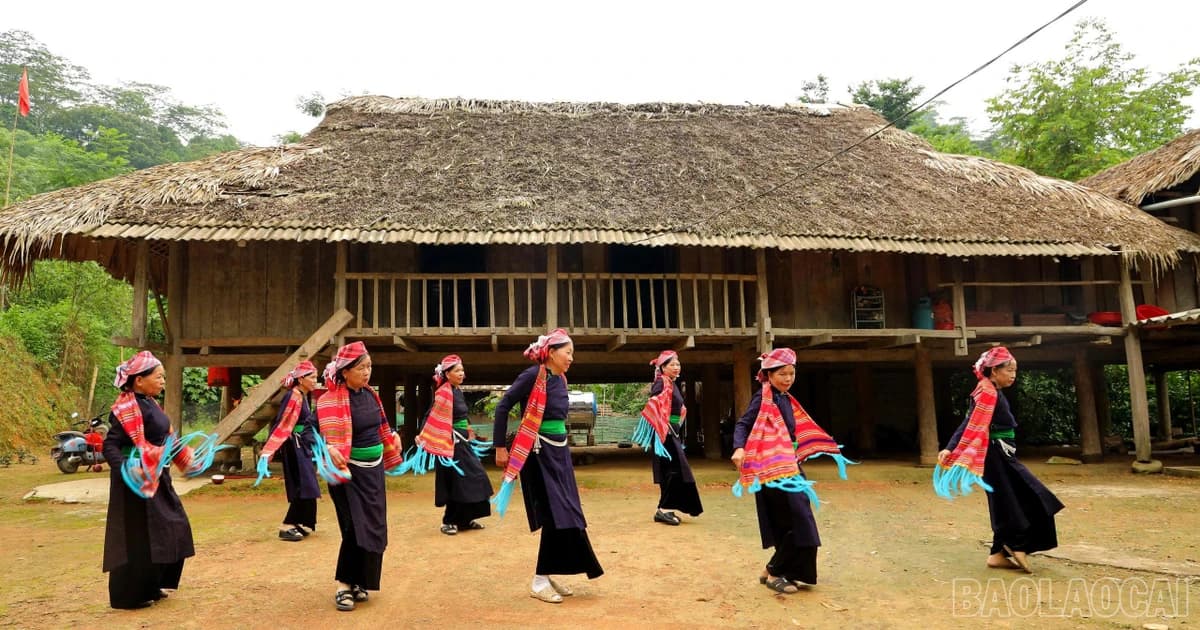
From Nghia Do to Y Ty, the restoration of traditional crafts, the preservation of customs and practices, and the integration of cultural values into tourism activities are opening up effective avenues for exploiting the potential of local identity. This is a promising direction for Lao Cai , a province where 34 ethnic groups live together and possess a rich heritage.
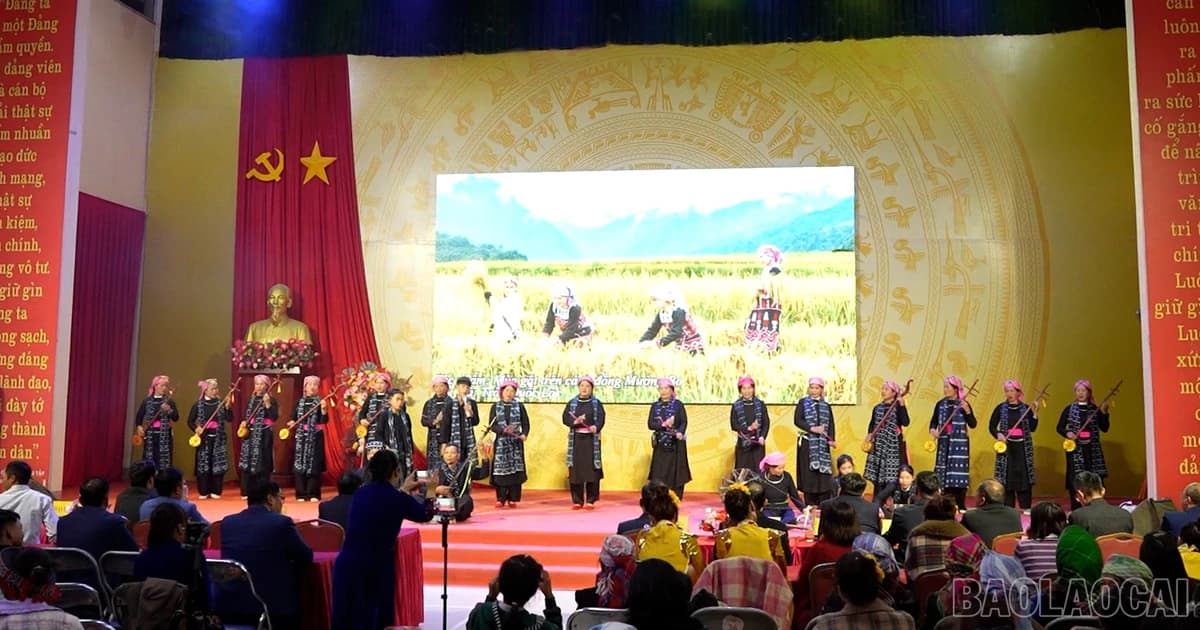
The province currently has 4 intangible cultural heritage sites recognized by UNESCO as Representative Intangible Cultural Heritage of Humanity; 59 heritage sites included in the National List of Intangible Cultural Heritage; and 210 classified historical sites at various levels. In addition, there is a system of traditional crafts, folk arts, cuisine , architecture, and more than 140 rituals and festivals held annually.
From these resources, Lao Cai has the conditions to develop many unique tourism products such as experiencing weaving and basketry, food processing, learning about house architecture, enjoying folk art, participating in the Gau Tao festival of the Mong people, the Xuong Dong festival of the Tay and Giay people, or exploring cultural spaces associated with Thuong Temple, Bao Ha Temple, Dong Cuong Temple...
However, to create a competitive product chain, it is necessary to connect cultural values with the service and market system. In that chain, artisans and households directly provide experiential activities, handicrafts, food and accommodation services; cooperatives play the role of organizing production and connecting households; and travel businesses participate in building programs, promoting, and bringing products to tourists. The coordination between these links will help diversify experiences, extend the length of stay, increase spending, and expand economic development opportunities for the community.
The people are the subjects, culture is the foundation.
For the tourism product chain to develop sustainably, it is crucial that local people benefit from the cultural values they preserve. This is also the overarching principle in Lao Cai's cultural tourism development orientation, with the policy of "Transforming heritage into assets" and "Transforming culture into commodities".
Mr. Duong Tuan Nghia, Deputy Director of the Department of Culture, Sports and Tourism, stated: In order to effectively implement the policy of "Transforming heritage into assets" and "Transforming culture into commodities," the province is paying close attention to the task of preserving and promoting cultural values in conjunction with tourism development. This clearly identifies the people as the subjects of culture and the guardians of the cultural heritage of various ethnic groups. Therefore, promoting the value of the province's cultural heritage aims to both preserve cultural forms effectively and bring benefits to the community through business, service, and tourism activities.

When cultural products are exploited appropriately, people can earn additional income from accommodation, food services, guided tours, art performances, and the sale of handicrafts. Revenue from tourism also motivates families, clans, and communities to continue preserving traditional crafts, passing on their language, costumes, customs, and folk knowledge to younger generations.
However, developing tourism based on culture must avoid the trend of pure commercialization, which distorts traditional values. Rituals with spiritual significance, community customs, and private living spaces must be respected. Experiential activities must be organized with the consent of the community, ensuring authenticity and suitability to local customs.
In addition, it is necessary to focus on training local tourism human resources; supporting people in improving communication skills, foreign languages, and promoting products on digital platforms; encouraging artisans to pass on traditional crafts; and building mechanisms for fair linkage and benefit sharing between the community and businesses.
Building a tourism product chain rich in cultural identity is therefore not just about tourism development, but also about preserving heritage, promoting community values, and creating livelihoods. The goal is for each trip to Lao Cai to be more than just admiring beautiful scenery; it should also be a journey of discovery, experience, and preservation of unforgettable cultural imprints.