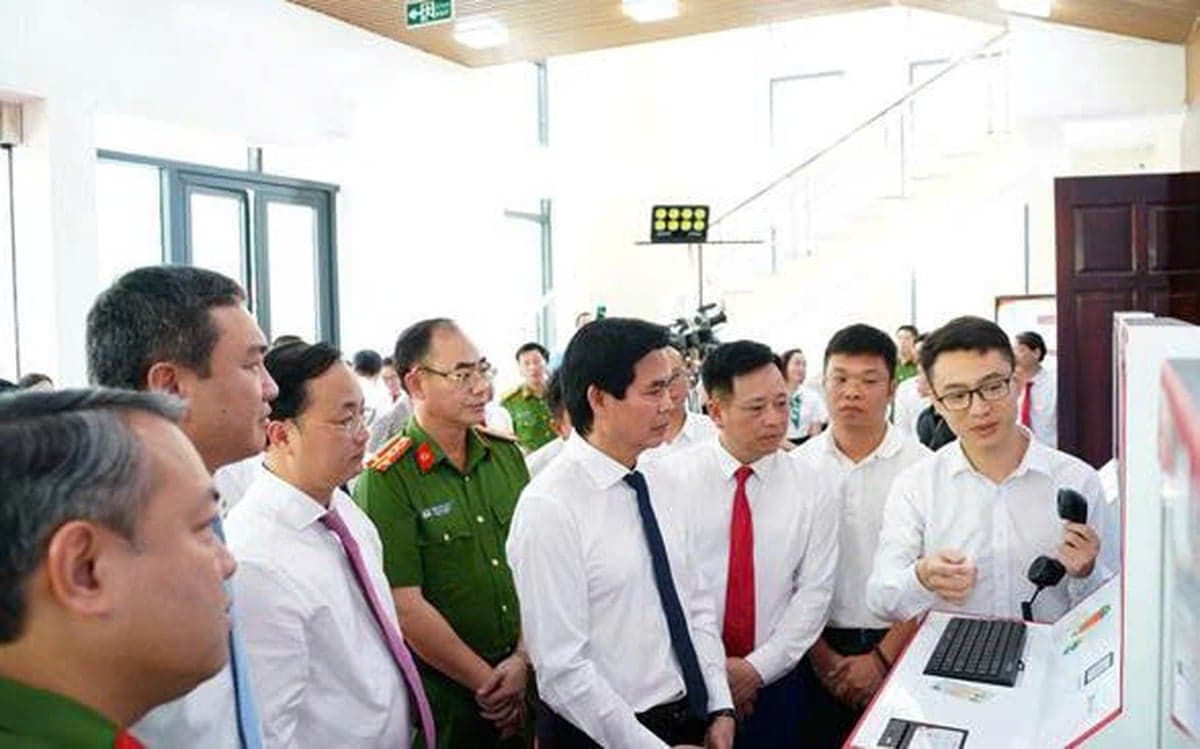
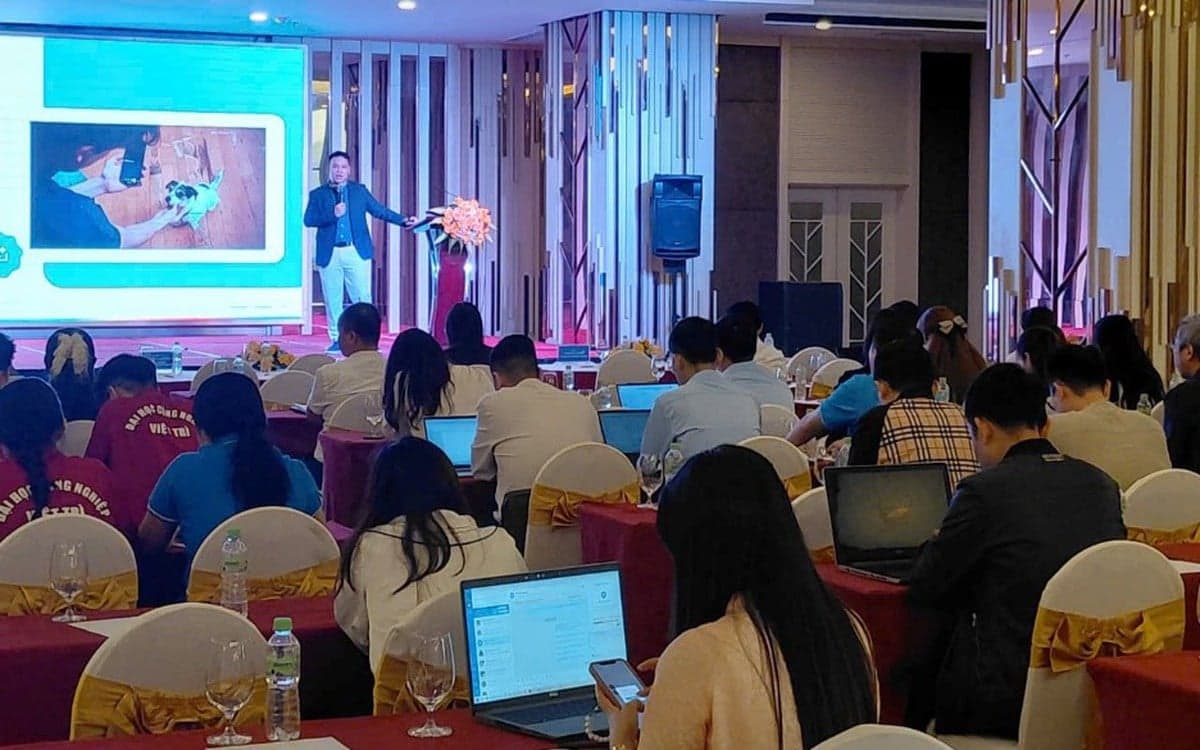
The results were shared at the KIST Innovation Program (KVIP) 2026 workshop. The program comprises six tasks to be implemented starting in 2025 and two tasks to begin in 2026, focusing on problems arising from business needs in Vietnam and South Korea .
According to Dr. Vu Duc Loi, Director of VKIST, the KVIP program aims for a research model that is business-centric and market-oriented.
In addition to technological products, the program also facilitates direct collaboration between VKIST scientists and KIST experts, allowing them to access new technologies and enhance their applied research capabilities. Some projects have come close to market entry.


Eight research projects with numerous applied and commercialized results.
In the field of agricultural processing, a research team led by Dr. Nguyen Hoang Nguyen has successfully implemented a pilot-scale process for producing γ-oryzanol-rich rice bran oil using supercritical CO₂ technology. The purified γ-oryzanol achieved a purity of over 95%. The solution has been accepted by the Intellectual Property Office and the patent has been transferred to CVI Pharmaceutical and Cosmetics Joint Stock Company.
In the field of medicinal herbs, a Vietnamese-Korean research team is applying vacuum processing technology to improve the extraction efficiency and active ingredient content of Vietnamese ginseng and reishi mushrooms. Eight prototype products have been developed, including ginseng combined with reishi mushrooms, ginseng cell extract, ginseng coffee, and ginseng honey. These products are expected to be launched in the first half of 2027 through cooperation between Korean and Vietnamese businesses.
Another research direction combines extracts of Vietnamese artichoke leaves with the microalgae Tisochrysis lutea to develop a product that supports the improvement of fatty liver disease related to metabolic disorders. The team has tested the formulation of 11,000 soft capsules on a laboratory scale. The memorandum of understanding between MAUS of South Korea and Traphaco is expected to lay the groundwork for further development and commercialization of the product in both markets.

Overview of the Conference.
In healthcare and cosmetics, Dr. Mai Thi Nga's team developed two improved gac oil delivery systems to protect lycopene and beta-carotene, while increasing the dispersion and stability of the active ingredients. Initial test results show potential for antioxidant effects, wrinkle reduction, and skin brightening, opening the door to collaborative product development with TH true HERBALS and STARMED.
AI is also being incorporated into medical applications. A collaborative project with KIST and Seoul National University Hospital established a DemoLab in Hanoi to test a mechanized gastrointestinal endoscopy system integrated with AI. The technology is capable of assisting with navigation, detection, tracking, and estimating lesion size. The device has been licensed for use in Vietnam and is being introduced at several medical facilities.
In the field of mental health, the research team developed 50 audio content pieces based on a survey of 602 Vietnamese individuals, combined with brainwave measurement devices to support improved sleep, stress reduction, and increased concentration. Initial results showed positive changes in electroencephalogram signals.
Two other tasks focused on the circular economy and environmental technology. At the Hyundai Aluminum Vina plant, the research team developed a system to recover aluminum from anodizing wastewater to produce aluminum sulfate. This technology reduces hazardous sludge emissions while creating a valuable product for water treatment, and a patent application has been filed.
Using agricultural by -products, Dr. Do Thi Uyen's group researched durian peel, coconut fiber, and coffee husks, initially developing a process for composting organic fertilizer from durian peel combined with microbial preparations and biochar. The results provide a basis for developing a solution for processing by-products suitable for production conditions in Vietnam, especially in the Mekong Delta.

Delegates attending the workshop.
Dr. Oh Sang Rok, President of KIST, stated that from the beginning of 2025, the research support program between the two institutes will be restructured into KVIP, using the actual needs of Vietnamese and Korean businesses as the starting point for R&D activities.
In the next phase, KIST and VKIST plan to further expand the program, increase connections with businesses and experts, and prioritize product development, technology transfer, and bringing research results to market. Through this, research collaboration will not only focus on laboratory products but will gradually develop technologies with potential for application and economic value creation.