To commemorate the 80th anniversary of the First National Cultural Conference (November 24, 1946 - November 24, 2026), the first ever Vietnam Culture Day was held nationwide. This milestone not only honors national cultural values but also highlights the need to promote culture as an endogenous resource and a crucial driving force for national development.
"Culture must guide the nation's path" - an idea emphasized by President Ho Chi Minh at the First National Cultural Conference - affirms that culture not only enriches spiritual life but also plays a guiding role in the development of society. In the current period, this spirit continues to be concretized in Resolution No. 80-NQ/TW dated January 7, 2026, of the Politburo on the development of Vietnamese culture.
 |
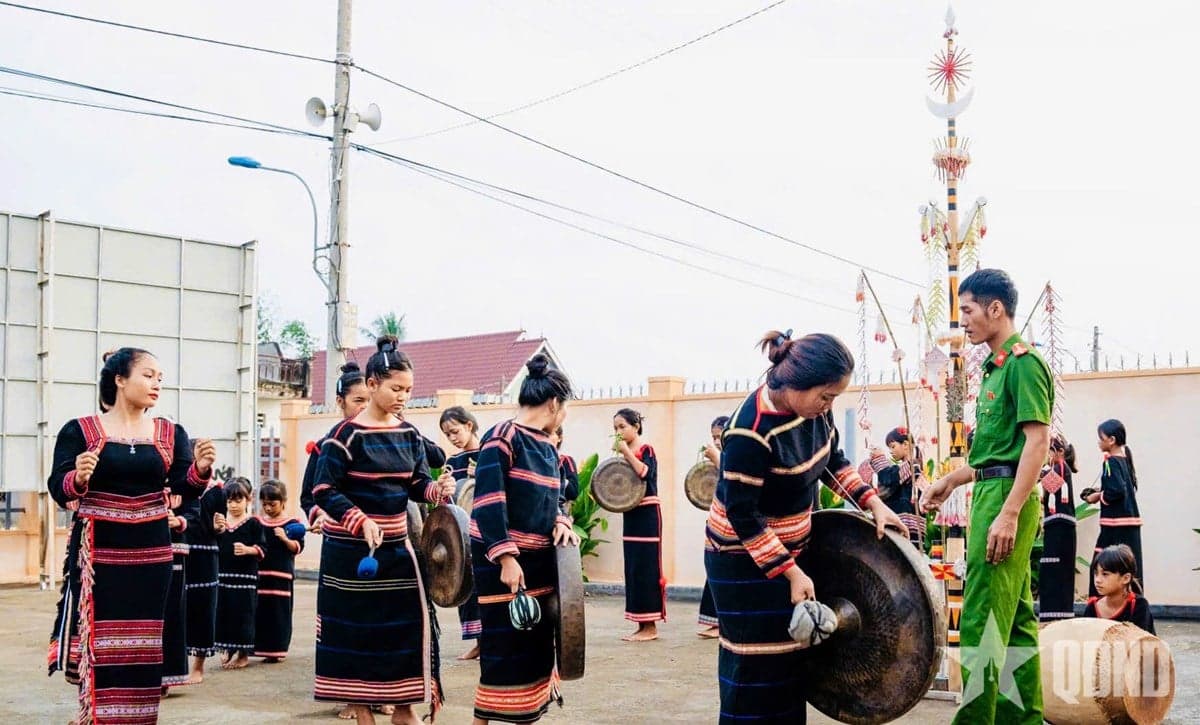
Vietnamese Culture Day on November 24th is an occasion to honor national cultural values and to awaken the responsibility of preserving and promoting Vietnamese identity. |
In line with that direction, Resolution No. 28/2026/QH16 of the National Assembly provides additional legal basis and resources for cultural development. The Resolution stipulates that the State shall ensure a minimum annual expenditure of 2% of the total state budget on culture, and designates November 24th as Vietnam Culture Day. These policies necessitate the transformation of cultural principles into concrete actions, closely linked to the life and development of the country.
Integrating cultural values into daily life.
Culture truly comes alive only when it is present in daily life, accessible, enjoyed, and actively preserved by the people. In this process, performing arts is one of the fields that directly brings cultural values to the public, while also contributing to shaping social awareness and sentiment.
People's Artist Xuan Bac, Director of the Department of Performing Arts (Ministry of Culture, Sports and Tourism), believes that the significance of Vietnamese Culture Day should not be limited to commemorative activities or giving workers a day off. More importantly, it is an opportunity for each person to recognize, appreciate, and honor the beautiful values of the nation and apply those values in building the country, improving themselves, and contributing to the community.
"Vietnamese Culture Day on November 24th should not be limited to commemorative activities or a day off for workers. This is an opportunity for each person to recognize, appreciate, and honor the beautiful values of the nation and apply those values in building the country, improving themselves, and contributing to the community," said People's Artist Xuan Bac, Director of the Department of Performing Arts.
According to People's Artist Xuan Bac, performing arts is one of the leading fields of the cultural industry, capable of directly impacting the thoughts, feelings, aspirations, and perceptions of the audience. "A performance can create a buzz, influence, and directly impact society," he said.
This impact stems not only from the content of the works but also from the cultural values conveyed through each art form. Traditional art, in particular, is a crucial component of national identity. In many regions, these art forms still preserve the historical imprint, aspirations, and unique qualities of the local community.
Therefore, preserving traditional art does not mean maintaining every form of expression, but rather creating conditions for core values to continue to be nurtured and creatively developed in contemporary life. People's Artist Xuan Bac stated that many young artists and art organizations have explored traditional materials as sources of inspiration and creative material. These cultural elements are embraced and renewed through creative thinking and expression that resonates with modern audiences.
 |
People's Artist Xuan Bac, Director of the Department of Performing Arts. |
According to him, some art programs using traditional materials have received support, especially from young audiences. Many young people also participate in clubs and programs at theaters and traditional art units to learn about and spread these values. The combination of cultural understanding, creative spirit, and technology opens up new approaches, helping traditional art become closer to the new generation.
Along with encouraging creativity, ensuring suitable working conditions for artists is also a crucial requirement. Government Decree No. 261/2026/ND-CP dated June 30, 2026, effective from July 1, 2026, stipulates preferential allowances for professional activities, training and performance allowances for civil servants and employees working in specialized professions in public performing arts institutions and performing arts units under the armed forces. This is one of the specific policies aimed at supporting the workforce directly involved in the performing arts field.
 |
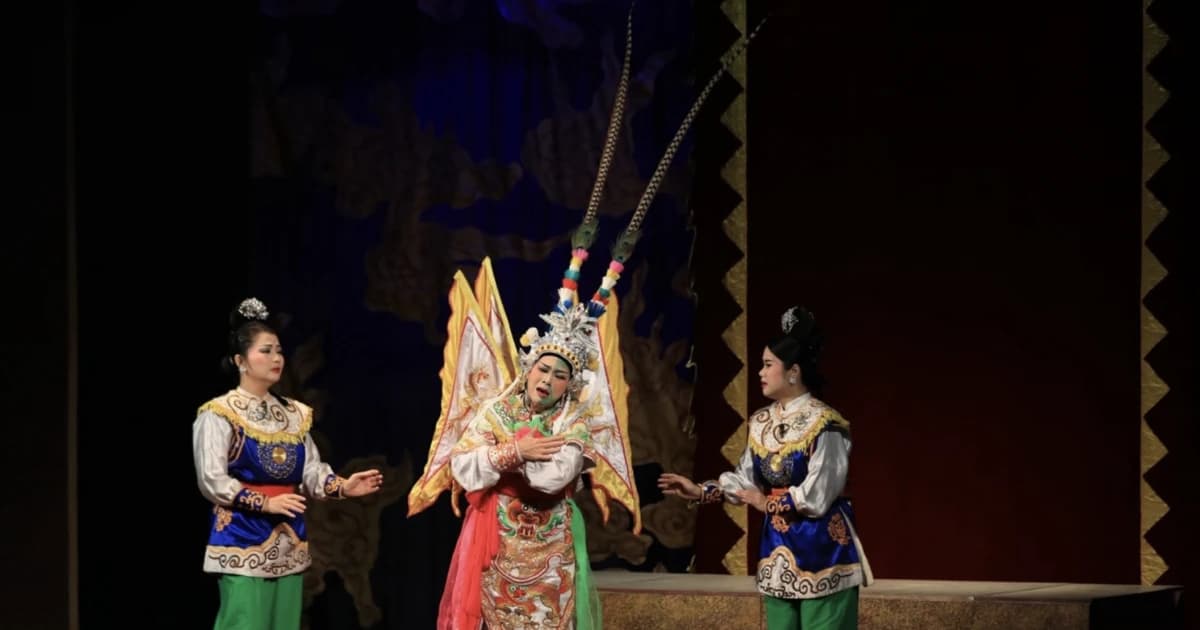
Traditional art both preserves the historical imprint and identity of the community and serves as a source of material for artists to create new values. |
Transforming cultural values into resources for development.
If art contributes to bringing cultural values closer to the public, then the development of the cultural industry requires those values to continue to be transformed into quality products with a market and the ability to generate long-term revenue. This is also the approach emphasized by People's Artist Vuong Duy Bien, former Deputy Minister of Culture, Sports and Tourism, and Chairman of the Vietnam Cultural Industry Development Association.
According to him, there needs to be a change in the way culture is perceived, not just as a field that creates spiritual values, but also as a resource that can directly contribute to growth. "Culture must be positioned as a new export resource," said People's Artist Vuong Duy Bien.
"We need to change our perspective, not just viewing culture as a field that creates spiritual values, but also as a resource that can directly contribute to growth. Culture must be positioned as a new export resource," said People's Artist Vuong Duy Bien, Chairman of the Vietnam Association for the Development of Cultural Industries.
Bringing cultural products to the international market is not limited to selling works or copyrights. When foreign audiences buy tickets to see performances, enjoy films, and other art products that reflect Vietnamese identity, cultural values are also spread beyond borders. Regarding tourism , he believes: "For tourism, culture is the core product. If we have art programs, festivals, and cultural spaces that are attractive enough, we can 'export them on the spot'."
Programs like "Memories of Hoi An" and "The Quintessence of Northern Vietnam" demonstrate the potential to connect art with tourism experiences. The appeal of these products lies not only in ticket sales but also in their ability to boost accommodation, food, shopping, and local experiential activities. Culture then becomes an integral part of the tourism product, contributing to the destination's attractiveness.
However, organizing numerous events does not automatically equate to the formation of a cultural industry. The crucial element is building branded products with copyrights, distribution capabilities, and a sufficiently long lifespan. People's Artist Vuong Duy Bien emphasized: "Creativity is the foundation, technology helps improve quality, expand accessibility and distribution, while the market is the measure of effectiveness and sustainability."
 |
People's Artist Vuong Duy Bien, Chairman of the Vietnam Association for the Development of Cultural Industries. |
Vietnam benefits from the cultural diversity of its 54 ethnic groups, its rich heritage, traditional arts, indigenous knowledge, and numerous handicrafts. However, resources cannot be spread across all sectors. According to People's Artist Vuong Duy Bien, it is necessary to select areas with advantages to prioritize investment and create products that are competitive enough.
To realize this goal, coordination is needed among the State, businesses, artists, and creative entities. The State plays the role of creating policies, planning infrastructure, and creating an investment environment; businesses organize production, distribution, and market development; and artists and creators contribute content and unique values.
People's Artist Vuong Duy Bien also noted that obstacles related to administrative procedures, investment mechanisms, ordering, and payment settlements could reduce the motivation of businesses to participate. Besides capital, a transparent and feasible institutional environment and a clear benefit-sharing mechanism are crucial conditions for attracting social resources to culture.
The cultural industry therefore needs to be developed with a long-term vision, linked to mechanisms that encourage creativity, protect copyrights, train professional personnel, and expand markets. When a product can be exploited across multiple seasons, platforms, and markets, the value created lies not only in revenue but also in its ability to promote the image and identity of Vietnam.
 |
We need to transform cultural values into branded products with intellectual property rights and the potential for long-term growth. |
Harnessing the inherent strengths of culture.
The contribution of culture is not only measured by revenue, market size, or the number of products exported internationally. At a deeper level, culture contributes to shaping ways of thinking and behaving, fostering character, and inspiring aspirations in people. This is the foundation for transforming society's potential into long-term development capabilities.
According to cultural expert Ngo Huong Giang, Vietnam's inherent strength stems from the connection between its history, culture, people, intellect, and aspirations for development. History helps generations understand their origins and national lessons; culture shapes identity, lifestyle, and behavioral norms; and knowledge, creativity, and aspirations enable people to continuously renew those values in the present.
These resources don't automatically translate into strength. It requires an educational environment that encourages independent thinking, mechanisms that create opportunities for capable individuals, conditions for research and innovation, and a management style that emphasizes accountability. When young people have opportunities to develop, scientists have the conditions to conduct research, and innovators are respected, the full potential of society can be realized.
The inherent strength of culture needs to be demonstrated through the way each individual learns, works, creates, and behaves in life.
For the younger generation, continuing the national culture must begin with an understanding of history, the Vietnamese language, literature, art, and the cultural diversity of various communities. More importantly, young people need to appreciate core values while identifying and discarding outdated practices. Inheritance does not mean simply repeating the status quo, but rather embracing positive values and finding ways to express them appropriately in contemporary life.
According to Mr. Ngo Huong Giang, love for culture needs to be expressed through concrete actions: serious study, responsible work, creativity, upholding professional ethics, and contributing to the community. When these positive values are ingrained in how each person works, behaves, and solves problems in life, culture becomes a real resource, not just an awareness or a call to action.
On a broader scale, culture is also reflected in how government agencies serve the public, how businesses treat their employees, and how each individual respects the law and respects differences. Norms such as integrity, transparency, accountability, and the rule of law contribute to building trust – an essential element for unleashing intelligence and mobilizing resources throughout society.
Investing in culture, therefore, is not just about building structures or organizing events. It is also about investing in creative people, art education, grassroots cultural institutions, libraries, museums, public spaces, research, and copyright protection. A nation possesses sustainable soft power when its cultural values are cherished and practiced by its people in their daily lives and are accepted by the international community.
"Culture doesn't stand alongside development; culture must permeate the way we develop" - Cultural expert Ngo Huong Giang.
"To achieve rapid and sustainable development, Vietnam needs a highly productive economy, modern national governance, a society with confidence, and a culture rich in creativity. Culture does not stand alongside development; culture must permeate the way we develop," Mr. Ngo Huong Giang emphasized.
Vietnamese Culture Day will only truly be meaningful when it is extended by concrete actions: substantive investment policies, a favorable creative environment, effectively functioning cultural institutions, and each individual proactively preserving and practicing positive values. When culture is present in the way we learn, work, create, behave, and manage, it truly becomes an intrinsic strength, contributing to the country's rapid and sustainable development and affirming its position in the international community.