A new milestone for Vietnam's import and export
Associate Professor Ngo Tri Long (Vietnam Financial Consulting Association) believes that the fact that import and export turnover has surpassed the 1,000 billion USD mark is an important step forward for Vietnam's foreign trade, creating a foundation to enhance the value and position of Vietnamese goods in the international market.
According to Mr. Long, this record not only marks a new stage of development for Vietnam's foreign trade, but also highlights the need for a strong shift from extensive to intensive growth.

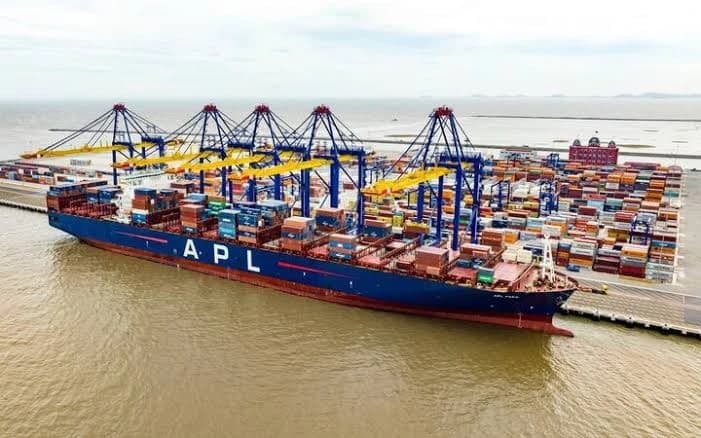
The fact that import and export turnover has surpassed the 1 trillion USD mark opens up opportunities to enhance the value and position of Vietnamese goods in the international market. Photo: MOIT/D.H
However, to transform the achievements in trade scale into a driving force for sustainable development, Associate Professor Dr. Ngo Tri Long recommends that the Ministry of Industry and Trade continue to play its role in creating, coordinating, and leading, linking trade policy with industrial development, and building a domestic supplier ecosystem capable of participating more deeply in the global production chain.
In particular, it is necessary to create conditions for small and medium-sized enterprises (SMEs) to participate more deeply in export activities, expanding their opportunities to benefit from trade growth, instead of the benefits mainly concentrated in large enterprises and the foreign direct investment (FDI) sector.
"Quantitative growth must go hand in hand with qualitative transformation, in which domestic added value must be considered an important measure. If in the past we focused on expanding scale, in the coming period we must pay more attention to the quality, efficiency and sustainability of growth," Mr. Long emphasized.
Enhancing the value of Vietnamese goods in the global supply chain.
Many economic experts also believe that the main policy focus in the coming period should be on three major issues: diversifying markets and reducing dependence risks; promoting exports linked to the development of supporting industries and increasing the localization rate; and effectively exploiting free trade agreements (FTAs) while improving technology, productivity, and developing Vietnamese brands.
The challenge in import and export lies not only in expanding export markets but also in the production capacity behind each order.
As domestic businesses become more deeply involved in the supply chain, the value created in Vietnam will increase, while gradually reducing dependence on external sources of supply.
This is also a direction aimed at enhancing the self-reliance and resilience of the economy against fluctuations in the international market.
For exports, growth in turnover needs to go hand in hand with improving product quality, supply capacity, and the proportion of domestic added value, thereby strengthening the competitiveness of Vietnamese goods in the international market.
In the last two months of the year, in addition to maintaining the growth momentum of exports and imports, it is necessary to continue expanding markets, effectively exploiting FTAs, and proactively responding to trade defense measures.
On the import side, priority should be given to machinery, equipment, raw materials, and product groups that serve production, creating a foundation to maintain export growth momentum.
"From a record $1 trillion in imports and exports, Vietnam's long-term goal of foreign trade is not only to expand the scale of trade but also to enhance production capacity, increase domestic value, develop Vietnamese brands, and gradually elevate Vietnamese businesses in the global value chain," Associate Professor Dr. Ngo Tri Long emphasized.
Imports and exports set records, trade balance improves.
According to the Ministry of Industry and Trade, the total value of goods exports and imports in the first 10 months of 2026 reached over 1,000 billion USD, an increase of 32.3% compared to the same period and exceeding the 2025 figure by more than 70 billion USD. Of this, exports reached approximately 499 billion USD, an increase of 27.4%.
Processed industrial goods accounted for 87.4% of export turnover. Many markets with free trade agreements (FTAs) with Vietnam recorded positive growth rates, such as Japan (18.6%), South Korea (19.1%), Canada (14.4%), and Mexico (42.5%).
To date, Vietnam has trade relations with 237 countries and territories, with 36 export markets and 31 import markets exceeding $1 billion in trade turnover.
Notably, after eight consecutive months of trade deficit, Vietnam recorded a trade surplus for two consecutive months (September and October), bringing the cumulative trade deficit down from over $20 billion to $14 billion. This is the result of efforts by the Government , ministries, associations, and the business community, creating a foundation for further improvement in the trade balance in the remaining months of the year.