|
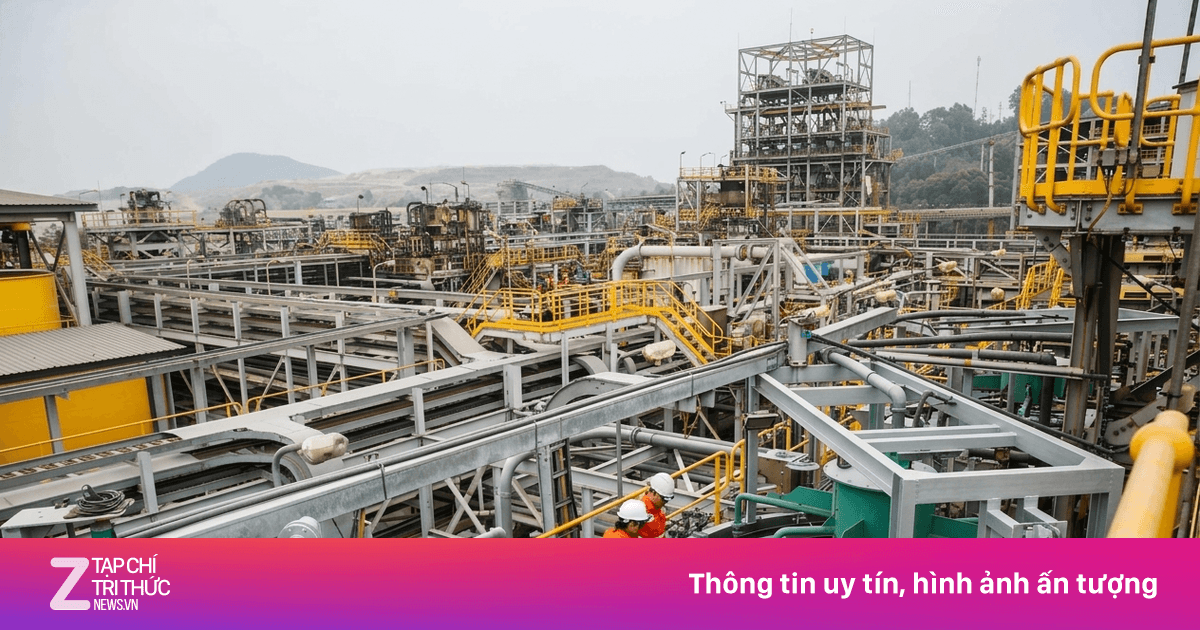
The new law relaxes the criteria for identification and adds more incentives for small and medium-sized enterprises. Photo: Duy Hieu . |
The National Assembly recently passed the Law on Small and Medium-Sized Enterprise Development, consisting of 4 chapters and 32 articles, which will take effect from July 1, 2027.
According to the General Statistics Office, over 98% of businesses operating in Vietnam belong to the small and medium-sized enterprise (SME) group. Therefore, the new policies are expected to directly impact more than 1 million businesses, focusing on bottlenecks related to capital, land, taxes, technology, and product distribution.
Raising the threshold for defining small and medium-sized enterprises
One of the notable changes is the adjustment of criteria for defining small and medium-sized enterprises (SMEs). According to Article 4, this group of enterprises must have an average number of employees in the preceding year of no more than 300 people and meet one of two criteria: total capital in the preceding year of no more than VND 150 billion ; or total revenue in the preceding year of no more than VND 400 billion .
Compared to current regulations, the labor threshold has been raised from 200 to 300 people; total capital has increased from 100 billion to 150 billion VND , and revenue has increased from 300 billion to 400 billion VND . The method of determining labor has also changed, from the average number of employees participating in social insurance per year to the average number of employees employed in the immediately preceding year.
Expanding these thresholds allows more larger businesses to be classified as small and medium-sized enterprises (SMEs), thereby giving them more opportunities to access government support policies.
Additional tax incentives and support for research and development.
Corporate income tax incentives are also noteworthy. Accordingly, micro and small enterprises are subject to lower-than-normal tax rates; small and medium-sized enterprises are exempt from corporate income tax during their initial establishment period.
Businesses with total annual revenue not exceeding 10 billion VND , or subject to government adjustments in each period, may choose the tax calculation method as prescribed by the law on corporate income tax.
The law also adds mechanisms to encourage investment in research and development. Small and medium-sized enterprises are allowed to establish and use a science and technology development fund as prescribed; expenses related to research and development activities are deductible at a rate higher than the actual expenses when determining taxable income.
For innovative start-up small and medium-sized enterprises (SMEs), the law sets out specific tax incentives for income from innovative start-up activities, capital transfers into innovative start-up businesses, and income of experts and scientists working at these businesses.
 |
Over 1 million small and medium-sized enterprises will benefit from a series of new support policies starting July 1, 2027. Photo: Nam Khanh . |
Allocate 20% of the value of public procurement packages to small and medium-sized enterprises.
The new law establishes a mechanism to prioritize small and medium-sized enterprises (SMEs) in procurement using state budget funds. Accordingly, agencies and organizations must allocate at least 20% of the total value of procurement packages from the state budget in their annual contractor selection plans to this group of enterprises. This regulation does not apply to international bidding packages; the results are publicly available on the National Bidding Network System.
For construction, goods procurement, and mixed supply and construction contracts with a value not exceeding 20 billion VND , small and medium-sized enterprises (SMEs) are given the opportunity to participate. If no enterprises from this group meet the requirements after the contractor selection process, the selection will be carried out according to the law on bidding.
The mechanism for allocating contracts worth no more than 20 billion VND was mentioned in Resolution 198/2025/QH15 on some special mechanisms and policies for the development of the private economy . The new law continues to include this content within the framework of policies for the development of small and medium-sized enterprises, while also adding a minimum rate of 20% of the total value of annual public procurement contracts.
Besides public procurement, small and medium-sized enterprises (SMEs) are supported in trade promotion, development of distribution systems, retail chains, e-commerce platforms, and product consumption channels. The State also encourages large enterprises, state-owned enterprises, foreign-invested enterprises, and upstream enterprises to develop programs to develop suppliers that are SMEs.
This linkage mechanism aims to help domestic businesses participate more deeply in the supply chain, rather than focusing solely on supporting individual production activities.
Reduce land lease costs and expand access to capital.
In terms of production and business premises, small and medium-sized enterprises (SMEs) are supported with a minimum 30% reduction in land lease fees for the first 5 years from the date of signing the land lease contract with the investor of industrial park infrastructure, industrial clusters, and incubation facilities eligible for support.
The law requires localities to publicly disclose information on land availability, premises, and rental prices before and after support is provided. The support amount is deducted directly from the amount businesses have to pay. Details regarding the determination of land availability, funding sources, maximum support levels, rental price basis, and repayment procedures will be stipulated in detail by the Government.
The policy of reducing land lease fees by at least 30% for the first five years was stipulated in Resolution 198/2025/QH15. The new law continues to maintain this policy, while further clarifying the requirements for transparency and the methods of implementing the support.
Regarding capital, the law sets out a direction to increase the credit supply capacity of credit institutions and develop diverse sources of domestic and foreign capital for small and medium-sized enterprises. Support policies focus on improving access to capital for production, business, and expansion investment.
The law also focuses on enhancing scientific and technological capabilities, innovation, and digital transformation; supporting businesses in utilizing consulting, mentoring, training, and human resource development services. These provisions are designed to improve management capacity, productivity, and responsiveness to market demands.
For household businesses and individual entrepreneurs, the law does not extend all support policies for small and medium-sized enterprises to this group. Instead, the law designs separate policies to encourage and support their transformation into enterprises.
According to the government's assessment presented to the National Assembly, the quantifiable budgetary impact of the three new policies during the 2027-2030 period is estimated at approximately VND 6,789.7 billion , averaging about VND 1,700 billion per year. Of this, the state budget is projected to experience a revenue reduction of approximately VND 702.1 billion per year and an increase in expenditure of approximately VND 6,087.6 billion per year.
The government assesses this impact as consistent with the medium-term budget balancing capacity. The reduction in revenue and increase in expenditure in the short term is expected to contribute to creating favorable conditions for businesses to develop, thereby nurturing revenue sources in the long term.