
In the 2026-2027 school year, Trinh Tuong commune will have 118 classes with 3,133 children and students. Of these, Trinh Tuong Kindergarten will have 840 children; Trinh Tuong Ethnic Boarding Primary and Secondary School will have 1,350 students; and Coc My Ethnic Boarding Primary and Secondary School will have 940 students.
The total number of children and students receiving state support and school lunch programs is 3,056. This is a large number, placing high demands on ensuring the quality, nutrition, and food safety of each meal.
Strict control over food inputs.
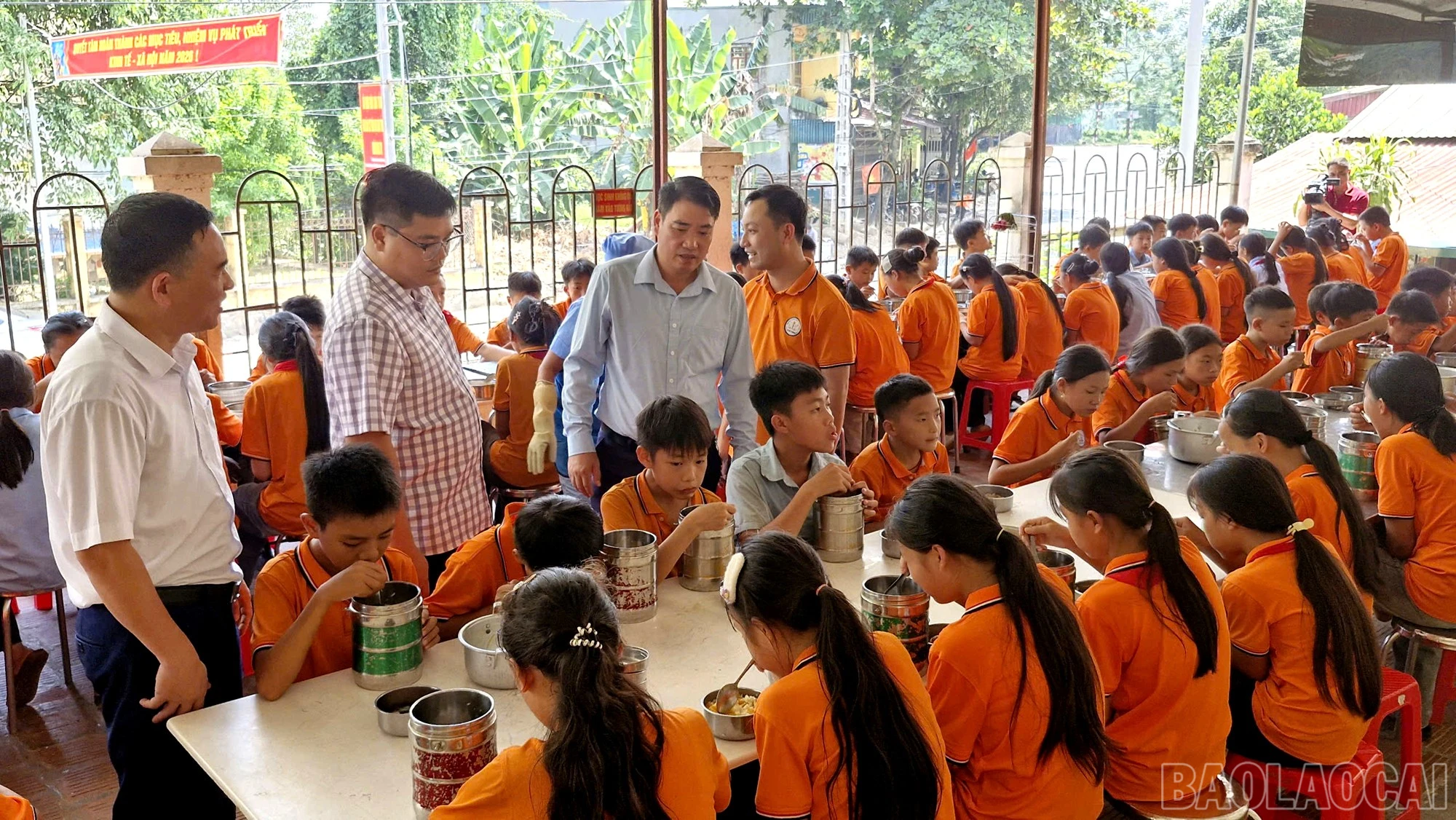
At Trinh Tuong Ethnic Boarding Primary and Secondary School, 1,298 students use the boarding school meal program. To ensure food safety, the school selects suppliers through a rigorous process, from checking legal documents to conducting on-site inspections of the businesses.
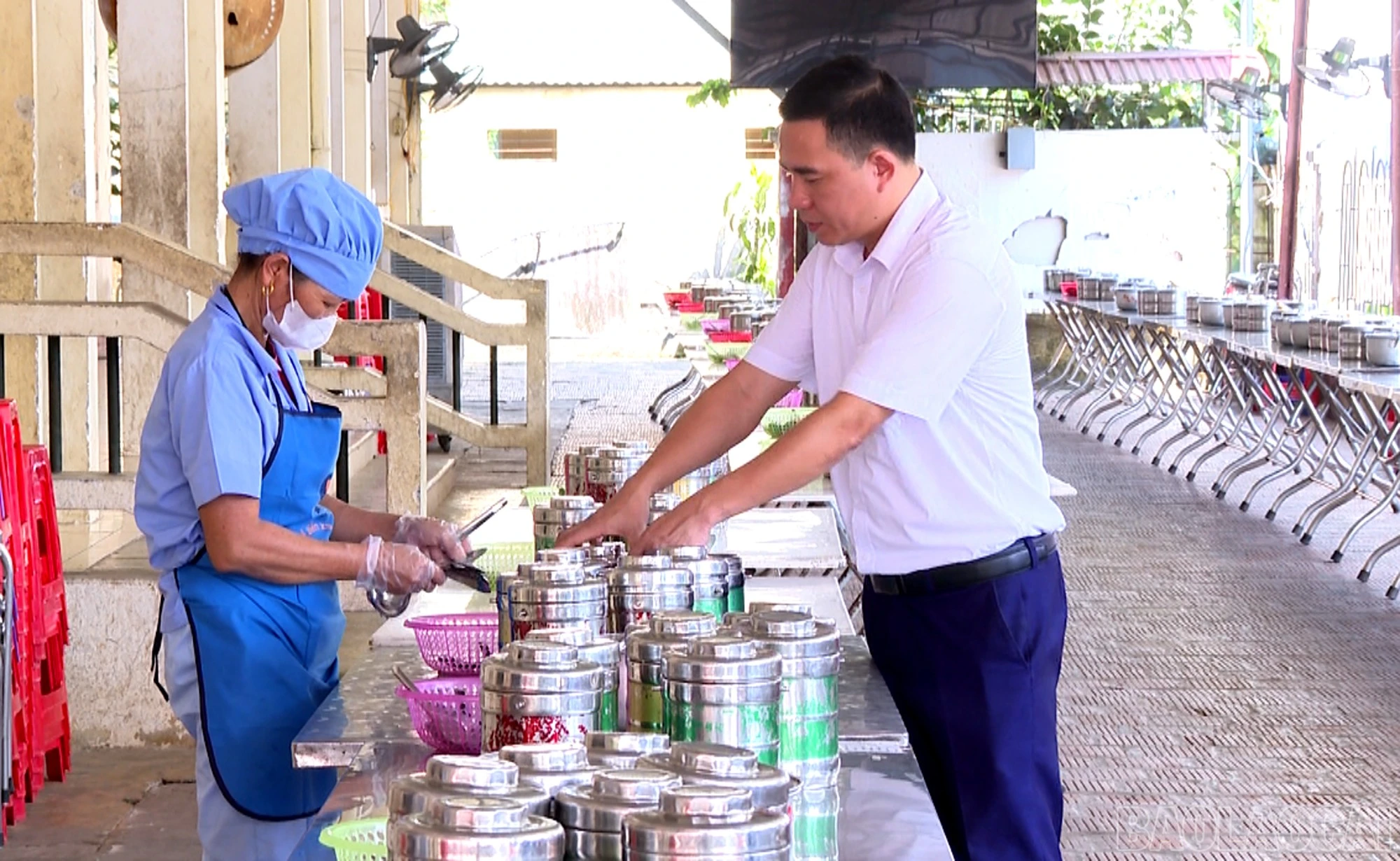
Mr. Pham Van Hoc, Principal of Trinh Tuong Ethnic Boarding Primary and Secondary School, said: "The school consulted with the Department of Culture and the People's Committee of the commune to survey food suppliers, check their records according to regulations, and conduct on-site inspections at the businesses. Based on that, the school signed contracts with qualified units and organized daily food delivery and receipt with the presence of all parties involved, including the school, the kitchen staff, parents, and the supplying businesses."
This approach aims to limit the risk of food of unknown origin entering school kitchens. According to a report from Trinh Tuong commune, the food supplied to schools is provided by businesses and households with complete and clear contracts and invoices. The commune People's Committee also organizes inter-agency meetings with the commune police, health station, and other departments to assess the legal status, capacity, transportation means, and delivery procedures of the suppliers.
In addition to controlling the supply, schools also monitor the daily delivery of food and publicly display menus so that students, teachers, and parents can track and compare them.
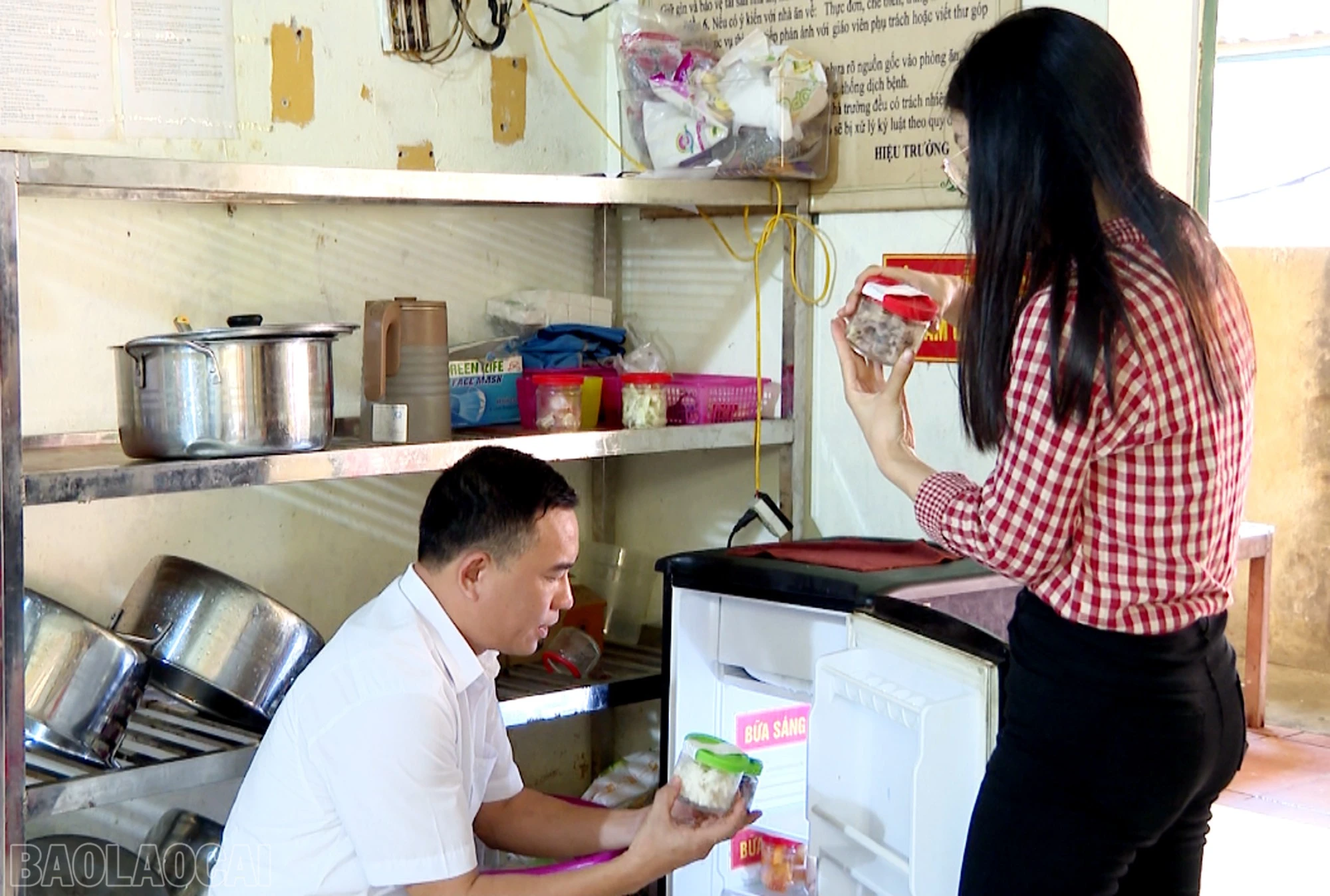
Ms. Ton Thi Loi, a parent, said: “I find the school's meals quite complete, well-prepared, and hygienically safe for the children. The meals are divided into clean and sufficient portions.”
In the kitchens, the one-way kitchen principle is maintained, ensuring the separation of areas for receiving raw food, processing, and serving cooked meals, minimizing the risk of cross-contamination. Food samples are also retained according to regulations, sealed, and recorded in logbooks for traceability when necessary.
Enhance co-monitoring
Not stopping at monitoring within the school, Trinh Tuong commune also expanded parental involvement in supervising school lunch programs.
According to the commune's People's Committee leaders, right from the beginning of the school year, the locality organized on-site inspections at schools, branches, and school locations; issued two documents guiding the implementation of food safety and one decision to establish an inspection team to ensure food safety and school meals in educational institutions. The inspection team also worked directly with suppliers of raw materials and food for school kitchens in the area.
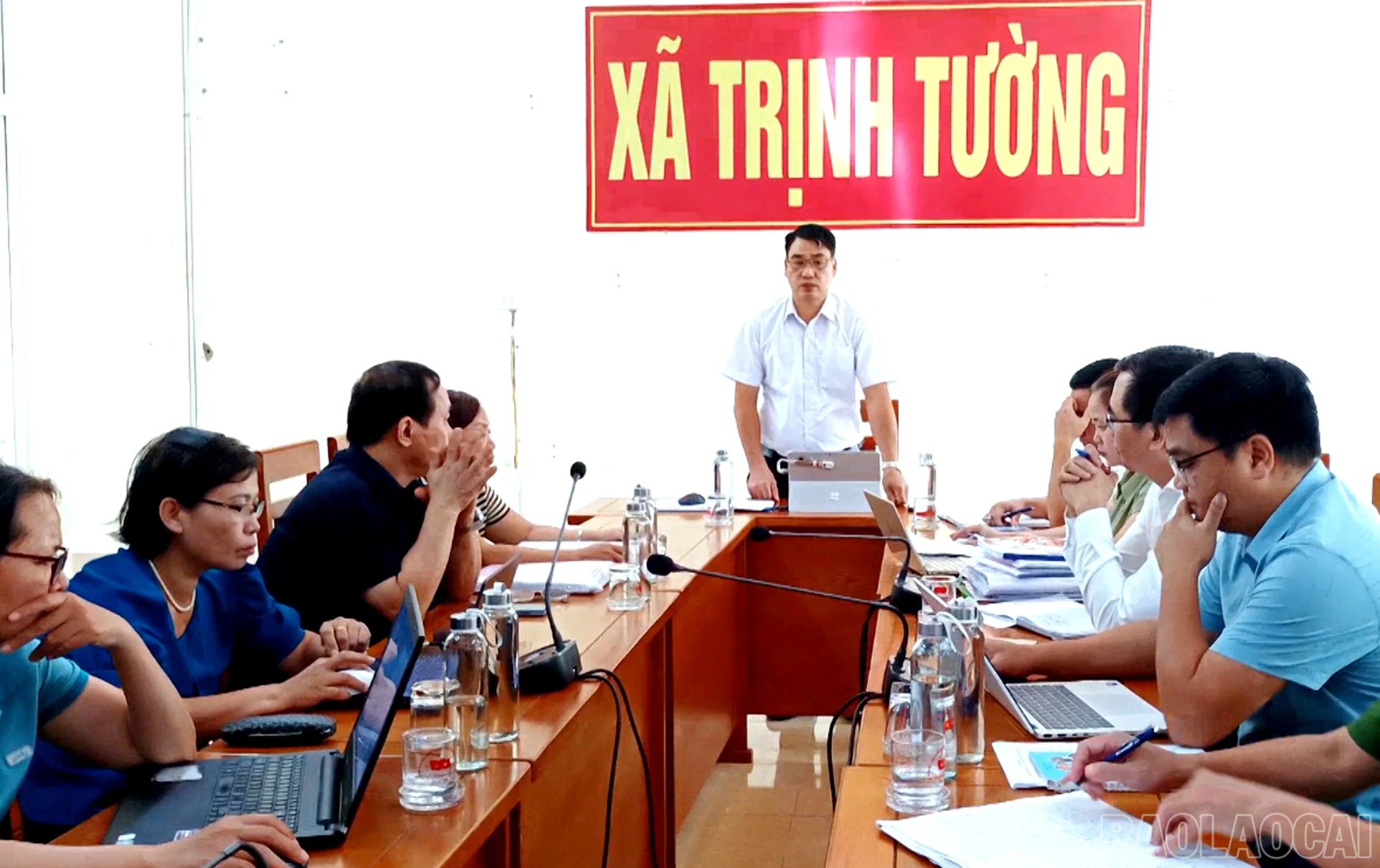
Along with regular inspections, localities are developing plans for surprise inspections; encouraging parent-teacher associations to participate in random checks of cooking and meal distribution. This is a solution to increase transparency and create an additional channel for direct monitoring of students' meals.
For schools in remote areas that do not have their own cooks, the school coordinates with local authorities to mobilize teachers and parents to participate in cooking on-site, ensuring that students receive hot and safe meals.
Mr. Chu Van Hoi, Vice Chairman of the People's Committee of Trinh Tuong commune, said that the locality will continue to strengthen inspection and supervision of food suppliers, and at the same time gradually upgrade facilities and improve the school canteen according to the one-way principle, ensuring the necessary conditions to organize safe meals for students throughout the school year.
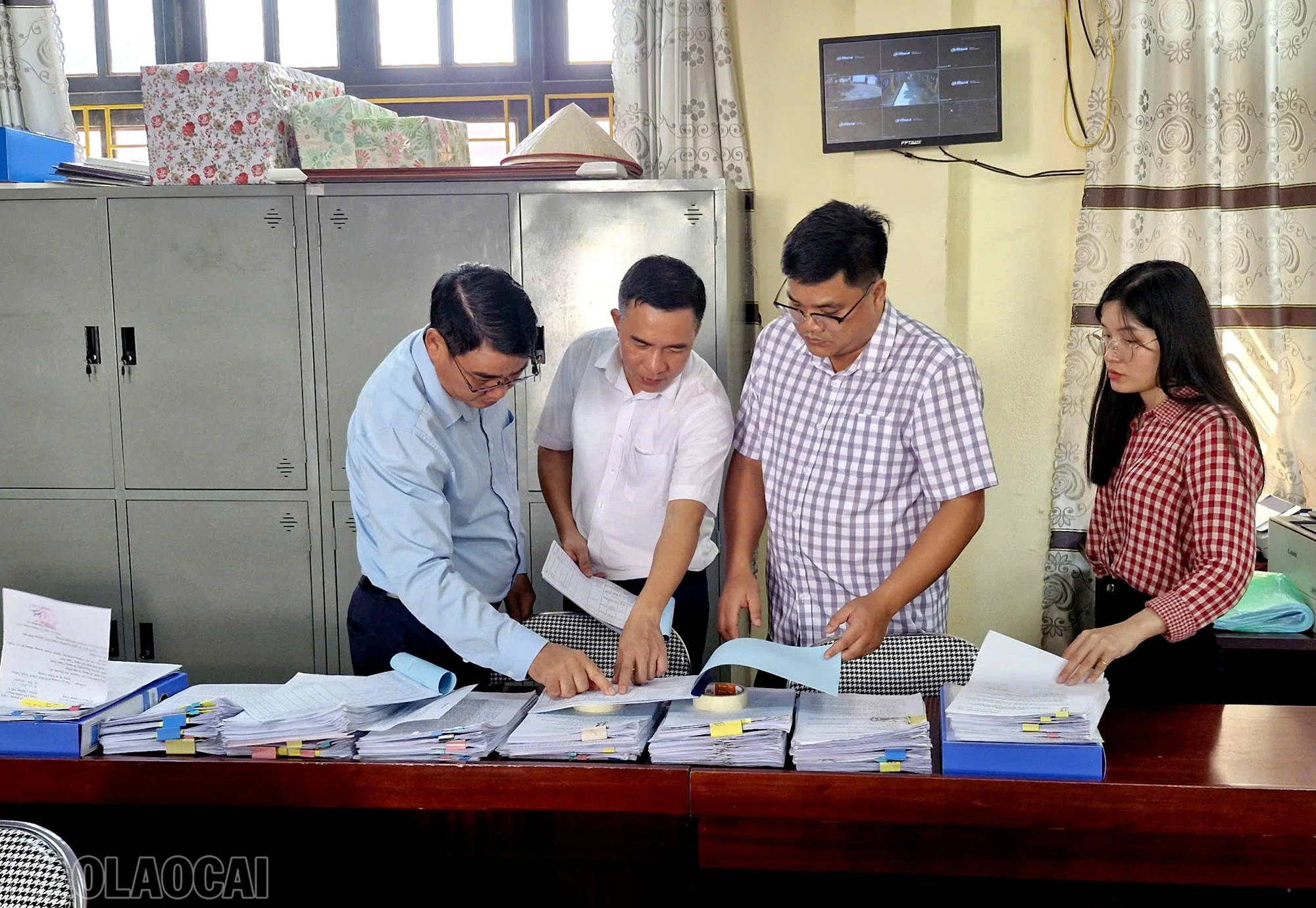
Trinh Tuong commune has implemented technology in food safety management. Accordingly, school kitchens in the commune have been updated on the SchoolFoodSafe food safety map of the Lao Cai Provincial Department of Health. This platform allows local authorities, management agencies, and parents to access information about meals, food suppliers, and supports traceability when needed.
From strict supplier control and monitoring of food inputs to rigorous processing procedures, food sample retention, and enhanced inspections, Trinh Tuong is building a comprehensive food safety assurance process in schools.
For mountainous areas with a large number of students eating school meals, each meal must not only be nutritious but also safe. Therefore, the proactive approach of the government, the responsibility of the school, the transparency of the food supplier, and the cooperation of parents are crucial factors in protecting the health of the students.
Source: https://baolaocai.vn/trinh-tuong-siet-chat-kiem-soat-an-toan-thuc-pham-tai-truong-hoc-post911265.html