With the theme "Investing in Green Rice in Vietnam - Welcoming New Capital, Creating a Sustainable Value Chain," the Forum is an activity organized within the framework of the 2nd Vietnam International Rice Industry Festival - Can Tho 2026, aiming to connect management agencies, localities, businesses, investors and development partners, and promote the mobilization of investment resources into the high-quality, low-emission rice value chain.
Shift from increasing output to increasing value.
 |
| Mr. Le Cong Ly, Standing Vice Chairman of the People's Committee of Can Tho City, delivered a welcoming speech at the Forum. |
In his welcoming remarks at the Forum, Mr. Le Cong Ly, Standing Vice Chairman of the People's Committee of Can Tho City, emphasized that the requirement is to shift from a production-oriented mindset to an agricultural economy ; from increasing output to increasing value; and from fragmented stages to a standardized, data-driven, and market-oriented supply chain. The project to cultivate one million hectares of high-quality, low-emission rice in the Mekong Delta by 2030 is a major direction for this transformation. Expanding the cultivated area must be accompanied by standardized raw material zones, measurable results, business linkages, and tangible benefits for farmers.
That's why the participation of investors with a long-term vision is needed. Besides capital, FDI can bring technology, management capacity, international standards, markets, and the ability to replicate effective models. The flow of capital will create change when it is linked to the specific needs of growing regions, businesses, cooperatives, and farmers.
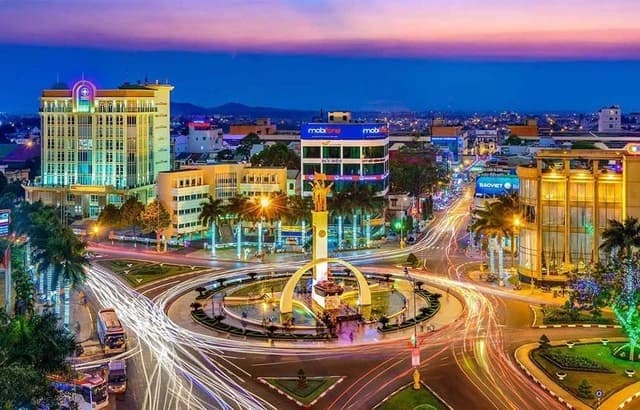
According to Mr. Le Cong Ly, Can Tho has the foundation to become an important connecting point in the rice value chain of the Mekong Delta. By 2026, the city's rice cultivation area is estimated at approximately 708,000 hectares, with a production of about 4.66 million tons.
Based on this, the city aims to attract investment in areas that create value throughout the entire value chain, such as high-quality seeds; mechanization and precision agriculture services; digitalization, traceability, and emission measurement; water and nutrition management; drying, preservation, deep processing, branding, and market connectivity.
At the same time, it is encouraged to develop circular economic models, utilizing straw and by-products to produce biomass energy, fertilizers, animal feed, and other valuable products.
An investment approach that integrates the entire value chain.
Mr. Nguyen Do Anh Tuan, Director of the International Cooperation Department, Ministry of Agriculture and Environment, believes that green transformation should not only focus on changing farming techniques or reducing emissions in the fields, but also bring economic benefits to farmers, enhance the competitiveness of businesses, meet market demands, and maintain long-term environmental benefits.
To realize this goal, according to Mr. Nguyen Do Anh Tuan, it is necessary to innovate the investment approach towards synchronizing the entire value chain, from seeds, mechanization, production infrastructure, digital technology to processing, preservation, logistics and market development; while effectively exploiting by-products from the rice industry. The Mekong Delta region alone produces about 25 million tons of paddy rice, equivalent to 16 million tons of milled rice, generating about 25 million tons of straw and 5 million tons of rice husk. This is a resource with the potential to create additional economic value and contribute to reducing emissions if exploited and used efficiently.
From there, he suggested focusing on three key issues: clearly defining the value that the investment project needs to create, especially its ability to apply technology, improve management capacity, organize the supply chain, and connect to the market; shifting from introducing potential to preparing specific projects with clear locations, scale, infrastructure, capital requirements, and implementation conditions; and building a sustainable investment model that ensures economic benefits for all participating parties, with appropriate financial mechanisms, risk sharing, and consumer markets.
A sustainable green rice supply chain needs to meet three objectives simultaneously.
Based on his company's experience investing in low-emission rice, Mr. Nguyen Van Be Hai, General Director of Vietnam Rice Company Limited (VINARICE), proposed an approach to investing in low-emission rice that focuses on building a complete value chain, from seeds and production organization to processing and consumption.
Of these, three priority investment areas include: comprehensive investment in infrastructure and production services, especially water management, mechanization of sowing, harvesting, straw processing, and technical services supporting low-emission production.
At the same time, invest in systems for procurement, drying, preservation, processing, and traceability to form high-quality product chains that meet the requirements for supplying both domestic and export markets.
In addition, it is necessary to develop green financial products that are suitable for the agricultural production cycle, including value-linked credit, transition financing, climate risk insurance, and payment mechanisms based on verified emission reduction results.
"In our view, a truly sustainable green rice supply chain needs to simultaneously meet three objectives: farmers have better income and profits; businesses have efficient operations and a stable market; and the environment is protected and emission reduction results are transparently recorded," said Mr. Nguyen Van Be Hai.
 |
| Mr. Reginal Lee, Deputy Director of the Philanthropy Asia Alliance (PAA), spoke at the Forum. |
Speaking at the Forum, Reginal Lee, Deputy Director of the Philanthropy Asia Alliance (PAA), stated, “To promote the sustainable development of the rice industry on a large scale, it is crucial to connect market demand with production capacity, businesses, and financial resources. PAA aims to play a connecting role, sharing knowledge and mobilizing supporting resources, accompanying Vietnam in realizing the goal of developing a high-quality, low-emission rice industry.”
 |
| Signing of a Memorandum of Cooperation between the Vietnam Partnership for Sustainable Agriculture Development (PSAV) and the Philanthropy Asia Alliance (PAA). |
Within the framework of the Forum, the Vietnam Partnership for Sustainable Agricultural Development (PSAV) and the Philanthropy Asia Alliance (PAA) signed a Memorandum of Understanding to strengthen partnership connections, share knowledge, promote public-private partnership initiatives, and mobilize resources for the development of a sustainable, low-emission rice value chain.