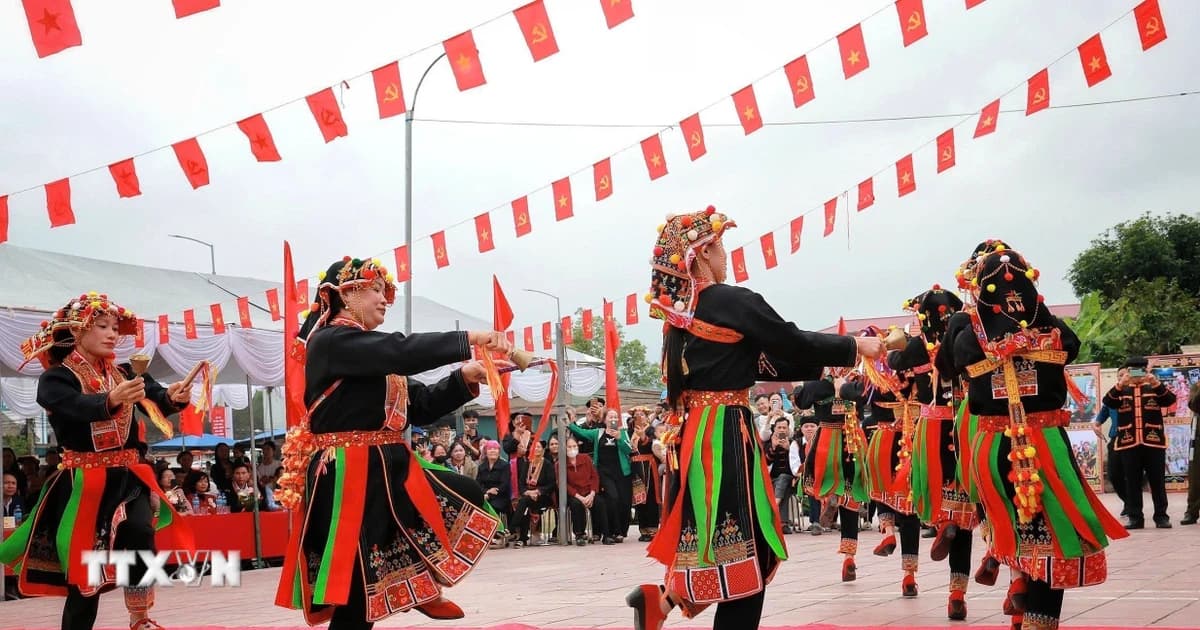
The New Rice Offering Ceremony is held annually by the people of Xuan Lap on the 15th day of the 10th lunar month, after the harvest season is complete.
The fresh, fragrant glutinous rice grains, carefully selected, are processed into rice flakes, sticky rice, and offerings to respectfully present to King Le Dai Hành and our ancestors.
The ceremony expresses the people's gratitude to those who contributed to building and defending the nation, while also conveying their hopes for favorable weather, abundant harvests, and a peaceful and prosperous life.
This is also a cultural aspect closely associated with the rice-farming civilization, reflecting the principle of remembering one's roots and appreciating the fruits of labor of the local people.

Through the preservation of these rituals, traditional cultural values continue to be passed down within the community, contributing to the education of the younger generation about the history of their homeland, fostering pride and a sense of responsibility in preserving the heritage of their ancestors.
According to historical records, King Le Hoan was born in 941 in Trung Lap village, in the former Ai Chau region, now part of Xuan Lap commune, Thanh Hoa province. He was an emperor who played a particularly important role in the nation's history, closely associated with the defense of independence and the building of the Dai Co Viet nation in its early days of self-rule.

In 980, facing the threat of Song invasion after the death of King Dinh Tien Hoang, Le Hoan was enthroned by the court officials and Empress Dowager Duong Van Nga, taking the reign name Le Dai Hành.
As emperor, he directly led the army and people to defeat the invading Song army, firmly protecting national independence. In 982, he continued his campaign against Champa, further consolidating the nation's position.
Besides his strategic brilliance, King Le Dai Hanh also focused on developing agriculture , caring for the people's well-being, valuing talent, and implementing many policies to build the nation. His contributions have left a significant mark on the nation's history.

After the king's death in 1005, the people of his hometown erected a temple to commemorate his contributions. In 2018, the Le Hoan Temple was classified as a Special National Monument by the Prime Minister.
Every year, the Le Hoan Temple Festival is held on the 8th day of the 3rd lunar month, becoming a typical cultural and spiritual activity of the locality.
Maintaining the tradition of offering new rice flakes at the historical site not only enriches the cultural and religious life of the community but also creates a connection between historical heritage and traditional customs in contemporary life.