

According to the Department of Finance's report, the management and handling of public assets throughout the province has achieved many positive results, but some obstacles still need to be addressed. Specifically, regarding the 19 surplus land and buildings under the supervision of the Provincial Steering Committee for the Prevention and Control of Corruption, Waste, and Negative Practices, 14 have been processed; the remaining 5 are undergoing the short-term lease process, expected to be completed in the fourth quarter of 2026.
Regarding the 400 surplus land and property assets identified in the inspection report, 178 have been processed; the remaining 222 have been submitted to the Provincial Party Standing Committee for approval, with the goal of completion by December 2026. In addition, departments, agencies, and localities are finalizing procedures for receiving 31 land and property assets transferred by the Ministry of Public Security ; resolving legal issues related to assets transferred from the central government; and reviewing files for the management of infrastructure in the Northwest Square area and the Nặm La stream embankment.

The average Consumer Price Index (CPI) for the first 10 months of 2026 in the province increased by 5.87% compared to the same period last year. Although the monthly CPI has shown a downward trend since May, the high increase in the first four months of the year has put significant pressure on the overall price level.
Three groups of goods and services directly impacted and contributed significantly to the province's overall CPI increase: food and food services increased by 6.78%; transportation increased by 7.27%; and housing, electricity, water, fuel, and construction materials increased by 3.88%, with the price of domestic water increasing by 15.51% due to the application of new prices from January 2026 after 9 years of stability.


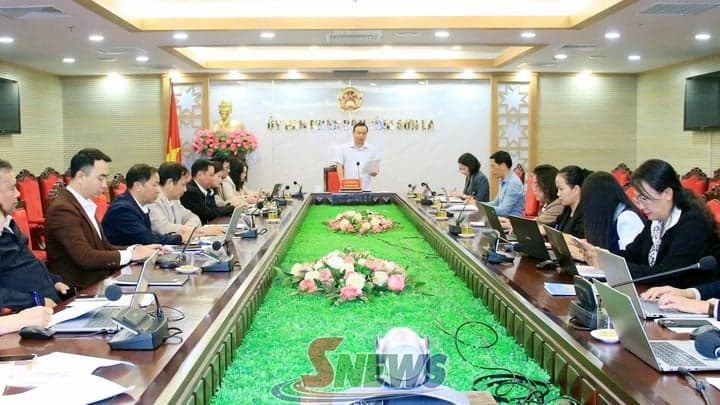
During the meeting, leaders of departments and agencies focused on discussing and clarifying the causes of price fluctuations of some essential goods, while also analyzing the obstacles in the process of receiving, converting the function of, and valuing the exploitation of public assets at the local level.

Concluding the meeting, Comrade Nguyen Minh Tien acknowledged the efforts of the departments and agencies in managing prices and public assets. He assigned the Department of Finance to take the lead in resolving legal obstacles related to land and planning; to accelerate the handover and efficient exploitation of surplus houses and land; and to complete the procedures for transferring the management of infrastructure in the Northwest Square area and the Nam La stream embankment. The implementation process must be strictly controlled, resolutely preventing any loss or waste, and completed no later than December 25, 2026.
Regarding price management, in order to control inflation and stabilize the market at the end of the year, the comrade requested the Department of Finance to advise the Chairman of the Provincial People's Committee to issue a Directive on solutions to ensure a balance between supply and demand in the market before, during, and after the Lunar New Year of Dinh Mui 2027.
The comrade instructed the Department of Construction to work with water supply companies to consider a plan to reduce water prices in November and December 2026 to support the people. Specialized departments should finalize the list of specific goods and services for price declaration before November 25, 2026. The Department of Industry and Trade should take the lead in preparing essential goods, ensuring supply and demand; strictly control and prevent hoarding and unreasonable price increases; and promote market stabilization through public awareness campaigns.