

Some people believe that simply eating vegetables and drinking enough water can prevent constipation. However, according to nutrition experts, the important thing is not to eat a lot, but to choose the right foods, especially those rich in fiber, to support the digestive system's efficient functioning.
Nutritionist Nguyen Thu Ha from Nam Saigon International General Hospital shared with Vietnamnet that fiber is a type of carbohydrate, but unlike other carbs, it is not completely broken down during digestion. This substance is found in plant-based foods and can be divided into two types: soluble and insoluble fiber.
In particular, a high-fiber diet not only regulates digestion in the short term but also prevents gastrointestinal disorders.
In fact, many people think that simply eating lots of vegetables and drinking enough water can prevent constipation. However, the important thing is not just the quantity but also the quality and structure of the meal. One common misconception is that all fruits and vegetables provide the same amount of fiber.
Eating a lot of lettuce usually doesn't provide enough fiber, as 100g of lettuce only provides about 0.5g of fiber. Meanwhile, the daily fiber requirement for adults is around 20-25g. Therefore, if someone only ate lettuce to supplement their fiber intake, they would have to eat 4-5kg of lettuce every day to meet their needs, which is almost impossible.
Conversely, some fruits have significantly higher fiber content. For example, 100g of guava provides about 6g of fiber. A 300g guava can provide nearly 18g of fiber, equivalent to most of an adult's daily fiber needs.
Therefore, choosing the right fiber-rich foods is very important. Eating lots of vegetables but choosing vegetables with low fiber content may not necessarily meet the body's needs.
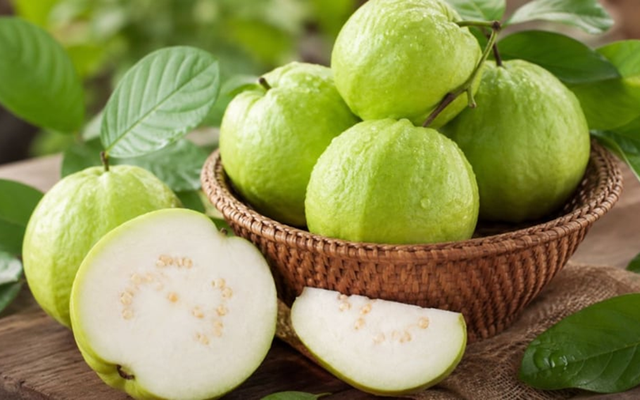
Illustrative image.
Health benefits of guava
Guava is a familiar, readily available, and highly nutritious fruit. Not only is it rich in vitamin C, but it also provides fiber, vitamin A, folate, potassium, and many antioxidants. Therefore, incorporating guava into a balanced diet can offer numerous health benefits.
Boost your immune system.
Guava is well-known for its high vitamin C content, an important nutrient for the immune system. Vitamin C participates in many immune system functions and has antioxidant properties, helping the body fight against the effects of free radicals.
Supports brain health
Guava provides several B vitamins, including vitamins B3 and B6. These nutrients are involved in energy metabolism and the normal functioning of the nervous system, contributing to maintaining brain health.
Supports thyroid function and hormone production.
Guava contains copper, a mineral essential for many metabolic processes in the body. Copper is involved in energy production, connective tissue formation, and supports the normal functioning of the thyroid gland.
Supplement with antioxidants.
Guava contains vitamin C, lycopene, and many polyphenol compounds with antioxidant properties. These substances help protect cells from the effects of free radicals. A diet rich in fruits and vegetables, including guava, can contribute to long-term health.
Supports blood sugar control.
Guava is a fruit rich in fiber, while its sugar content is not excessively high compared to many other sweet snacks. Fiber can help slow down the absorption of carbohydrates, thereby limiting the rapid increase in blood sugar after eating. People with diabetes still need to pay attention to portion sizes and the total amount of carbohydrates in their meals.
Good for the skin
Vitamin C and antioxidants in guava play an important role in skin health. Vitamin C is involved in collagen synthesis, while antioxidants help protect cells from oxidative stress. Adding guava, along with many other fruits and vegetables, to a balanced diet can contribute to maintaining healthy skin.
Supports digestion and reduces constipation.
Guava is rich in fiber, especially when eaten with both the flesh and the washed peel. Fiber helps increase stool bulk and supports bowel movements, thereby contributing to regular digestive activity. To prevent constipation, in addition to increasing fiber intake, you should also drink enough water and maintain regular exercise.
Support eye health
Guava provides vitamin A and antioxidants, essential nutrients for visual health. A varied diet with colorful fruits and vegetables helps provide the vitamins and antioxidants necessary for eye health.
Beneficial for pregnant women
Guava provides folate (vitamin B9), a nutrient that is especially important during pregnancy. Folate is involved in cell division and the development of the fetal nervous system. However, pregnant women should still supplement folate as recommended by their doctor or healthcare professional.
Magnesium supplementation helps relax muscles and nerves.
Guava contains magnesium, a mineral involved in many bodily reactions and playing a role in the normal functioning of muscles and nerves. Including guava in a varied diet can contribute to providing magnesium and many other nutrients to the body.
Take vitamin C supplements when you have a cold.
Guava is rich in vitamin C, helping to meet daily vitamin C requirements. Vitamin C plays an important role in the immune system and overall health.
Truc Chi (compiled by Vietnamnet, Health & Life)
Source: https://www.nguoiduatin.vn/qua-oi-nho-luong-chat-xo-khong-ngo-tuong-duong-4-5-kg-xa-lach-2042610021241058.htm