

The story of collaborative and enhanced programs in public schools in Ho Chi Minh City in particular and the whole country in general has been going on for many years. Subjects such as STEM, life skills, IC3 International Computer Science, English with native teachers... are no longer unfamiliar.
What worries many parents isn't necessarily the extra classes themselves, but rather the family's choice. When these affiliated subjects are designated as voluntary but are scheduled to alternate with regular school classes, or if students don't register, they have to attend a full session.
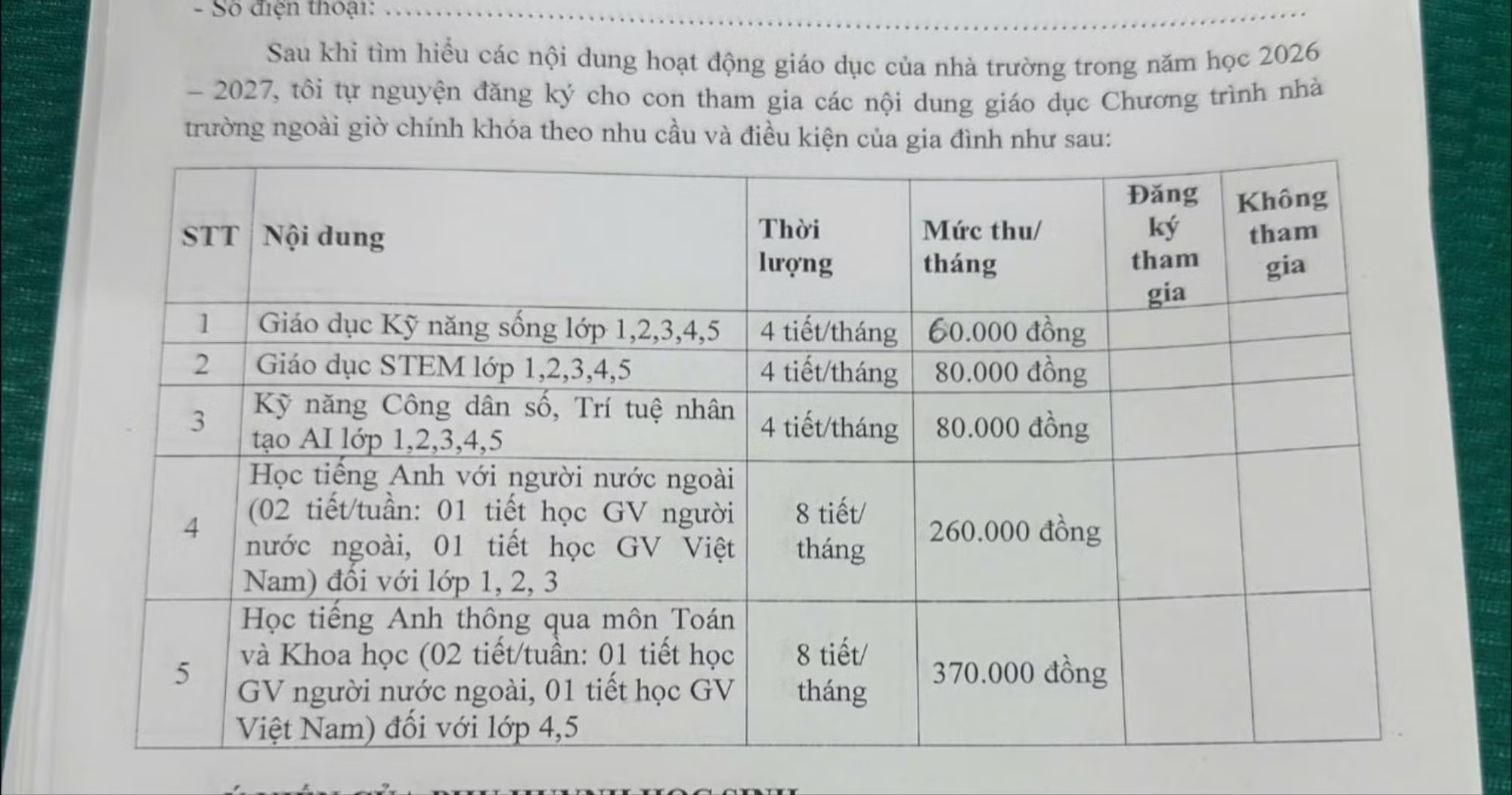
Most parents want to enroll their children in the half-day program because they work all day and cannot drop off and pick up their children frequently. Therefore, if they don't register for the integrated program, students will not be able to attend the half-day program or will have to transfer to a different class or school, forcing parents to register. This raises questions about the voluntary nature of the school program, as students who don't register are put at a disadvantage.
According to reports from Nguyen Thi Thap Secondary School (Tan Hung Ward), parents are being introduced to programs such as the IC3 International Computer Science program, STEM, life skills, and English with native speakers. If they register, they must commit to their children studying for an extended period. For example, a 6th-grade student who signs the application for an integrated program must study for four years (from 6th to 9th grade).
Notably, the application form states that if students do not participate in school programs, they will be transferred to a half-day class, meaning they will not be eligible for the half-day program. Some parents, wanting their children to attend the half-day program, have therefore enrolled them in an intensive English program.

The principal of Nguyen Thi Thap Secondary School said that the school organizes one-session classes, half-day classes, and enhanced English classes. Students who do not register for the school's programs will study the basic curriculum of the Ministry of Education and Training. With the Ministry of Education and Training's curriculum framework, one session per day is sufficient. Due to the school's limited classroom space, it is difficult for the school to offer half-day classes for all students.
This situation also occurred at Nguyen Thi Minh Khai Primary School (Thong Tay Hoi Ward). According to the school principal, teachers advised parents from the beginning of the school year that if students did not enroll in any of the integrated subjects, they would only study the number of lessons stipulated by the Ministry of Education and Training's curriculum.
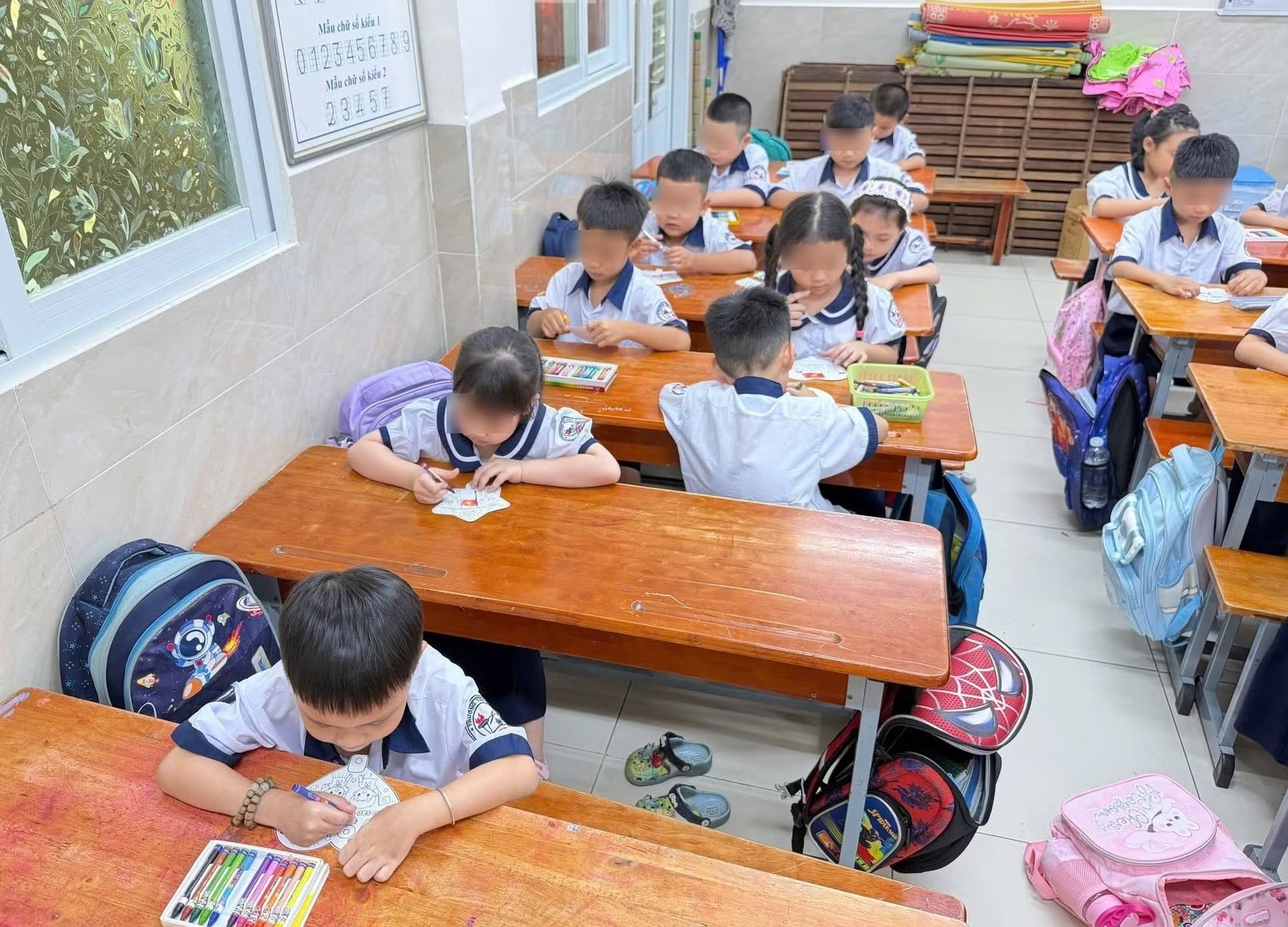
However, parents have complained that if students do not register for the integrated courses, even though they still attend two sessions a day, they have to go home at midday, and parents have to pick up and drop off their children four times a day because the school does not provide boarding facilities for these students. Meanwhile, students who register for the integrated courses are provided with boarding facilities.
This very organizational structure raises a major question: If a program is truly voluntary, why should parental choice be tied to changes in class types, class times, or boarding conditions?
Ms. Trang, whose child is in first grade at a school in Ho Chi Minh City, said she had almost no choice when the extracurricular subjects were interspersed into the regular school timetable. If students didn't register, they had to wait for others to finish their regular subjects before continuing with the next main course. For a family with young children, having children wait in school is not only inconvenient but also affects their psychology and learning rhythm. In the end, she reluctantly registered her child for the extracurricular subjects.
Another parent whose child attends high school in Linh Xuan ward, Ho Chi Minh City, complained that on October 2nd, their child did not participate in the enhanced English class but still had to come to school and wait for the next class. If a student did not show up and wait for that class, their conduct grade would be negatively affected by the school.
These reflections show that the issue is no longer simply about whether a family wants to pay for extra tutoring. It's a story about the choice of parents and students in public schools.
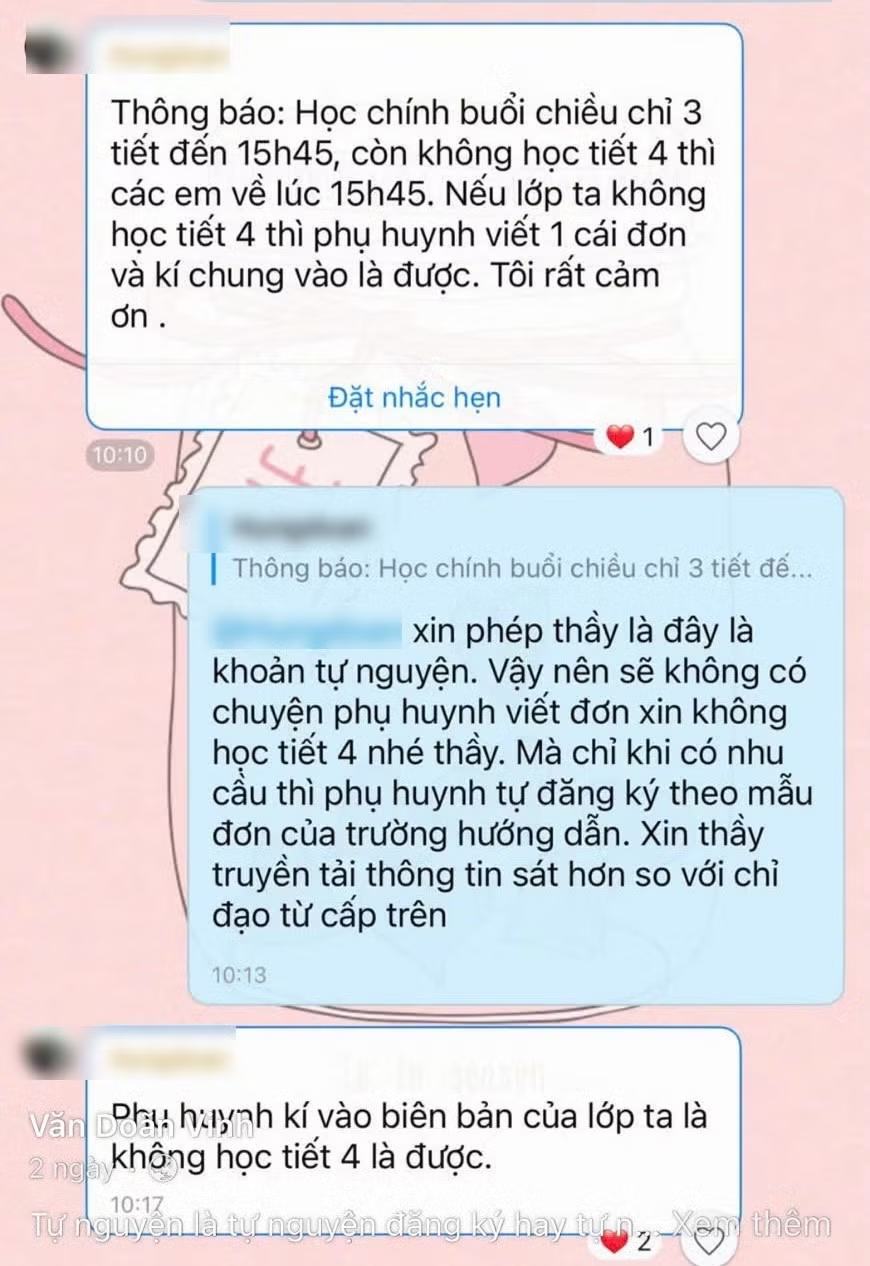
Some parents with elementary school children believe that the current curriculum is already quite demanding. Students have to study many subjects, do homework, and participate in educational activities. Catching up with the curriculum is already difficult when children miss a few days of school due to illness. If, after regular school hours, they continue with extended extracurricular programs, the pressure increases even further.
Not all students have the same needs for extra English language training, life skills, STEM, etc. Many students simply want to excel in their regular school curriculum, have time to relax, read, play sports , or participate in activities with their families.
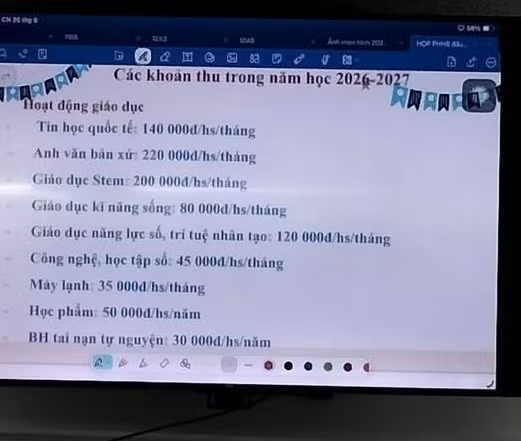
Many parents believe that for enhanced and collaborative programs, if needed, students can choose to enroll their children in licensed educational institutions outside the school, and that schools should not be the ones to organize these collaborations with external institutions. Voluntary participation must be accompanied by a genuine right to refuse; collaborative subjects cannot become a reason for students to lose access to after-school care or have their studies disrupted.
Source: https://cand.vn/phu-huynh-hoc-sinh-o-tp-ho-chi-minh-met-moi-vi-mon-hoc-lien-ket-post823979.html