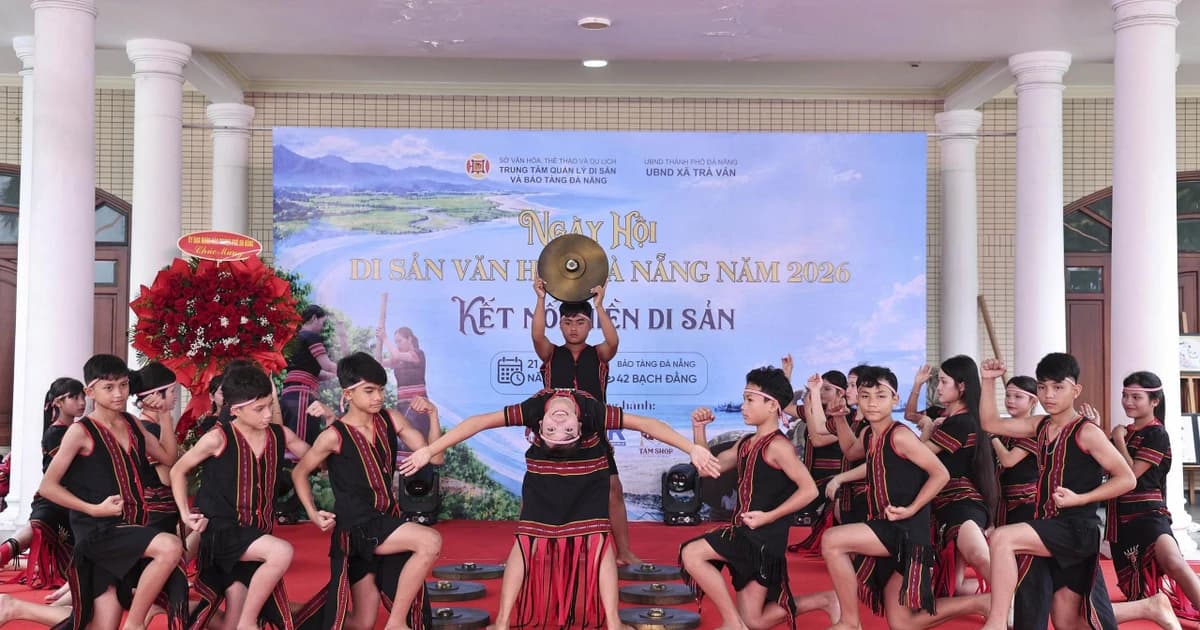
The 2026 Gia Lai Gong Festival impressed with a unique stage: an LED screen transformed into a Central Highlands village featuring nearly 2,000 artisans. This was the choice of designer and general director Minh Hanh, who for many years has persistently incorporated culture, heritage, and regional identity into artistic programs. From Gia Lai to the Temple of Literature - National University, and then the UNESCO headquarters in Paris, she tells stories of Vietnamese culture through people, materials, and evocative imagery.
When the Central Highlands village becomes a stage
In a trend where stage performances increasingly focus on projection technology and visual effects, designer Minh Hạnh has chosen a different approach: bringing real life into the performance space, placing people and local culture at the center.

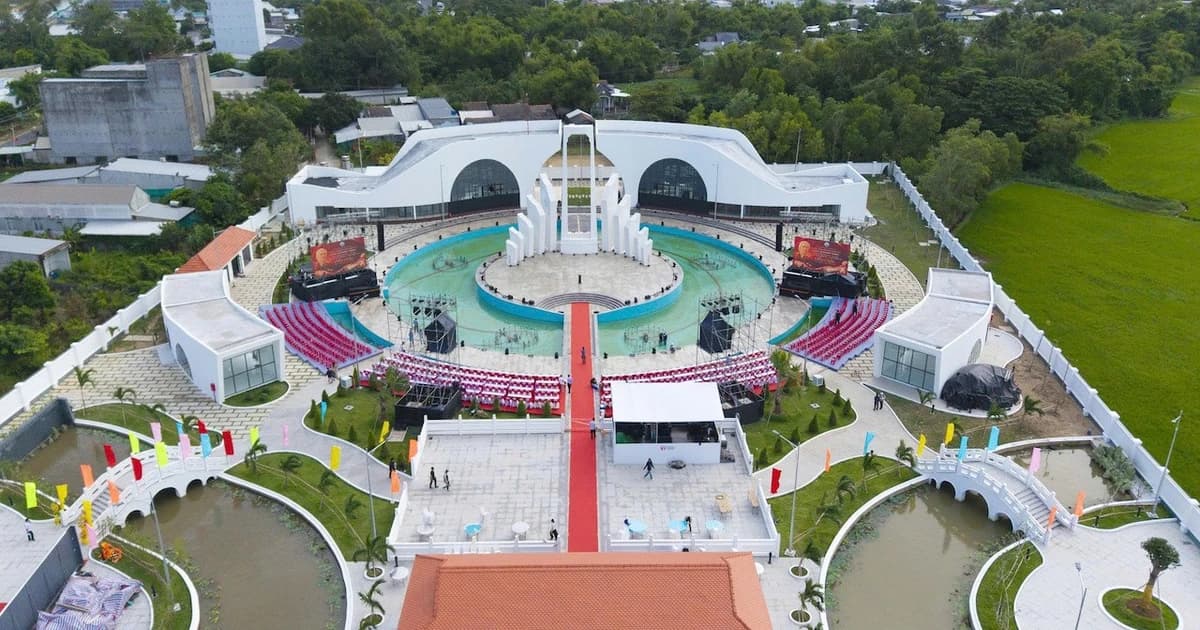
At the Gia Lai Gong Festival 2026, the audience was transported to a Central Highlands village right in the middle of the square. A thatched-roof communal house rose high in the center, flanked by stilt houses, bamboo bird cages, dried gourds, ripe rice paddies, and wooden statues resembling tombstones. Each detail was connected to the life and beliefs of the community. The gourd suggested the water-carrying ritual, the rice paddies alluded to the connection between the sound of the gongs and the harvest, while the wooden statues represented the concept of continuity between the living and their ancestors.

In particular, traditional crafts are brought directly into the performance space. Women sit weaving at looms, people carry water across the courtyard, and the sound of pestles pounding rice blends with the rhythm of gongs. The audience not only sees the handcrafted products but also witnesses the hands preserving traditional crafts.
Minh Hạnh doesn't deny the role of modern technology, but places it in a supporting position. When the projection effects are toned down, the audience has the opportunity to focus on the gongs, the artists, and the cultural elements present on stage.
950 Ao Dai dresses tell the story of 950 years of scholarship.
In early 2026, the art program "The Way of Learning," directed by her, was chosen to open a series of activities commemorating the 950th anniversary of the founding of Quoc Tu Giam, Vietnam's first national school. A special highlight of the program was the appearance of 950 first and second graders in traditional ao dai costumes. The children moved in a procession from the inner courtyard to Ho Van Lake, creating a highly symbolic image.

The 950 traditional Vietnamese dresses (áo dài) donated by designer Minh Hạnh correspond to the 950-year history of the Imperial Academy (Quốc Tử Giám). These students, just beginning their academic journey, become a symbol of the continuation of the nation's scholarly tradition. Through this, she conveys the idea that education is not just about imparting knowledge, but first and foremost about guiding individuals towards moral values.
Continuing this creative spirit, within the framework of the 2nd Thang Long - Hanoi Festival, designer Minh Hanh took on the role of general director of the art program "Khai Van," transforming the octagonal house in the Imperial Garden into a stage for the first time. The inherently tranquil space of the historical site was awakened by light, miniature scenes of golden rice paddies, ponds, and traditional ao dai dresses. The images of rice and water evoke the agricultural civilization, where the cultural values and learning traditions of the Vietnamese people have been nurtured through generations.

Not limited to domestic stages, in mid-2026, the "Studies on Morality" program will be introduced at UNESCO headquarters in Paris, within the framework of the General Assembly of States Parties to the 2003 Convention on the Protection of Intangible Cultural Heritage, and also to commemorate 50 years of relations between Vietnam and UNESCO.

When the stage becomes a catalyst for the village, for the craft, and for the local community.
Looking back at the programs Minh Hạnh has created, one common thread emerges: artisans and local communities always hold a crucial position within the artistic structure.
In 2024, the "Gia Lai ơi" brocade fashion show, directed by her, brought together nearly 300 artisans. Two years later, the Gia Lai Gong Festival featured nearly 2,000 artisans, almost seven times the original number. These figures demonstrate the increasing scale of community mobilization and reflect the widespread impact of heritage-centered art programs.
When artisans perform live on stage, traditional crafts have more opportunities to reach the public. Brocade fabrics are not only present in everyday life but also become fashion materials; ancient gong music has more people to enjoy; and local cultural values are introduced more widely.

This approach also opens up the possibility of connecting heritage conservation activities with tourism promotion, handicraft development, and local cultural economy . However, what makes Minh Hạnh unique is not the number of artisans or the scale of the stage, but the way she gives them the position of cultural subjects, instead of just appearing as illustrative elements of the program.
From a Central Highlands village nestled in a town square to 950 traditional ao dai dresses at the Temple of Literature, the five gates at the Garden of Eden, or the brocade fabrics in Paris, designer Minh Hanh always begins with the unique identity of each region and cultural space. As the overall director, she not only creates aesthetically pleasing programs but also seeks to bring heritage closer to contemporary life. Perhaps the most striking aspect of Minh Hanh's style is when the stage lights come on, and those quietly preserving heritage are brought into the spotlight, telling their own cultural stories.