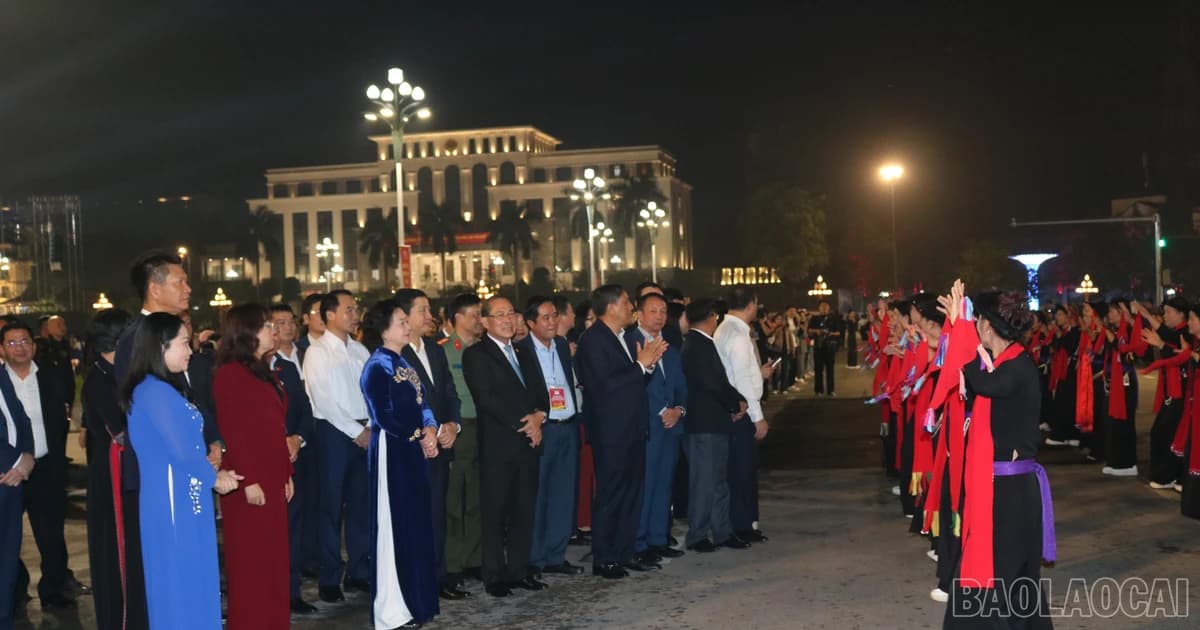
One of the clearest examples of efforts to preserve and promote heritage in conjunction with tourism development is the Muong Lo Culture and Tourism Festival 2026, taking place from October 15-21 in Nghia Lo ward. This event marks the 5th anniversary of the Thai Xoe dance art being inscribed by UNESCO on the Representative List of Intangible Cultural Heritage of Humanity.
The highlight of the festival is the grand Xoe dance, featuring 2,026 artisans, performers, and local people. Within this vast circle, clasped hands and rhythmic steps not only recreate the beauty of the heritage but also spread a spirit of unity and community solidarity.
"The Xoe dance is very beautiful, dazzling, and magnificent, with formations resembling flowers, and the Thai dance is very beautiful," said Ca Van Dung, a tourist from Son La province, expressing his particular impression.

From the traditional circle dance symbolizing unity to stalls showcasing local products, cultural spaces, and culinary delights , the Muong Lo Cultural and Tourism Festival is demonstrating a clear direction: preserving heritage is not just about safeguarding existing values, but also about creating spaces for heritage to continue to be present in contemporary life. When culture becomes an attractive experience, tourists have more reasons to explore the villages and learn about traditional products; and locals have more opportunities to develop services and create livelihoods from the cultural values of their homeland.
The festival's influence extends beyond Nghia Lo to other western communes and wards of the province, such as Van Chan, Tu Le, Lien Son, Cau Thia, and Trung Tam, through various cultural and sporting activities and experiences. These include "A Day Living with the Thai Village," the "Rice Field Fishing" competition, the Suoi Giang Snow Tea Festival, and paragliding activities like "Flying Over the Golden Season." Each locality contributes its own unique color, creating a rich series of experiences for visitors. Through these activities, local heritage, landscapes, and products are connected, contributing to the promotion of tourism in the western part of the province.
Continuing that festive atmosphere, in the highlands of Muong Khuong, the first-ever "Muong Khuong - Colors of the Border" Festival opened up a vibrant space for cultural exchange. The sounds of musical instruments, songs, traditional dances, and experiential activities created a vivid picture of the cultural life of the ethnic communities.
For the locals, this is not only a time for fun and gatherings, but also an opportunity to express their love and pride in their ethnic identity.
Ms. Pờ Thị Xuân, from Sa Pả village, Mường Khương commune, excitedly recounted her joy at bringing her musical instrument to the festival and singing familiar songs with her fellow villagers. “It’s been a long time since the people here have participated in such a vibrant festival. We are very happy!” Ms. Xuân shared.

From this simple joy, we can see that when given the space and conditions to participate, traditional cultural values are not only preserved in memory or the private activities of the community. They are awakened, passed on, and spread more widely. The people are both the custodians of these values and the direct presenters of their homeland's identity to tourists.
Beyond simply organizing a cultural event, Muong Khuong also aims to leverage its existing advantages to develop commercial agriculture and experiential tourism.
Mr. Nguyen Dinh Thuc, Vice Chairman of the People's Committee of Muong Khuong commune, said that the locality has advantages in terms of land, climate, unique products, and diverse cultural identity. These are potentials that are being gradually exploited and connected to create more tourism products and promote the image of the homeland. Mr. Thuc hopes: "The festival will be successful, so that tourists will learn more about the people and products of Muong Khuong. Our wish is for the agriculture and tourism sectors to develop further, increasing income for the people."

A common thread in the way festivals are organized in many localities is the integration of cultural activities with existing economic advantages. Culture is linked to agriculture, specialty products, landscapes, and experiential tourism. Each festival is therefore not only an opportunity to honor traditions but also to promote the image of the homeland, connect with markets, and boost economic development. This approach is clearly demonstrated in Thac Ba commune, where the locality has identified two key development directions based on its existing advantages: enhancing the value of the Dai Minh specialty pomelo region and exploiting the tourism potential of Thac Ba Lake.

Within the framework of the Dai Minh Pomelo Festival and the exploration of Thac Ba Lake National Scenic Area in 2026, activities such as the beautiful pomelo tree and garden contest, agricultural product display, folk games, jet ski demonstrations, bamboo boat races, and lake exploration tours created a diverse experiential space. Each activity contributed to introducing an aspect of the locality, from agricultural products and natural landscapes to community cultural life. Mr. Nguyen Ngoc Quynh - Secretary of the Party Committee of Thac Ba commune said: "Through this activity, we hope to promote the local pomelo product to a large number of tourists and to make more people aware of Thac Ba Lake National Scenic Area so they can experience it and have a positive impression."
In Sin Cheng commune, organizing the first Golden Harvest Festival is also a concrete step in realizing the orientation of tourism development through the preservation and promotion of traditional culture. Implementing the Resolution of the Commune Party Congress for the 2025-2030 term, the locality has issued 3 projects, 4 resolutions, and 3 action plans, focusing on exploiting tourism potential while preserving cultural identity and gradually improving the lives of the people.
Mr. Le Dinh Nghiep, Vice Chairman of the People's Committee of Sin Cheng commune, said that the local Party committee and government are paying attention to organizing the festival and intend to maintain this activity in August every year. Mr. Nghiep emphasized: "This year is the first year the Sin Cheng Golden Harvest Festival is being held. From next year onwards, the festival will take place every August. It is a festival of the people, by the people, and for the people."
From resolutions to specific projects and plans, and then realized through a festival bearing the unique mark of the locality, Sin Cheng demonstrates the proactive role of the local Party committee and government in choosing the appropriate development direction. In particular, the orientation that the festival belongs to the people, is by the people, and for the people is also a key factor in creating lasting vitality for community cultural activities. When people participate in organizing, showcasing products and traditional values, they are not only beneficiaries but also become the main actors creating the attractiveness of the festival.

Following the implementation of the two-tiered local government model, localities are required to proactively review their resources and choose a direction that suits their actual conditions. In the cultural field, this requires each locality to identify its unique values and, from there, develop appropriate approaches, avoiding organizing festivals based on trends or focusing on scale without depth.
According to Mr. Duong Tuan Nghia, Deputy Director of the Department of Culture, Sports and Tourism of Lao Cai province, in the coming time there will be many specific mechanisms and policies aimed at bringing benefits to the community from cultural values, while creating distinctive products with a unique mark for Lao Cai tourism.
This orientation requires a harmonious combination of conservation and development. Because if exploitation is solely for attracting tourists without preservation, the unique characteristics of local culture may fade away. Conversely, when people are involved and benefit from their own cultural values, the heritage will have better conditions to continue to be preserved and passed down through generations.
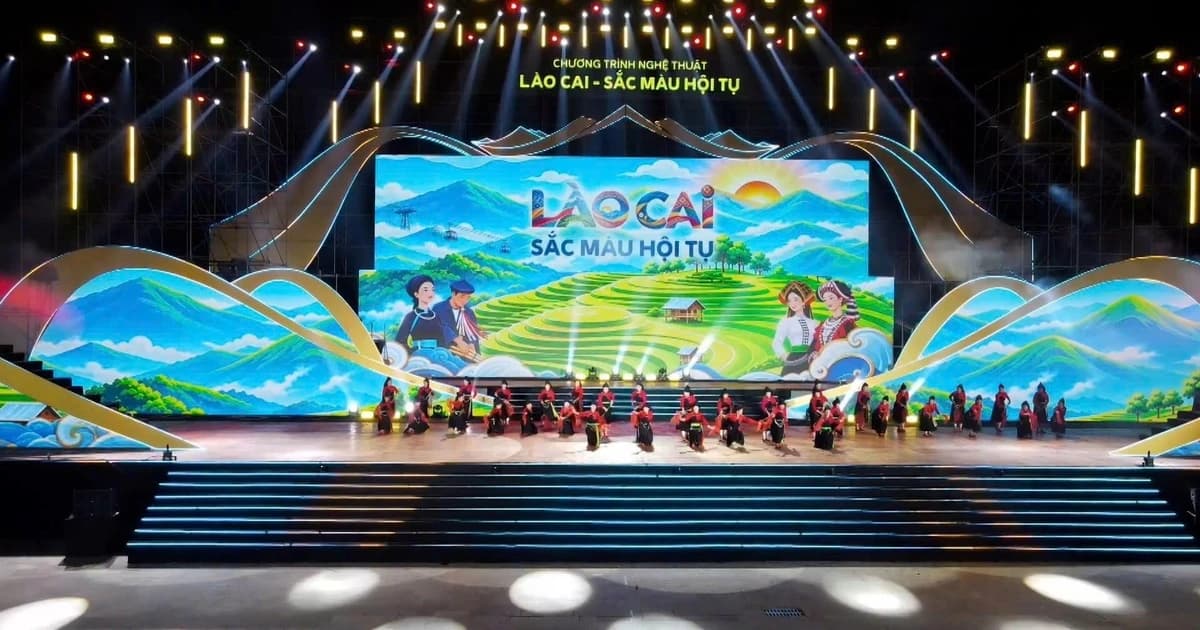
From November 20th to 24th, the Lao Cai Cultural Colors Festival will continue to be an opportunity to showcase the unique cultural values of the province's ethnic groups. Each festival and cultural activity, when organized with respect for heritage and placing the people at the center, will contribute to building a bridge that brings local identity closer to friends and tourists.

The festive seasons unfold not only with the sounds of drums, flutes, and lively dances. Behind them lies a shift in development thinking, an effort to awaken the potential of each region and ignite pride within each community. When resolutions are concretized through practical actions, and when the people truly become the custodians and promoters of culture, traditional values will not only be preserved in memory but will also become a resource for building the future.