Stretching from the high mountain ranges to the fertile valleys of Northwest Vietnam, Lao Cai is captivating not only for its majestic natural landscapes but also for its rich cultural heritage, with rituals, customs, and festivals preserved through generations. Each festival tells a story of history, beliefs, working life, and aspirations of the community... all contributing to the unique character of this land rich in identity.
For the Red Dao people, the Fire Dance Festival is one of their unique spiritual and cultural activities. The festival is usually held at the beginning of the lunar year, signifying a prayer for peace, health, warding off bad luck, and hoping for a prosperous new year.
Before the main ceremony, the shaman performs rituals to invoke the blessings of the spirits and ancestors for the community. When the bundles of firewood have burned to embers, the Red Dao men step into the circle of fire one by one, performing vigorous dances on the hot coals to the sound of drums, gongs, and the cheers of the villagers.

According to traditional beliefs, participants gain the strength to overcome challenges thanks to the blessings of the gods. The ritual reflects spiritual faith, courage, and the human desire to overcome difficulties. The flickering fire and sacred atmosphere create a unique cultural feature that helps preserve the long-standing religious values of the Red Dao people.
As a traditional festival of the Ha Nhi people, the Kho Gia Gia Festival is usually held in the sixth lunar month, associated with agricultural beliefs and the concept of harmony between humans and nature. The Ha Nhi people believe that the forest god, the earth god, and the water god always protect, bringing peace and prosperity to their villages.

During the festival days, people prepare offerings and hold rituals in the sacred forest to thank the gods and pray for favorable weather, bountiful harvests, and thriving livestock. Following the solemn ceremony, there are recreational activities, cultural exchanges, and the enjoyment of traditional dishes.
Beyond expressing aspirations for a prosperous life, Khô Già Già also reminds the community to preserve the sacred forest, protect water sources, and safeguard the living environment – elements intimately connected to the lives of the Hà Nhì people.

On the high mountain slopes, the Gầu Tào Festival of the Hmong people brings a unique cultural flavor with the resonant sound of the Hmong flute echoing across the land. This traditional festival, usually held in the spring, is associated with prayers for blessings, children, health, peace, and thanksgiving to the deities for protecting the family and clan. The festival space is usually set up in a large open area, with a ceremonial pole erected in the center as a focal point for the rituals.
Following the ceremonial part, the festive atmosphere intensifies. Hmong men in traditional costumes perform the khene dance, with graceful spins, jumps, rolls, and rhythmic movements to the music. The khene is not simply a musical instrument but also a means of conveying thoughts and feelings, expressing joy, longing, and love. Besides the khene dance, there are also courtship songs, pao throwing, spinning tops, and many other folk games. Therefore, Gau Tao is not only a blessing ceremony but also a space for preserving and transmitting the unique folk art of the Hmong people.
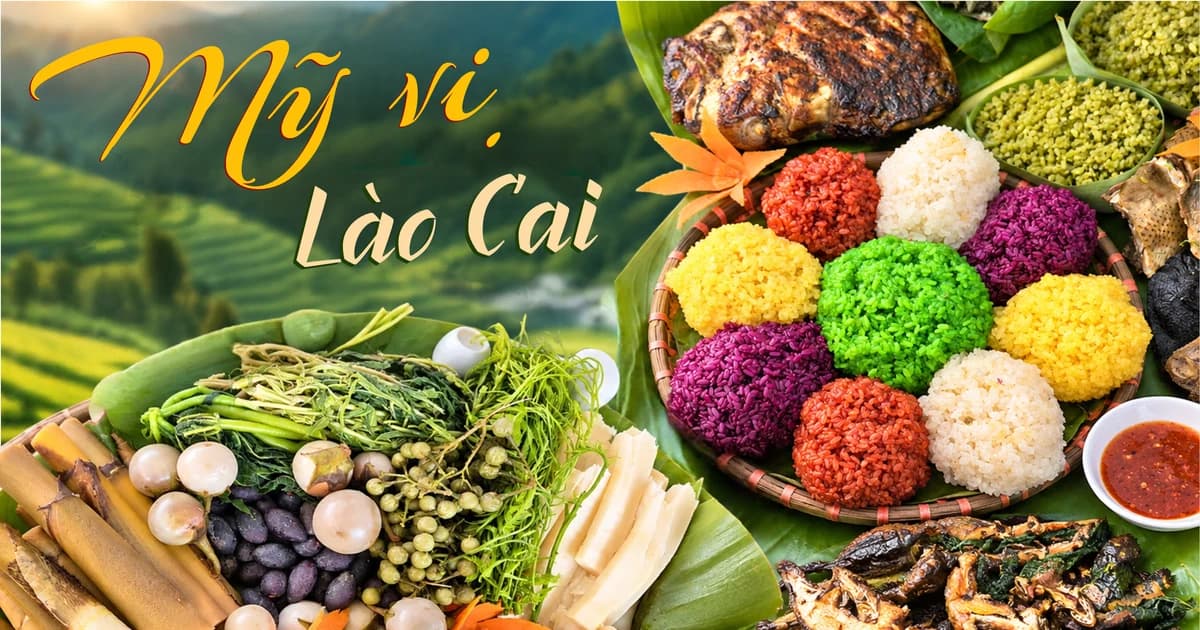
For the Tay people, the Com Festival brings a familiar cultural experience, deeply rooted in the flavors of their homeland. The festival is associated with the glutinous rice harvest season, expressing gratitude to the earth, sky, and ancestors, and valuing the fruits of their labor. Young glutinous rice grains are selected, roasted over a fire, then pounded in a wooden mortar and sifted repeatedly to create green, soft, and fragrant com grains.

From simple ingredients found in the fields, the Tay people have created a delicacy deeply rooted in their ethnic culture. The festival not only honors the traditional craft of making sticky rice flakes but also conveys hopes for a bountiful harvest and a prosperous life. It is also an opportunity for the people to showcase local products, share processing techniques, and preserve the culinary traditions passed down through generations.
In Muong Lo, considered one of the cultural cradles of the Thai people, the Xen Ban and Xen Muong festivals are community religious activities deeply rooted in ethnic identity. In the Thai language, "xen" means offering or sacrifice. The festival is held to give thanks to heaven and earth, spirits, ancestors, and guardian deities of the village; and to pray for peace, bountiful harvests, and a prosperous life.
The ceremonial part of the festival is solemn, with rituals of offering sacrifices and prayers. After the ceremony concludes, the village becomes lively with traditional dances, folk songs, and games such as throwing the ball, tug-of-war, and stick pushing. In particular, the Thai circle dance symbolizes unity. People hold hands, regardless of age or status, joining together in a common rhythm. Through this, the festival demonstrates community cohesion and the humanistic values in the lives of the Thai people.
In the modern era, preserving and promoting traditional festivals is not only about safeguarding ancient rituals but also about transmitting the identity and origins of each nation. This ensures that traditional cultural values, customs, practices, and the beauty of spiritual life continue to be preserved and spread, becoming a source of pride for present and future generations. It is also a way for culture to be nurtured by community vitality, contributing to enriching Vietnam's already diverse and vibrant culture.