Advantages from challenging terrain
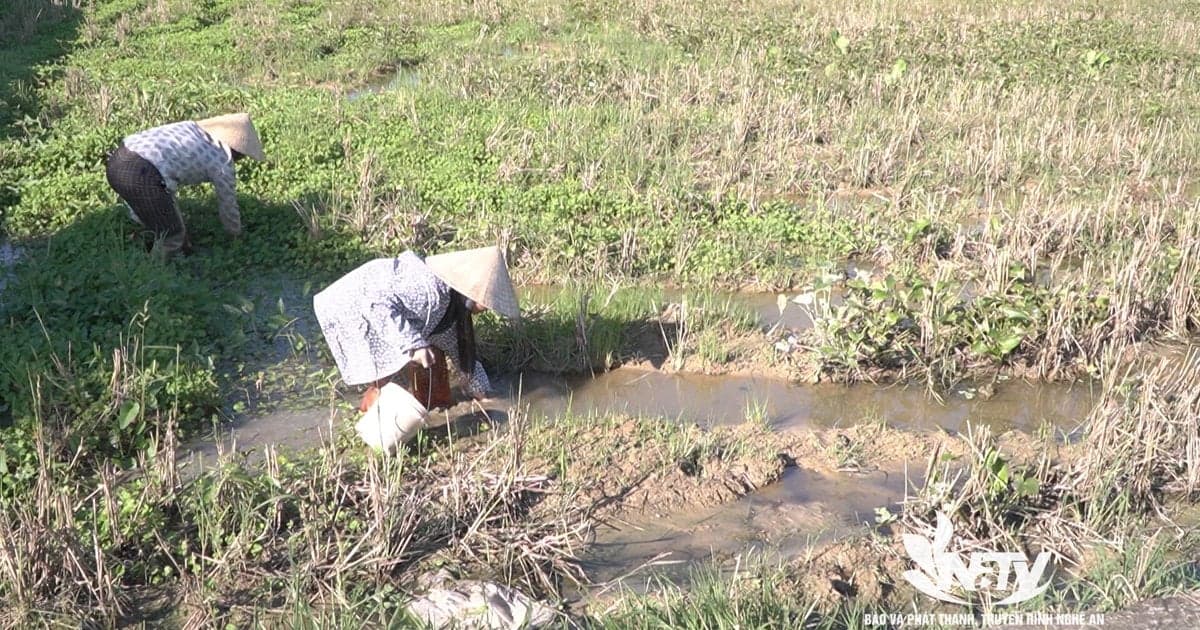
The prolonged heavy rains in October caused flooding in many low-lying vegetable-growing areas, damaging crops and forcing a halt to planting and harvesting. When supply is affected, the prices of some vegetables tend to increase. Meanwhile, at Dong Hoi Farm, the vegetable beds are maintained on higher ground with good drainage, less affected by flooding. This advantage stems from the land selection and improvement efforts of Mr. Nguyen Van Ninh and his colleagues.

Mr. Nguyen Van Ninh (born in 1987) grew up in the old Quynh Lien vegetable farming area (now Tan Mai ward). Before returning to his hometown to run a farm, he spent many years working abroad. His family's experience in vegetable production, combined with his time working overseas, gave him a broader perspective on agricultural production. Upon returning, Ninh, along with Mr. Mai Thanh Chuong (born in 1972) and Ms. Mai Thi Ngan, pooled their capital to establish a vegetable farm, starting on land that many considered unsuitable for efficient vegetable cultivation.
The 3-hectare plot of land was initially leased by three individuals from a local business. Previously, it was mainly hilly land, used for growing fruit trees, but with low yields, and a portion was left fallow. The land was rugged, uneven, with many tree stumps, rocks, and mixed soil, and a steep slope; during the dry season, the sandy loam soil dried quickly, making it difficult for crops to grow. Irrigation water was also scarce, while the drainage system had not been invested in.
These conditions led many to consider Nguyen Van Ninh and his associates' decision to reclaim the land for vegetable cultivation to be too "risky." Relatives and neighbors did not support it, because what they saw was a barren, rugged area lacking water, with no successful vegetable farming model in the vicinity.

However, Mr. Ninh and Mr. Chuong saw an advantage in this area that low-lying vegetable-growing regions lacked: the elevated terrain, which was less prone to flooding during heavy rains. In vegetable production, this was a valuable factor because prolonged rain could force production to halt in many low-lying areas, delay planting, or cause crop damage due to flooding. With proper land improvement and a reliable irrigation system, crops could still thrive even during unfavorable weather conditions.
From 2011-2012, the three members began reclaiming the land. Each uneven plot was leveled; a drainage system was constructed for each section; and a comprehensive irrigation and furrowing system was installed. Two plows were purchased to support the reclamation and production. The initial reclamation cost for the 3 hectares alone exceeded 1.5 billion VND. After about four months, the newly reclaimed land was essentially ready for stable production.
Water scarcity continued to be a challenge. Sandy soil retains water poorly, while vegetables require frequent irrigation. The farm had to drill more than 15 deep wells to extract groundwater and invest in a sprinkler irrigation system. Electricity and investment costs increased as a result. In return, the farm could manage its water supply independently, adjusting irrigation amounts according to crop type and time of year.

From land initially considered unsuitable for farming, the farm gradually developed farming methods adapted to the natural conditions. When heavy rains cause flooding in low-lying areas, disrupting vegetable supply in those regions, the farm can still maintain production and bring its products to market.
Production based on market demand.
Having high ground that is less prone to flooding is only the initial condition. For commercial vegetable producers, the bigger challenge is how to sell their produce at a profitable price. Production experience has taught members that if they plant according to the same schedule as other vegetable-growing regions, the products will all flood the market at the same time, making it difficult for growers to avoid the situation of "bumper harvest, low prices".
Before each planting season, Mr. Nguyen Van Ninh, Mr. Mai Thanh Chuong, and other members spend time monitoring the market, calculating demand, and determining the optimal planting time. Vegetable prices are updated through traders, markets, buyers, and information from other production areas. When a vegetable fetches a good price, the farm calculates the planting time, which may be 10-15 days earlier or later than usual. Before large-scale planting, members usually conduct trial plantings to assess growth potential, harvest time, and market demand.

Eight plots of recently harvested scallions are a prime example. The farm carefully plans the planting time so that the scallions are harvested when supply is not overly abundant. Each crop takes about 45 days, yielding 1.7-2 tons per plot. With selling prices ranging from 35,000-40,000 VND/kg depending on market conditions, revenue reaches approximately 60-70 million VND per plot, with a profit of about 40 million VND per plot. This scallion crop alone generates a profit of approximately 320 million VND.
What these farmers are concerned about isn't necessarily which vegetables are currently the most expensive, but rather when the market needs those vegetables. Agricultural prices can change very quickly. When many regions plant their crops at the same time, prices can fall; conversely, if unfavorable weather reduces supply, regions that still have produce to sell will have an advantage. The high elevation and low risk of flooding give Dong Hoi the ability to proactively manage production during such times.

Carrots are also produced in this way. The farm currently has 5.5 hectares of carrots, planted in July. Harvesting is divided into several phases, with 4 hectares expected to be harvested at the end of November and nearly 2 hectares at the end of December. The expected yield is 38-40 tons/ha, with a selling price of approximately 15,000-18,000 VND/kg. This staggered planting helps to avoid simultaneous harvesting and allows the farm to be more proactive when the market fluctuates.
In its current 6 hectares of production, the farm does not rely on a single crop. Scallions, carrots, radishes, various vegetables, watermelons, and cantaloupes are arranged in a rotational system, staggered planting. The farm can produce 2-3 crops per year. Crop rotation is also calculated to change soil quality, supplement nutrients, and create better conditions for plant growth. This arrangement diversifies products and distributes harvesting times, avoiding bringing all products to market at the same time.
Of course, this method doesn't always yield high profits. The farm once suffered losses of around 50 million VND when the prices of watermelons and radishes plummeted. After such incidents, Ninh and his team adjusted their production methods: increasing mechanization to reduce labor, selecting seeds more carefully, improving market forecasting, establishing a trial planting area before expansion, adjusting the irrigation system, and monitoring plant growth.

To date, the 6 hectares of Dong Hoi Farm yield an average of about 400 tons of vegetables per year, generating nearly 2 billion VND in revenue and a profit of approximately 500 million VND. The farm provides regular employment for 17 workers, with an average income of 8-10 million VND per person per month. This success stems from the accumulation of experience, investment in soil improvement, and gradual changes in production methods.
“Farmers in Dong Hoi have transformed unproductive land into efficient vegetable-growing areas, creating jobs for local workers. It is noteworthy that those implementing this model have shown a spirit of innovation, initiative, and change. This is a direction that should be encouraged and replicated in the development of local agricultural production.”
Mr. Ho Sy Tung - Vice Chairman of Tan Mai Ward People's Committee