November 24, 2026 marks the first time Vietnam will celebrate Vietnamese Culture Day as a public holiday, with workers receiving full pay off. This is not only a significant milestone in social life but also reflects the growing concern for the role of culture in national development.
Culture is given its rightful place in social life.
Speaking to Nguoi Dua Tin (The Informer) , Dr. Tran Huu Son, Director of the Institute for Applied Cultural and Tourism Research, said that the Party and State's choice of November 24th as Vietnam Culture Day is a meaningful initiative, demonstrating concern for and a proper assessment of the importance of culture to the country's development.

Dr. Tran Huu Son, Director of the Institute for Applied Cultural and Tourism Research (Photo: FBNV).
According to him, the predecessor of this day is linked to the milestone of the First National Cultural Conference held on November 24, 1946. Organizing Vietnamese Culture Day in the current context not only continues the values that have been established before but also creates a space for culture to truly be present and widespread in the lives of the people.
"This is a very good initiative. First of all, it affirms the role and position of culture by dedicating a public holiday to it. This shows that the Party and the State highly value the importance of culture," shared Dr. Tran Huu Son.
Dr. Tran Huu Son also emphasized that the first noteworthy point is that this holiday contributes to affirming the position and role of culture. In the system of holidays with special significance for social life, the addition of Vietnamese Culture Day shows that culture is increasingly recognized as an important field with a profound influence on the development of the nation and each individual.
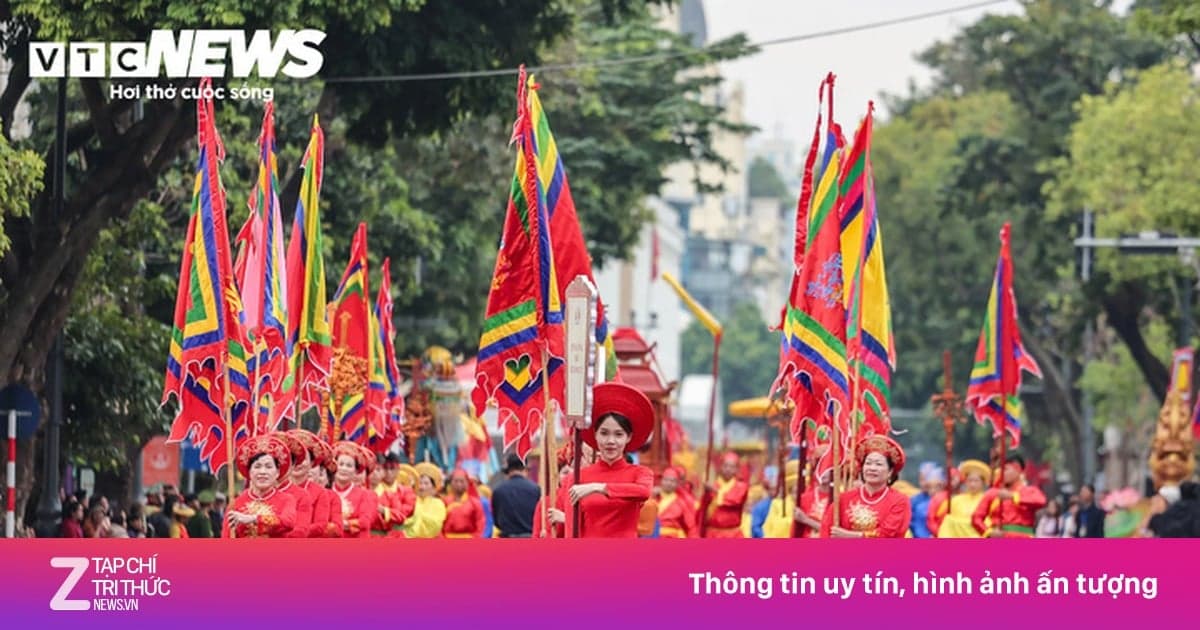
Beyond its symbolic significance, this holiday also provides an opportunity for a large number of people to participate in cultural activities. From workers and farmers to civil servants and officials, all social classes have the chance to access, experience, and contribute to preserving and promoting national cultural values.
Another significance he particularly emphasized was the ability to celebrate cultural diversity. Vietnam has 54 ethnic groups, each possessing a treasure trove of heritage, customs, traditions, costumes, and unique ways of life. When brought together in a common festival, these diverse colors create a rich cultural tapestry, reflecting the unity in diversity of Vietnam's ethnic communities.

Vietnamese Culture Day is not just a holiday, but also an opportunity to awaken national pride (Photo: Quoc Tiep).
According to Dr. Tran Huu Son, culture should not only be viewed through existing values but also within its historical context. Traditional costumes, customs, practices, and folk art forms are all the culmination of the formation and development of communities over many generations.
Referring to the costume exhibitions in Hanoi to celebrate Vietnamese Culture Day, he said that although they could not fully reflect the richness of Vietnamese ethnic costumes, these exhibition spaces still provided a vivid perspective on cultural identity. From the traditional ao dai to the costumes of ethnic communities, each exhibit contained stories about history, aesthetics, and life.
However , for such activities to be more effective, the participation of scientists , researchers, and design teams is needed to ensure cultural accuracy while also making them appealing to the public.
Opportunities for developing the service economy .
Besides its spiritual value, Dr. Tran Huu Son shared that Vietnamese Culture Day should be viewed from an economic perspective, especially its impact on the production and business activities of enterprises.
According to him, when discussing increasing the number of holidays, some direct manufacturing businesses may worry about reduced working hours, affecting progress and productivity. However, when considering the economy as a whole, it is necessary to distinguish between the direct manufacturing sector and the service sector.
"Managers must look at two areas: firstly, direct production, and secondly, services. This holiday is an opportunity to increase service consumption," he analyzed.
Accordingly, when workers are on holiday, the demand for entertainment, sightseeing, tourism, dining, shopping, and cultural experiences may increase. This creates favorable conditions for the accommodation, restaurant, transportation, trade, and tourism service sectors to expand their operations.
The increase in consumer demand during holidays not only generates additional revenue for service businesses but can also have a ripple effect on related industries. As tourism, trade, and consumer activities develop, the demand for goods, food, transportation, and products catering to tourists also increases.

When workers are on holiday, the demand for entertainment, sightseeing, travel, dining, shopping, and cultural experiences can increase (Photo: Quoc Tiep).
Therefore, holidays should not only be viewed from the perspective of reduced productivity, but also the economic value that can be generated from people's need for cultural experiences and enjoyment.
This is also a noteworthy perspective: culture is not only seen as an area requiring investment and preservation, but it can also become a resource for promoting economic development. Heritage sites, festivals, customs, traditional crafts, and cultural products, if organized and exploited appropriately, will contribute to creating attractive destinations and expanding livelihood opportunities for local communities.
Bringing together 54 different cultural colors in one common festival.
Regarding expectations for Vietnam Culture Day in the coming years, Dr. Tran Huu Son believes that it is crucial to continuously innovate the organizational format, avoiding the festival from becoming merely a performance or a formality.
He proposed that the cultural diversity of the 54 ethnic groups should be a consistent highlight. Each ethnic group has its own unique identity, from clothing, language, and writing to festivals, performing arts, and folk knowledge. Creating opportunities for these communities to showcase, practice, and share these values will help people better understand the richness of their national culture.
In particular, the activities during the festival should highlight both the spatial breadth and temporal depth of national culture. Space represents the presence of different regions and ethnic communities with their unique characteristics, while time is the journey of inheriting and continuing cultural values from the past to the present and future.
"If we value both space and time, then cultural values will endure and thrive," shared Dr. Tran Huu Son.

Dr. Tran Huu Son hopes that Vietnam Culture Day will become a festival for the entire nation (Photo: Quoc Tiep).
This is also a significant issue in the context of increasingly deep international integration. According to him, when organizing Vietnam Culture Day, in addition to showcasing the unique values of the nation, attention should be paid to exchanging, receiving, and introducing the cultures of other countries.
Culture does not exist in isolation. Interaction between cultures gives people more opportunities to discover new values, broaden their understanding, and enhance their ability to absorb the best of humanity. On that basis, Vietnamese cultural identity also has more opportunities to be widely introduced, affirming its position in the flow of international exchange.
"In this era of integration, Vietnam Culture Day should also open its doors to introduce the cultural essence of international friends. This exchange will make our festival more attractive, modern, and vibrant," expressed Dr. Tran Huu Son.
It is clear that the significance of Vietnamese Culture Day lies not only in a day of rest, but also in an opportunity for each citizen to take time to reflect, learn, and deeply appreciate the values that make up the national identity. When culture is brought closer to daily life, when each community has the opportunity to voice its opinions and showcase its heritage, this festival will become a meeting point for unity, pride, and the continuation of Vietnamese values.