2026 marks the first year of implementing Resolution No. 80 of the Politburo on cultural development, and also the first year of organizing Vietnam Culture Day on November 24th with a series of practical and widespread activities across the country in general and in Hai Phong city in particular.
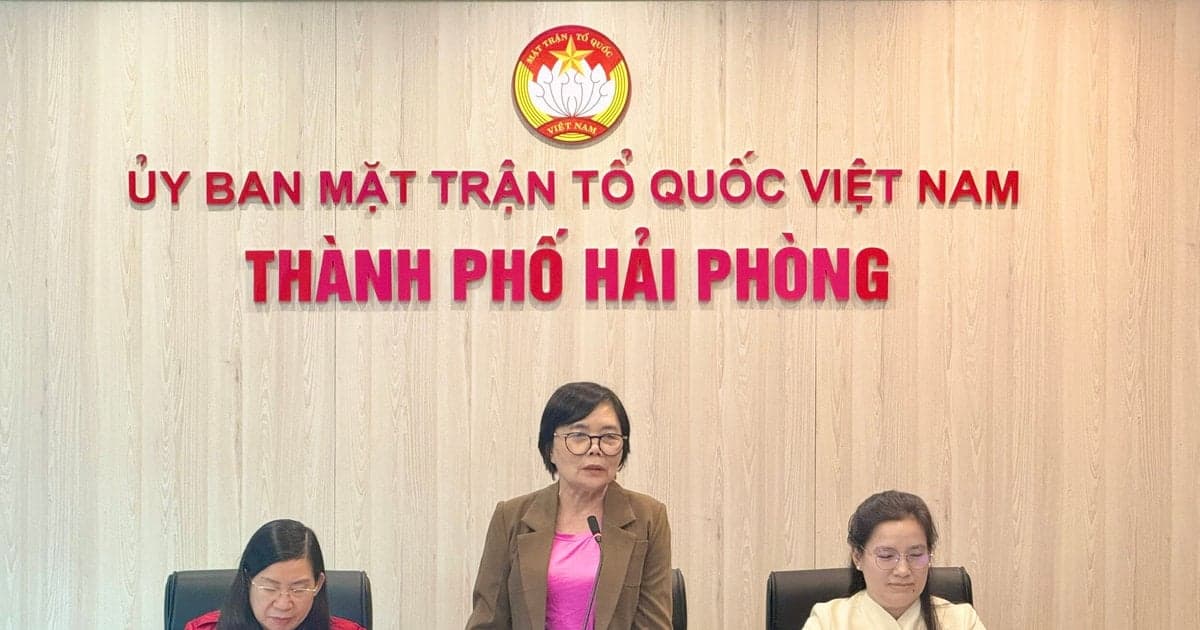
Newspapers and radio and television in Hai Phong interviewed Dr. Nguyen Thi Viet Nga, Member of the City Party Committee and Deputy Head of the Hai Phong City National Assembly Delegation, about the significance of the first Vietnamese Culture Day and its impact on Hai Phong City – a locality that is focusing on developing its culture, improving the quality of life and spiritual well-being of its people, and attracting domestic and international tourists.
- Madam, on April 24, 2026, with a high percentage of votes in favor, the National Assembly passed a Resolution on the Development of Vietnamese Culture. This resolution designates November 24th as "Vietnamese Culture Day" and specifies resources for cultural development and investment incentives in the cultural sector. As a National Assembly representative with extensive experience in the cultural field, how do you assess the significance of Vietnamese Culture Day now that it has been adopted and is gradually becoming one of the country's major holidays?
I believe that the National Assembly's decision to designate November 24th as Vietnam Culture Day is profoundly significant, demonstrating respect for the values that have shaped the nation's vitality, while also affirming the role of culture in the country's future development. As someone working in the cultural field and in parliamentary activities, I welcome this decision with joy and a sense of responsibility.
November 24th is associated with the First National Cultural Conference in 1946. Therefore, choosing this date creates a continuity between the ideology of building the culture of an independent Vietnam and the requirements of cultural development in the new era. In 2026, when we celebrate the 80th anniversary of the conference, that significance will be even more pronounced.
In my opinion, the important value of Vietnamese Culture Day lies in creating a common meeting point for each person to reflect on their relationship with culture. This includes language, family traditions, village memories, and ways of interacting with others; it's about the ability to appreciate beauty, preserve goodness, and be responsible to the community. When these values are nurtured, society gains a stronger spiritual foundation for sustainable development.
The establishment of a cultural day, along with policies on resources and investment incentives, also represents a step forward in institutionalizing the cultural development initiative. What I hope is that this attention will translate into concrete opportunities: people will have easier access to books and art; creators will have the opportunity to contribute; heritage will be cared for; and children will grow up in a healthy cultural environment.
A day celebrated with respect will have lasting vitality when it awakens voluntary participation. I hope that from this event, reading, visiting museums, learning about history, appreciating heritage, and acting with compassion will become regular needs. That is how the meaning of November 24th will continue to be present in life throughout the year.
- In your opinion, unlike previous celebrations, in the first year of organizing Vietnam Culture Day, how should related activities be organized by local authorities, units, and organizations to truly make an impact, have a widespread influence, and be genuinely meaningful and positively affect the cultural life of the people?
In my opinion, the impact of the first year should be built on the experiences and emotions of the people. Each activity should answer specific questions: how can people participate, what benefits do they receive, and what continues after the event?
First and foremost, opportunities to access culture need to be expanded. Museums, libraries, historical sites, and cultural centers can develop programs tailored to different public groups; organize guided tours, book readings with authors, art experiences, and local history explorations. Fee waivers or reductions, as decided by competent authorities, must be accompanied by improved service quality to encourage repeat visits. Attention should also be paid to workers, rural and island residents, people with disabilities, and disadvantaged children.
Regarding Hai Phong, I hope there will be activities that help people explore the city after the merger. Students in the port city area can learn about historical sites and traditional crafts of the Eastern region; young people in rural areas will have more opportunities to experience the culture of the islands and seas. Artisans will be invited to teach and share stories about their crafts and villages. People will be introduced to the memories and beauty of where they live. Through these encounters, a natural connection with the city will be nurtured.
In addition, the festival should be linked to sustainable activities: supplementing books for local libraries, forming art clubs, organizing community sports activities, guiding civilized behavior at historical sites, and protecting the landscape. The government, organizations, and businesses can all contribute; resources should be transparent and voluntary participation respected.
I believe that results should be evaluated based on the level of participation, satisfaction, and the likelihood of the activities continuing. When a child wants to return to the library, a young person wants to learn a traditional craft, or a residential area maintains cultural, sports, and community events, it leaves a practical impact. The ripple effect will begin from such changes.
- As a National Assembly representative from Hai Phong city, how do you assess the impacts and potential that Hai Phong can leverage from the momentum of "Vietnamese Culture Day" to realize important goals and projects in the development of culture, tourism , and sports that the city is currently implementing?
After the merger, Hai Phong possesses a rich cultural space where the historical depth of the Eastern region meets the open and dynamic spirit of a port city. From its system of communal houses, temples, pagodas, and traditional craft villages to its coastal and island landscapes and rural ecosystems, the city has abundant resources to create unique experiences. Vietnamese Culture Day is a favorable opportunity for people to more fully recognize this cultural heritage.
One can envision itineraries connecting Con Son and Kiet Bac with urban architectural heritage, then to Lan Ha Bay and the Cat Ba archipelago; or combining experiences of traditional crafts and cuisine with a visit to Crane Island in Nam Thanh Mien commune. Con Son and Kiet Bac belong to the World Cultural Heritage complex; Cat Ba belongs to the Ha Long Bay - Cat Ba Archipelago World Natural Heritage site. Each destination has its own value, requiring accurate presentation and connection through compelling stories.
In my opinion, the opportunity lies primarily in translating the abundance of resources into quality products. Tourists need to understand the story behind a historical site, meet the artisans, enjoy the art, and experience local life. The city can encourage the creation of performance products, designs, gifts, and digital content from cultural materials; while simultaneously nurturing human resources and supporting the community in providing services.
The festival can also provide impetus for mass sports movements, encouraging walking, cycling, and other activities suitable for the landscape and safe conditions. Through this, it can develop tourism linked to improving health and quality of life.
What I want to emphasize is the need to preserve the foundation of the city's appeal: the originality of the historical site, the marine and island environment, the bird habitat on Heron Island, and the rights of the community. I hope that November 24th will contribute to increasing pride and unity, so that people can work together to protect and enrich the city's identity.
Thank you very much, Madam!
PHONG TUYET (performed by)