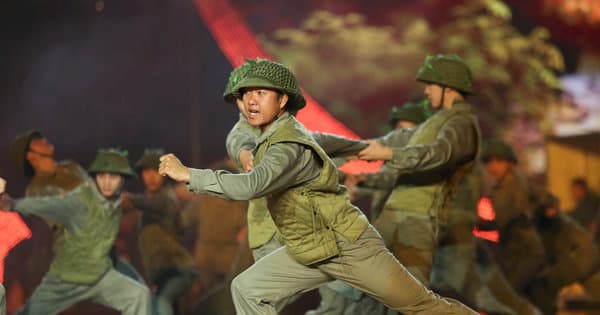
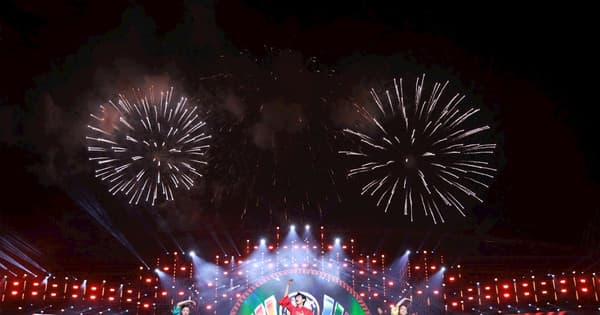
These November days, the area around Hoan Kiem Lake is bustling with a special energy. Amidst familiar streets, heritage displays, handicraft activities, exhibitions, and new artistic experiences are all present. The elderly can hear songs evoking memories of the past, while young people enthusiastically explore historical narratives through images, sounds, and technology. Looking at this picture, what is valuable is not just the festive atmosphere, but the feeling that culture is stepping out of the exhibition space to become a part of life. This is what makes the first Vietnamese Culture Day so profoundly meaningful.

Eighty years ago, at the First National Cultural Conference in 1946, the idea that "Culture must guide the nation" placed culture in a leading position in the nation's development. Today, with the Politburo 's Resolution No. 80-NQ/TW establishing new orientations for the development of Vietnamese culture, that requirement becomes even more concrete: Culture must be preserved, created, transmitted, and enjoyed; it must be present in the quality of life and contribute to the country's competitiveness. General Secretary and President To Lam once affirmed: "It is the enduring vitality of culture that has preserved the vitality of the nation." That vitality is not immutable, but is nurtured through each generation that cherishes its roots and dares to create.
Hanoi is a place where this continuity is clearly visible. This year's 950th anniversary of the Imperial Academy is not only an opportunity to look back at a symbol of scholarship, but also a reminder of the vitality of the spirit of learning, respect for knowledge, and the aspiration for talented individuals. At the same time, the Hanoi Creative Design Festival 2026, themed "Thang Long Ke Nghe," brings traditional crafts, architecture, fine arts, design, and technology closer together. Values passed down within families, guilds, and villages now have the chance to inspire new products, new spaces, and new ways of storytelling. Heritage, therefore, is not only something to be protected, but also a resource that can continue to thrive.

Observing cultural life in recent times, what impresses me most is that many young artists are changing their approach to tradition. "Bac Bling" brings the cultural essence of Kinh Bac into the rhythm of popular music ; Hoang Thuy Linh's "Vo Luong Kiet" continues to experiment with storytelling through images, music, and ethnic cultural materials. In performing arts, "A O Show" shows that bamboo, simple objects, and memories of life can become a theatrical language capable of connecting with audiences in many countries. This is not just about incorporating an ancient motif or melody into a modern work. It's a shift in thinking: finding strength in identity to create something new, rather than treating identity as a template that artists are forced to repeat.
Cinema and theater are also contributing noteworthy voices. "Peach, Pho, and Piano" rediscovers a glimpse of Hanoi amidst the smoke and flames of war; "Red Rain" evokes empathy for the memories and sacrifices of previous generations. Plays exploring history, experiments with traditional Vietnamese theater forms like Cheo and Xam, puppetry, and multimedia theater all demonstrate one thing: the public, especially young people, are not indifferent to national culture. What they await are works with depth, emotion, and the ability to engage in dialogue with contemporary life.

However, cultural vitality cannot be measured solely by a large-scale event or a product that spreads widely on social media. For Hanoi, a more meaningful measure is how many more opportunities people have to access art after the festival; how many more spaces artists have to experiment; how many more opportunities artisans have to pass on their skills; and how many more experiences children have with museums, libraries, theaters, and heritage sites right in their own city. A creative city is not only beautiful during festival seasons, but must also nurture the habit of creating and enjoying culture every day.
Therefore, the next step is to connect the scattered sources of inspiration: connecting heritage sites with schools, artisans with designers, theaters with the public, businesses with young talent, and technology with authentic cultural stories. Hanoi needs more public art spaces, small stages, and open, people-friendly programs; at the same time, it needs mechanisms to protect copyright, encourage investment, and create conditions for cultural products to thrive in the market. Developing the cultural industry is not opposed to preservation. On the contrary, when heritage is respected and creatively developed responsibly, cultural values can continue to be preserved through their own vitality.
Vietnamese Culture Day on November 24th is a beautiful milestone, but what matters more is what remains after that day. Hopefully, from the music by Hoan Kiem Lake, the lights in theaters, the creative spaces in the Old Quarter, to classrooms and residential areas, the love of culture will continue to spread naturally and sustainably. Hanoi, with its thousand-year history, will be even more livable when its heritage is not only admired, but also preserved, created, and enjoyed by its people. And it is from these simple things that Vietnamese culture will gain the strength to go further.