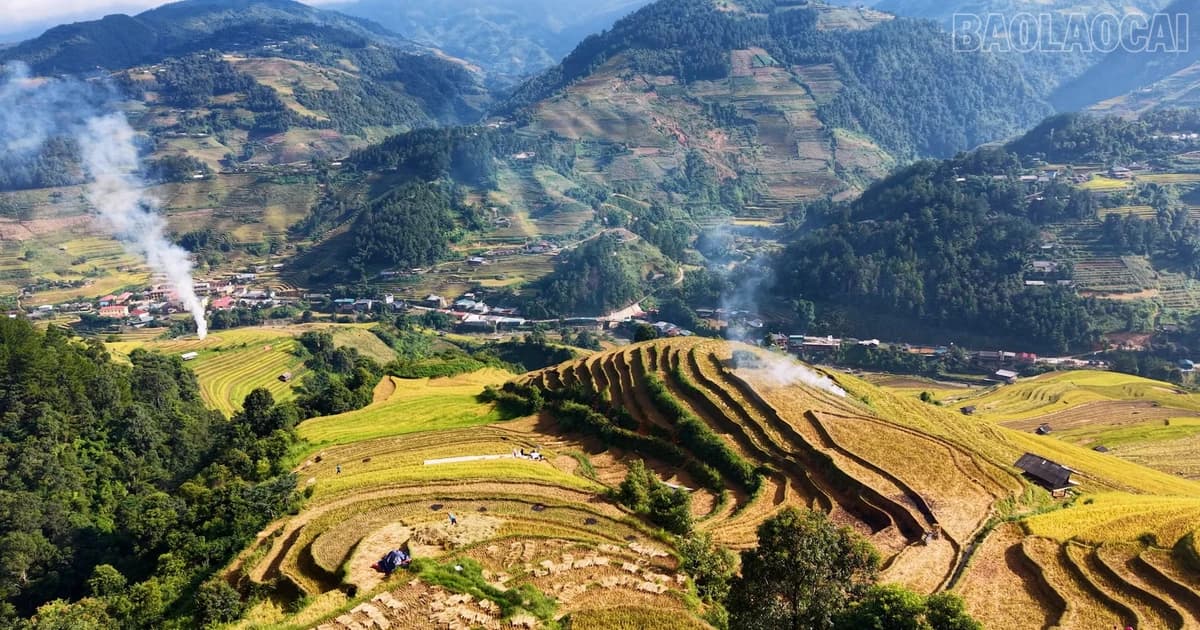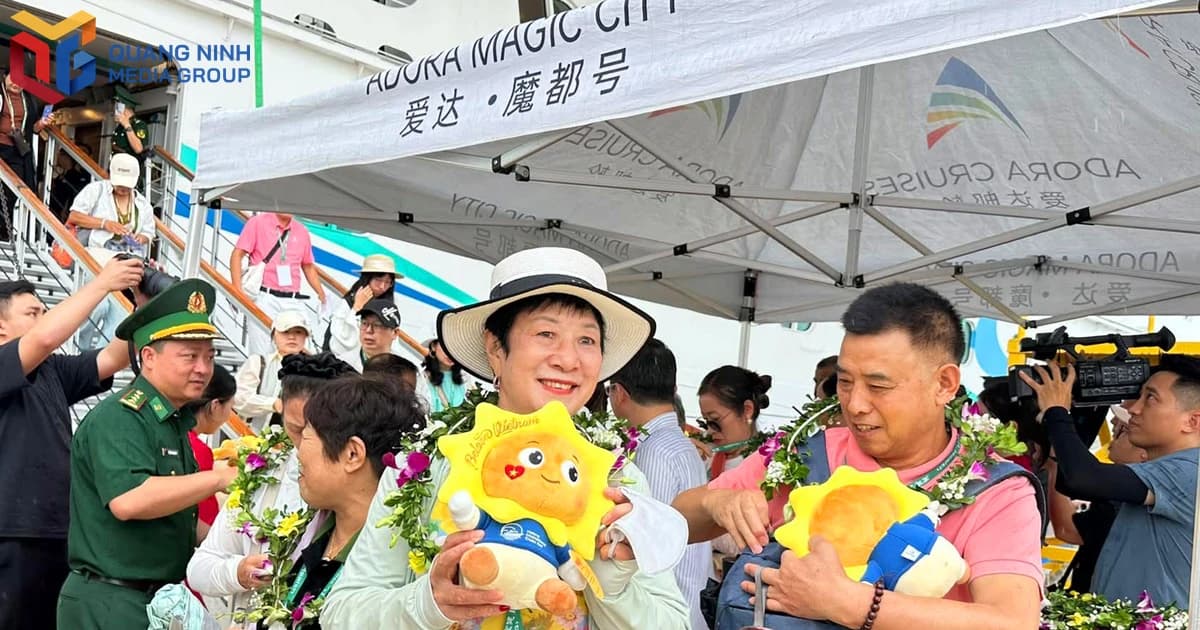


The tourism situation is showing many positive signs.
According to Deputy Minister of Culture, Sports and Tourism Ho An Phong, in the first eight months of 2026, the number of international visitors to Vietnam reached 15.9 million, an increase of 14.5% compared to the same period in 2025 and achieving 63.6% of the previously set target of welcoming 25 million international visitors in 2026.
Domestic tourism reached 113 million visitors, a 6.56% increase compared to the same period last year, achieving 75.3% of the 2026 target of 150 million visitors. Total revenue from tourism reached VND 781 trillion, a 10.04% increase compared to the same period last year, achieving 69.4% of the annual target of VND 1,125 trillion. Ho Chi Minh City, Hanoi , and An Giang were key areas maintaining high growth rates.
Notably, amidst the global tourism industry facing numerous pressures, Vietnam stands out as a rare bright spot, continuing its positive growth momentum. According to the United Nations Tourism Organization, the growth rate of international visitors to Vietnam significantly outperformed the global tourism growth of 0.4% and the Asia-Pacific region's growth of 0.7%. In particular, Vietnam maintained double-digit growth while international visitor numbers to Southeast Asia declined by 1.5%.
Previously, according to the World Economic Forum (WEF), Vietnam's Tourism Development Capacity Index in 2026 reached 4.15 points (a 6.3% increase compared to 2024), ranking 52nd out of 110 economies, a 7-place increase compared to 2024 and an 11-place increase compared to 2019.
The Ministry of Culture, Sports and Tourism has proactively implemented a comprehensive set of activities linked to key markets. In addition, it has improved the quality of campaigns and events, participated in and coordinated the organization of international tourism events, fairs, and exhibitions to promote tourism in key markets.
Cultural and tourism promotion activities on media channels of international partners and localities have also been strengthened. The development of tourism products has been promoted in a direction of innovation, creativity, increased value, and elevated destination status; focusing on developing health and wellness tourism, MICE (Meetings, Incentives, Conferences, and Exhibitions), sports, wellness, and night tourism products.
Local authorities actively participate in programs and activities to promote tourist destinations and products. At the same time, they improve service quality, ensure security and safety, and build a civilized tourism environment.
Regarding digital transformation , the Ministry of Culture, Sports and Tourism continues to implement the connection of tourism industry data with the national population database, deploy electronic identification and authentication, promote cashless payments, and complete the conditions for connecting databases with ministerial-level data integration and sharing platforms. Based on this, the Ministry has issued a Decision to deploy the National Shared Digital Platform for Tourism Management and Business, and is developing a policy for investing in a digital tourism data platform for Vietnam.
In parallel with the above activities, the Ministry of Culture, Sports and Tourism implemented Announcement No. 34/TB-VPCP dated January 20, 2026, of Deputy Prime Minister Pham Thi Thanh Tra , Head of the State Steering Committee on Tourism, following the Steering Committee meeting held on January 13. The Ministry chaired, advised, and submitted to the Politburo Resolution No. 26-NQ/TW on “Developing Vietnamese tourism into a key economic sector in the new era,” and advised the Government to issue Resolution No. 263/NQ-CP on the Action Program to implement Resolution No. 26. In addition, it reviewed the implementation of the 2017 Tourism Law and developed a draft law amending and supplementing several articles of seven laws, including the Tourism Law.
Regarding local affairs, 22 out of 34 provinces and cities have completed the establishment and consolidation of their Tourism Development Steering Committees. State management of tourism continues to be strengthened, especially in the management of travel agencies, tour guides, accommodation establishments, and tourist areas and attractions. Market research, restructuring of the tourist market, and product development are being promoted.
Furthermore, promotional activities are focused on cultural diplomacy, economic diplomacy, investment and trade promotion, and the application of digital technology, big data, and artificial intelligence. Policies facilitating visas, immigration, and automated control at key international airports continue to be implemented, contributing to enhancing the experience and attracting international tourists.
Activate the implementation of Resolution 26-NQ/TW strongly, decisively, synchronously, and comprehensively.
Deputy Prime Minister Pham Thi Thanh Tra, Head of the State Steering Committee on Tourism, assessed: In recent times, tourism has continued to maintain positive growth momentum in many aspects, especially the number of international visitors to Vietnam. With high determination, along with changes in scale, products, space and development conditions, the tourism industry has the basis to strive to achieve the set goals.
Ministries, sectors, and localities, especially key tourism destinations, have also shown clear shifts in awareness and responsibility in promoting product development, linking tourism development with socio-economic development and local planning, particularly in the context of administrative unit restructuring and the implementation of a two-tiered local government model.
However, Deputy Prime Minister Pham Thi Thanh Tra noted that the tourism industry still faces many limitations, difficulties, and shortcomings that do not meet development requirements. Awareness of the role and position of tourism in some areas remains passive, inconsistent, and not commensurate with the requirements for tourism to become a key economic sector.
The value, competitiveness, distinctiveness, differentiation, and regional and international reach of tourism products are still limited. Digital transformation and the application of science and technology in tourism development have not met the requirements. Some mechanisms, policies, and responsibilities for promoting tourism as a key economic sector still need further improvement.
In the fourth quarter of 2026, Deputy Prime Minister Pham Thi Thanh Tra emphasized two key tasks for the tourism sector. Firstly, to accelerate the completion of tourism development targets and tasks for 2026. Secondly, to strongly, decisively, synchronously, and comprehensively activate the implementation of Resolution 26-NQ/TW, creating a foundation and favorable conditions for carrying out tasks from 2027 and subsequent years.
Aiming to propel tourism into a new era, the Ministry of Culture, Sports and Tourism and the entire tourism industry will focus on implementing key tasks and solutions in the coming period: creating breakthroughs in institutions and policies, creating a favorable environment, and focusing on implementing a targeted and measurable digital transformation in tourism.
Simultaneously, we need to develop high-quality tourism products with high spending potential and continue to innovate in promotion, marketing, and market development. Furthermore, we must improve the quality of tourist transportation services; focus on state management and the quality of the tourism environment; and develop human resources, businesses, and the tourism community to meet new development requirements.
According to the United Nations Tourism Organization, the growth rate of international visitors to Vietnam is significantly higher than the 0.4% increase in global tourism and the 0.7% increase in the Asia-Pacific region. Notably, Vietnam maintained double-digit growth while the number of international visitors to Southeast Asia decreased by 1.5%.
Source: https://nhandan.vn/nganh-du-lich-tang-toc-hoan-thanh-muc-tieu-nam-2026-post991678.html