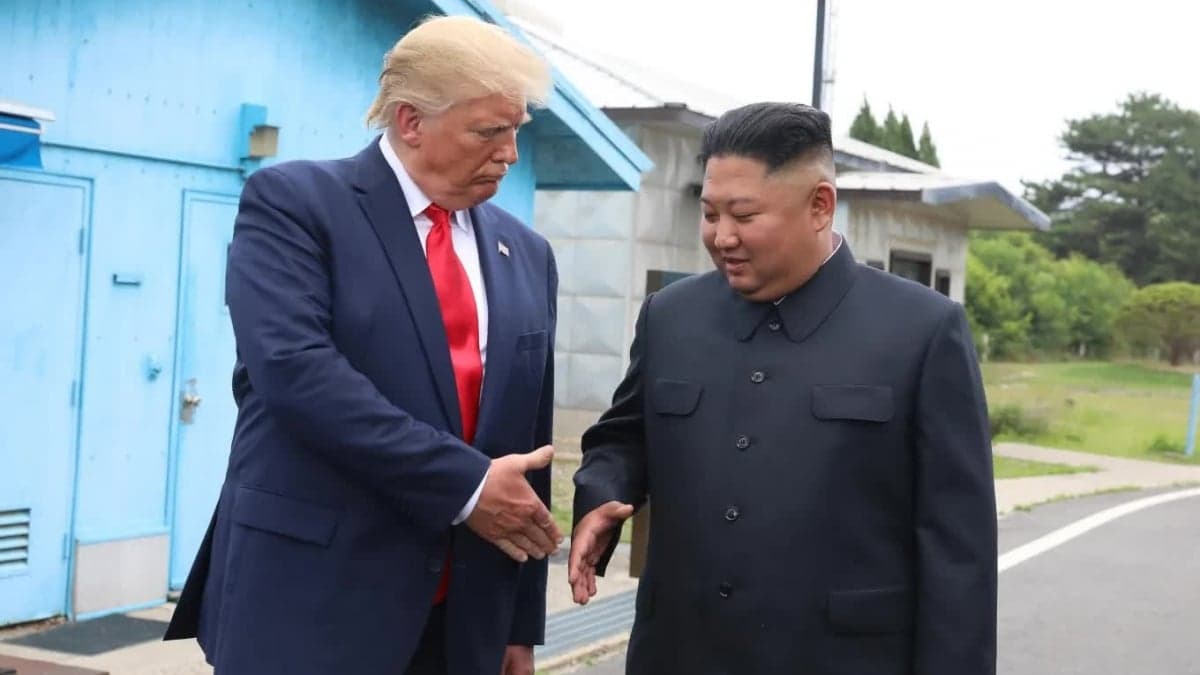


The Trump administration is excluding several major allies from next month's meeting of NATO members, following previous threats to create a list of "good and bad" countries based on their support for Washington's policies.
NATO is showing signs of fragmentation stemming from the US approach.
According to six diplomats familiar with the preparations, the meeting is scheduled to take place in Poland , spearheaded by Pentagon policy chief Elbridge Colby. Essentially, it's a working group to discuss issues related to the future of NATO.
However, the exclusion of some countries has drawn attention, as some of them play a crucial role in Europe's defense capabilities. The UK, France, and the Baltic states are all NATO members and also belong to the group of countries with significant defense spending.
An official from an uninvited allied nation said the country was seeking clarification on the criteria and purpose of the meetings, and added that it had not received much information about the preparations.
These developments are taking place against the backdrop of the Trump administration's continued demands for NATO allies to increase their defense contributions and share greater security responsibilities with the United States.

The chosen allied group
According to Politico , Colby held two similar meetings with representatives from Norway , Sweden, Finland, Poland, Germany, and the Netherlands. These meetings are known as the Bergen Group, named after the Norwegian city of Bergen, where the first meeting took place in June.
A diplomat from one of the participating countries said the group was not aiming to split NATO but rather to develop ideas that could be discussed throughout the alliance.
"This could be the impetus for a transformation of the entire alliance," the diplomat said, while acknowledging that some allies were unhappy about being excluded from the discussions.
According to those familiar with the preparations, Denmark could be the next country invited to join the group, amid a recent agreement between Washington and Copenhagen to expand the US military presence in Greenland.
Following the meeting in Bergen in June, Colby described the participating countries as “NATO allies who are rapidly meeting the spending commitments reached at The Hague, have the scale to contribute, and are ready to get down to practical work.”
At a conference in Washington this month, Colby stressed the goal of “pulling the entire alliance forward,” thereby building a NATO that is “better, stronger, and more sustainable” and helping Europe enhance its military capabilities.
These statements suggest that Washington is pushing for an approach in which allies with defense capabilities and contributions that match U.S. requirements are expected to play a more active role in shaping alliance initiatives.
The pressure to share the burden.
Washington's new approach comes amid repeated calls from President Donald Trump and senior US administration officials for NATO members to increase defense spending. Trump has also repeatedly criticized NATO for its members' level of contribution and argued that the US bears the majority of the costs of providing security for its allies.
Defense Secretary Pete Hegseth has also spoken about the concept of "model allies" and warned that countries that do not support U.S. interests may face consequences.
In April, Politico reported that the White House had been considering a kind of “list” to differentiate allies that met or did not meet President Trump’s priorities, potentially leading to different measures being applied to each country.
The formation of small cooperation groups within NATO is not entirely new. Colby has long been interested in mechanisms for limited-scale discussions among member states. However, the selection of certain countries to participate in these new discussions raises questions about how to ensure cohesion across the alliance.
NATO's Unity Challenge
For those countries not invited, the issue is not simply that they did not attend a particular meeting, but also concerns how decisions about NATO's future are made.
Some invited allies also questioned why countries with significant defense capabilities, such as the UK, were not included in the discussion group, while many nations had already met or exceeded the defense spending targets set by the Trump administration.
One diplomat involved in the Bergen Group suggested that splitting NATO into smaller groups could have consequences for both the US and Europe. Balancing the need to encourage countries with greater capacity to contribute while maintaining overall cohesion will be a key issue facing NATO in the coming period.
Source: https://daibieunhandan.vn/my-dang-chon-nhom-dong-minh-rieng-trong-nato-10432502.html