The Thai Nguyen International Tea Festival 2026 has brought tea culture to a wider space, where tradition meets creativity, and opened up more opportunities to connect Vietnamese tea culture with international friends.

The lush green tea hills create a distinctive landscape of Thai Nguyen.
Preserving the cultural heritage of tea
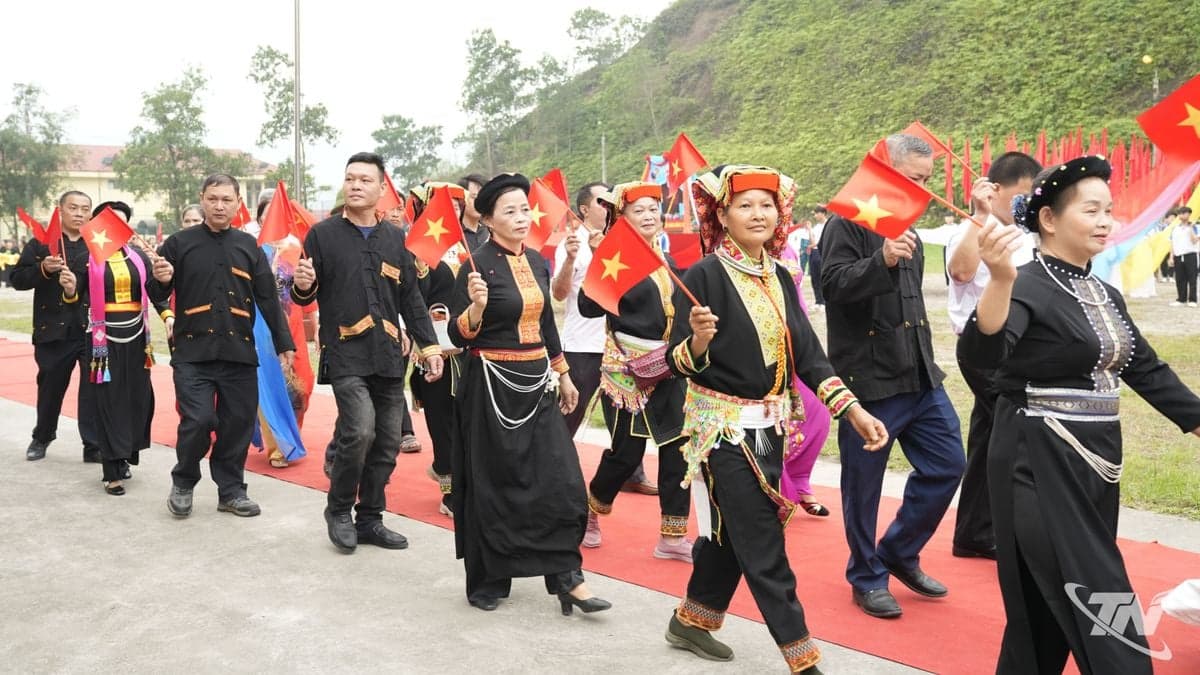
The whistle of the Heritage Train rings out, carrying visitors from Hanoi to the land of the mountain winds. Along this journey, the tea culture of Thai Nguyen is recreated through tea brewing and tasting demonstrations, blended with the Tinh lute, Then singing, the traditional bowl dance, and the sounds of flutes echoing the mountains and forests. Each fragrant cup of tea, each melody, is like a warm greeting, leading visitors closer to the land and people of this tea-producing region.
During the 9 days of the Festival, visitors have the opportunity to explore 5 representative tea-growing regions including Tan Cuong, La Bang, Trai Cai, Khe Coc, and Dong Phuc; directly experience picking, processing, and rolling tea leaves; learn about the art of brewing; and enjoy tea. Each tea-growing region has its own unique character, reflecting the long-standing connection between people and tea plants and the community's identity.
Mrs. Ito Yuki, wife of the Japanese Ambassador to Vietnam, was particularly impressed by the lush green tea hills and the experience of making and tasting Thai Nguyen tea. She found the rich, delicate aroma of the tea to be closely related to Japanese tea culture. This similarity shows that tea has the ability to connect cultures through respect for nature and traditional values.
The festival also opens up new approaches to tea culture. On the pedestrian street in Phan Dinh Phung ward, the tea-related culinary and cultural space attracts a large number of visitors with the participation of more than 30 units, 55 chefs, experts, artisans, and master chefs from Vietnam and abroad.
Over 200 dishes and drinks featuring tea were showcased at 66 stalls. During the 9 days of the event, the area welcomed nearly 300,000 visitors who came to browse, shop, enjoy tea, and sample the cuisine.

International tourists can experience the tea-growing region, learn about the production process, and discover the unique aspects of Thai Nguyen's tea culture.
Tea, traditionally known for its aroma, mild astringency, and sweet aftertaste, has now become an ingredient that creates fragrance, flavor, color, and inspiration for many new recipes. Chefs and food creators are also incorporating stories about the tea-growing region, the characteristics of the ingredients, and the tea-drinking culture into each product.
According to artisan Nguyen Ngoc Tuan ( Ho Chi Minh City): The festival is an opportunity for tea makers to assess product quality, listen to consumer tastes and needs. Preserving tradition does not mean maintaining the old methods, but rather innovating and creating so that tea can be enjoyed in more ways, applied in modern beverages and cuisine, and more accessible to younger customers.
That spirit was also demonstrated in the World Master Tea Vietnam 2026 competition. From over 100 applicants, 20 outstanding contestants advanced to compete in 6 rounds, 9 challenges, and were judged by 14 judges.
Many contestants are very young, including some who are only 18 or 20 years old. Artisan Hoang Anh Suong, a member of the judging panel, was impressed by the energy and enthusiasm of the younger generation. The participation of young people shows that tea culture is finding more approaches suitable for contemporary life, creating conditions for traditional values to continue to be practiced and spread.
Expanding the economic value of tea plants.
For tea culture to become a driving force for development, the values it celebrates need to be transformed into concrete products, brands, services, and livelihoods for the community. This was also a key topic discussed at the 2026 International Tea Economic Forum, which was attended by approximately 240 domestic and international delegates.
Delegates focused on discussing quality, technology, deep processing, brand building, raw material area development, and market expansion. Notably, eight memoranda of understanding and cooperation agreements were signed between domestic and international businesses and organizations, opening up opportunities for cooperation in deep processing investment, technology transfer, product development, production linkages, and trade promotion in Japan, South Korea, China, and North America.

The Thai Nguyen International Tea Festival 2026 contributes to honoring the cultural value of tea, promoting the identity of the tea-growing region, and expanding opportunities for international connection and cooperation.
Professor Ohashi Tetsuo, a senior expert in the Japanese tea industry, emphasized the need to connect production, culture, tourism, and trade; build regional brands, establish quality standards, and promote the role of the community.
Sharing the same perspective on innovative development thinking, Steve Bui, Chairman of the Vietnam-China Business Council, believes that the tea industry should not only focus on selling tea leaves but also look more broadly at the ecosystem surrounding the tea plant.
These insights show that the value of tea lies not only in production volume or raw material prices but also in its ability to connect multiple sectors. A tea-growing region can simultaneously be a safe agricultural production area, a space for preserving folk knowledge, an ecotourism destination, and a place for organizing cultural experiences. A tea product possesses both commercial value and embodies the story of the region's history, people, and identity.
Thai Nguyen currently has nearly 22,600 hectares of tea plantations, with an estimated fresh tea leaf production of over 278,000 tons per year in 2026. This is a significant advantage for developing the tea industry towards multi-value production.
Along with the area of tea production adhering to VietGAP and organic standards, promoting deep processing, diversifying products, ensuring transparency of origin, and building supply chains will expand market access, enhance product value, and increase income for tea growers.
The Thai Nguyen International Tea Festival 2026 has concluded, but the story of tea culture continues in each tea-growing region, each product, and each production and business activity. The value of the event lies in opening up new avenues, preserving knowledge of tea cultivation and processing, spreading the art of tea appreciation, and giving tea products more opportunities to access the international market.
On this journey, preserving identity and innovating development methods will be two interconnected factors, enabling Thai Nguyen tea to reach further and affirm its position on the world tea map.