
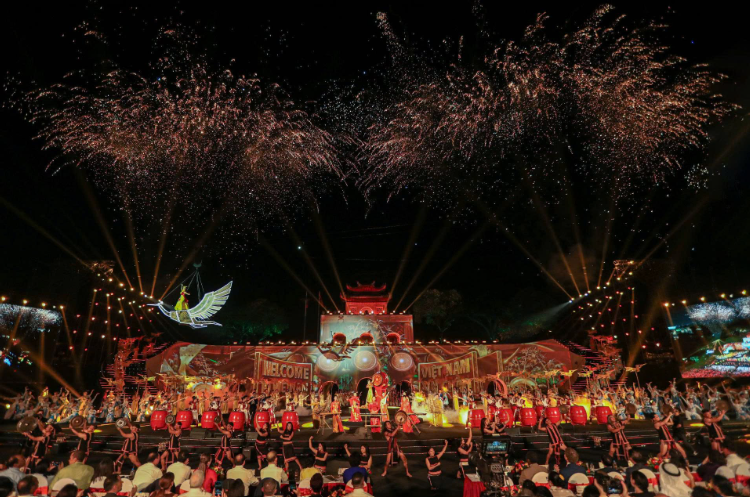
From October 1st to 4th, 2026, the second World Culture Festival in Hanoi, themed “Gathering Heritage - Shaping the Future,” took place at the Thang Long Imperial Citadel National Special Historical Site .
The festival, jointly organized by the Ministry of Culture, Sports and Tourism, the Ministry of Foreign Affairs , and the Hanoi People's Committee, brought together representatives from 50 countries and international organizations . Notably, the program, taking place in the year commemorating the 50th anniversary of Vietnam's membership in UNESCO , further highlighted the message about the role of culture in connecting people, promoting understanding, respecting diversity, and working towards peace and sustainable development.
From the depth of heritage to the rhythm of contemporary life.
The series of activities kicked off with the Opening Night "Gathering of Heritage - Shaping the Future" on the evening of October 1st. On the stage of Thang Long Imperial Citadel, the artistic journey took the audience from the traditional cultural values of Vietnam's 54 ethnic groups to a space for international cultural exchange.
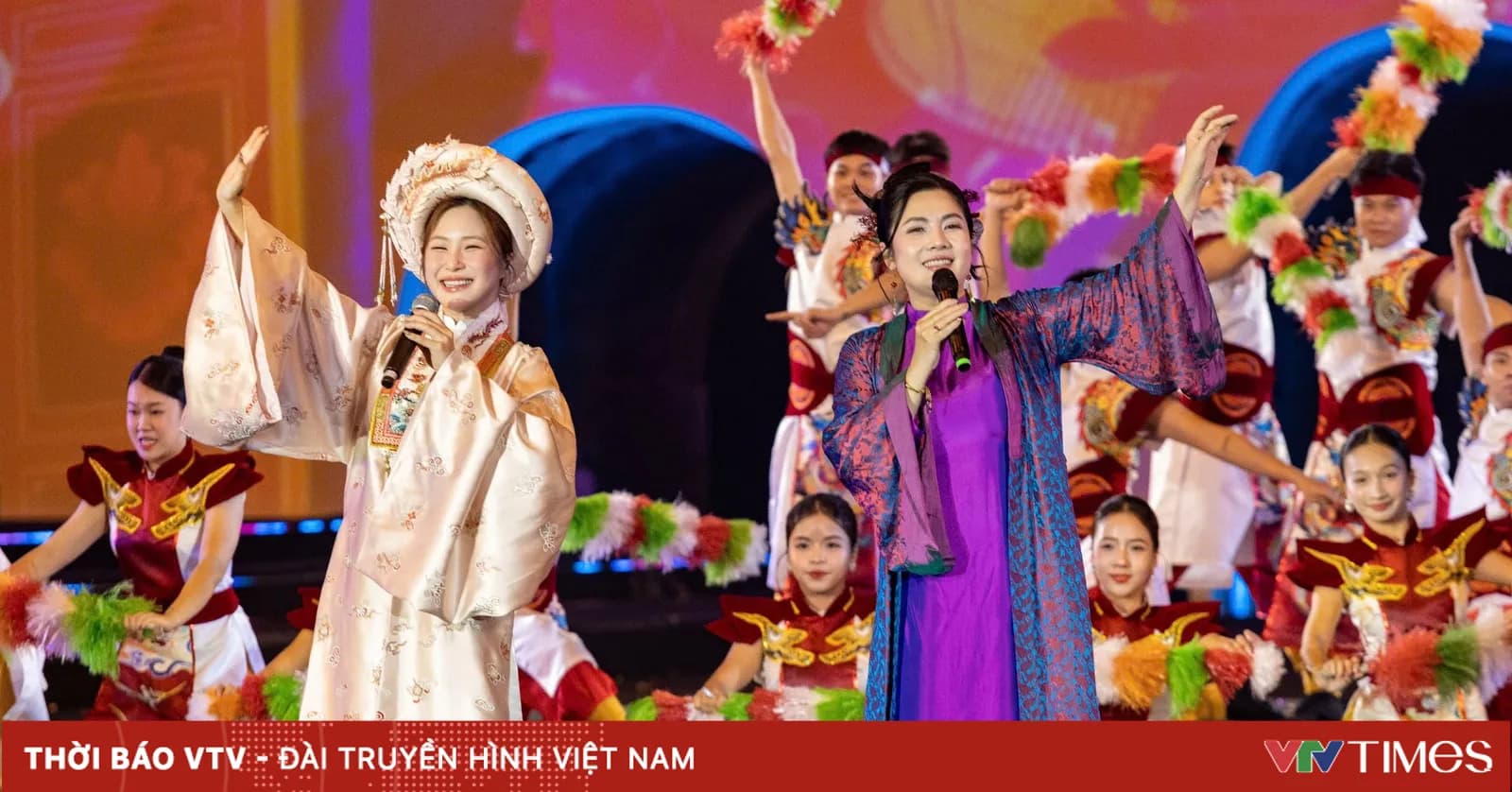
Folk melodies from all three regions of Vietnam, Hue Royal Court Music, Quan Ho folk songs from Bac Ninh, and cultural influences from various regions are connected with contemporary music , Rap, Hip-hop, and EDM through the participation of many Vietnamese artists. Alongside these, international art troupes bring their own unique colors, creating a multifaceted and vibrant cultural tapestry.
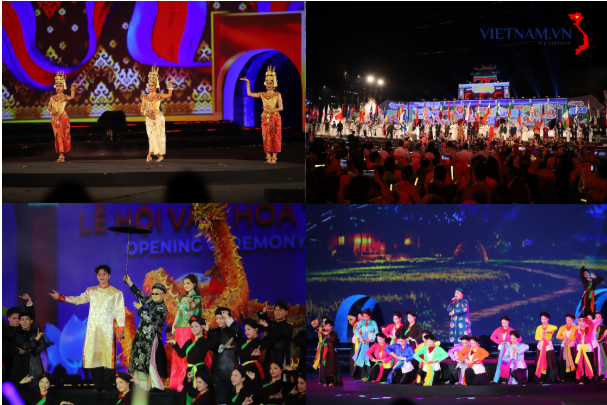
The art program took place during the opening night (Photo: Viet Hung/ MCST)
A notable aspect of the festival is its approach to heritage, which goes beyond mere performance and aims to bring heritage closer to the public, especially the younger generation. Traditional elements are revitalized with modern artistic language, demonstrating that heritage is not a static value of the past, but rather capable of adapting, continuing, and accompanying contemporary life.
Culture becomes a destination for tourists.
The festival's appeal stems not only from its artistic performances but also from the system of cultural experience spaces organized throughout the four days.
45 cultural spaces, 35 food stalls, a film program featuring 20 countries, fashion spaces from 15 countries, and 19 international art troupes created a rich cultural tapestry, offering a wide range of experiences for the public.
Beyond sightseeing, tourists also have the opportunity to directly experience cultural values through music, cuisine , traditional costumes, films, and cultural exchange activities. Through this, culture becomes an integral part of the travel experience, contributing to the creation of lasting memories of Hanoi and Vietnam for international visitors.
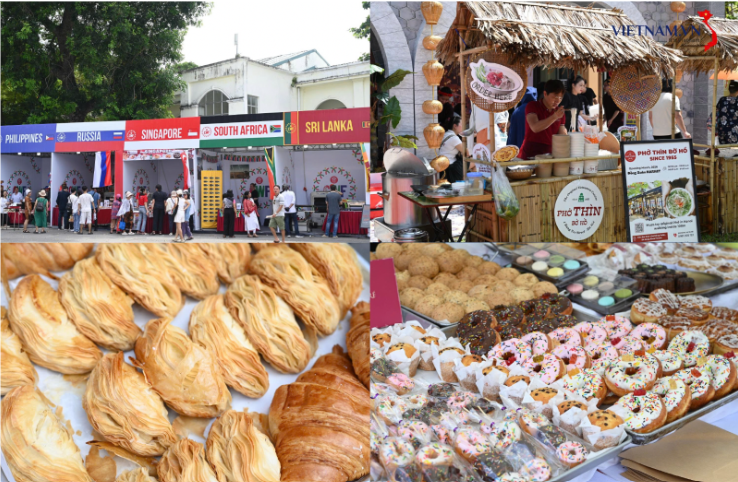
35 food stalls from countries around the world .
Expanding the space for cultural exchange and connection.
As part of the festival, the tour and experience program at the Vietnam Ethnic Culture and Tourism Village on October 2nd brought international delegates closer to the cultural life of Vietnam's ethnic communities. Here, delegates learned about customs, traditions, traditional crafts, enjoyed folk art and cuisine, and interacted directly with the people of these ethnic groups.
One of the highlights that attracted public attention was the "Colors of Five Continents" street parade held on October 3rd. With the participation of 15 international art troupes along with Vietnamese artisans and artists, the Ho Hoan Kiem pedestrian street area became an open cultural stage.
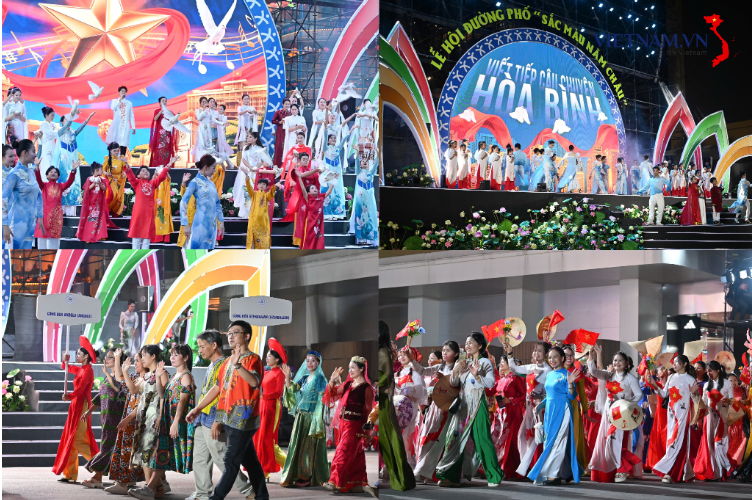
The art program and street parade "Colors of Five Continents" took place on the Ho Hoan Kiem pedestrian street.
Traditional costumes, music, dances, and performing arts from many countries create a colorful encounter between cultures. From the stage to the streets, from artists to the public, the distance between performers and audiences is narrowed, creating a natural and open space for interaction.
When heritage becomes a common language
On October 2nd and 3rd, the "Concert of Five Continents" program continued to expand the space for musical exchange between international artists and the Vietnamese public.
Artists from various regions of the world showcase the unique musical forms, instruments, and cultural characteristics of each country. Differences in language, geography, and traditions are connected through music—a language that needs no translation.
Closing one chapter, opening new connections.
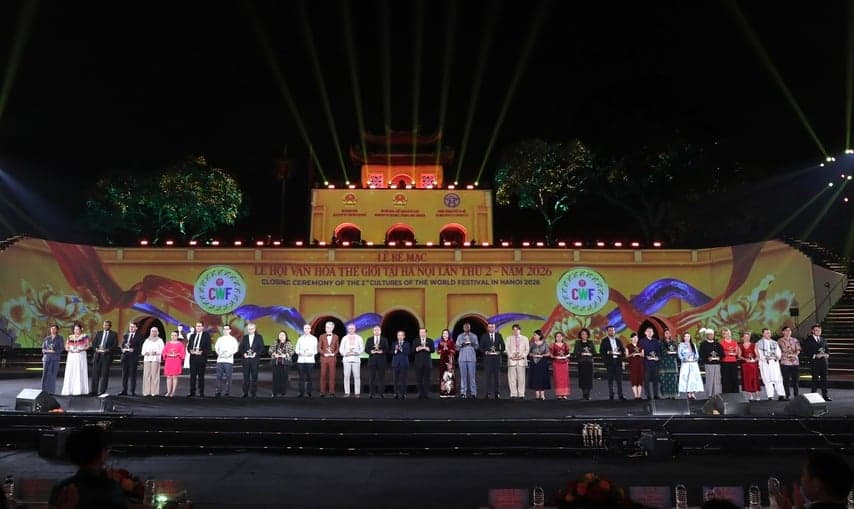
On the evening of October 4th, the closing ceremony of "Colors Converge - Hand in Hand Towards the Future" concluded the four-day festival with emotionally rich artistic performances.
If the opening ceremony opened a journey from origins to the future, the closing night was a moment when cultural values converged. The song "Hand in Hand," featuring Vietnamese and international artists, became the quintessential image of the festival's message: culture is not only a place where each nation affirms its identity, but also a bridge for nations to understand, respect, and move towards the future together.
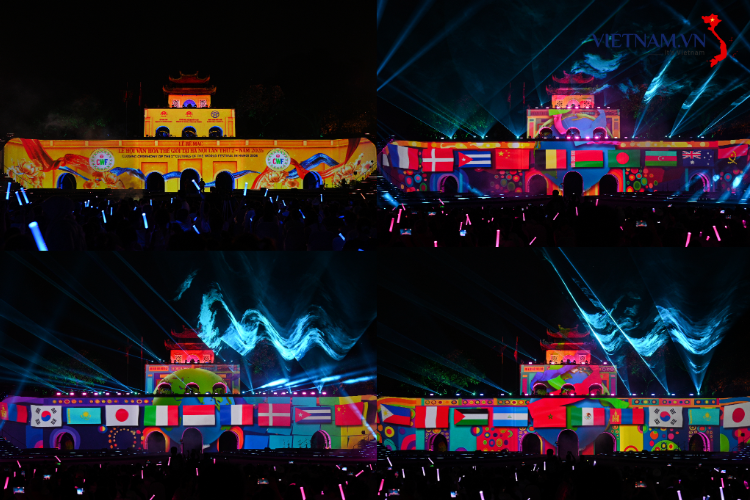
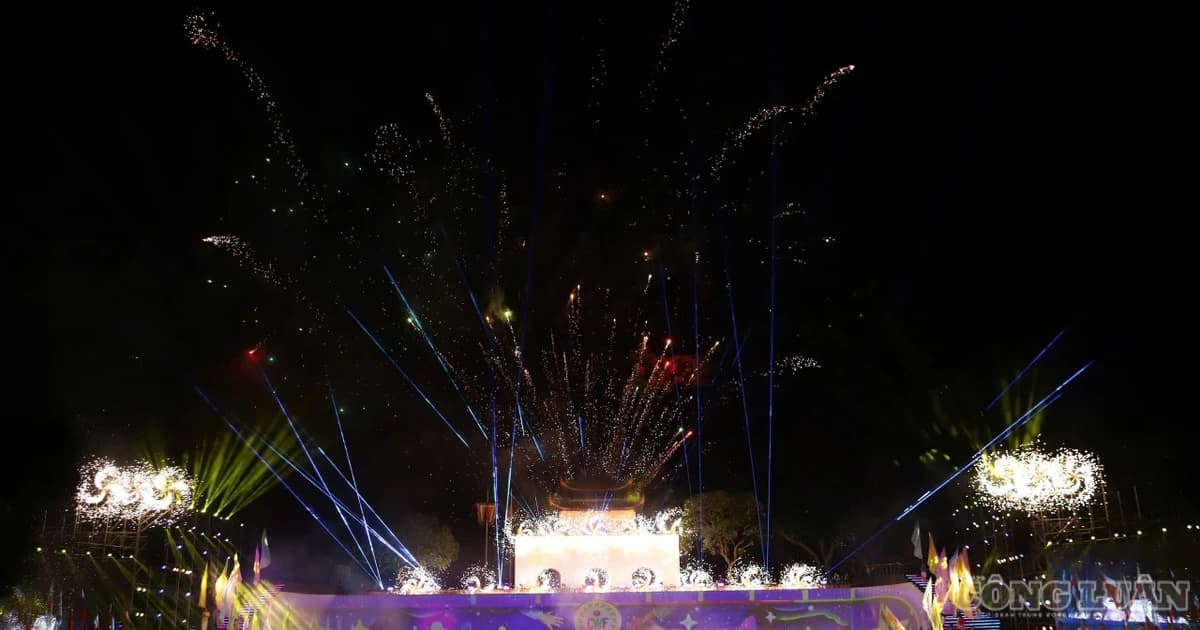
A 3D mapping performance during the closing night of the festival.
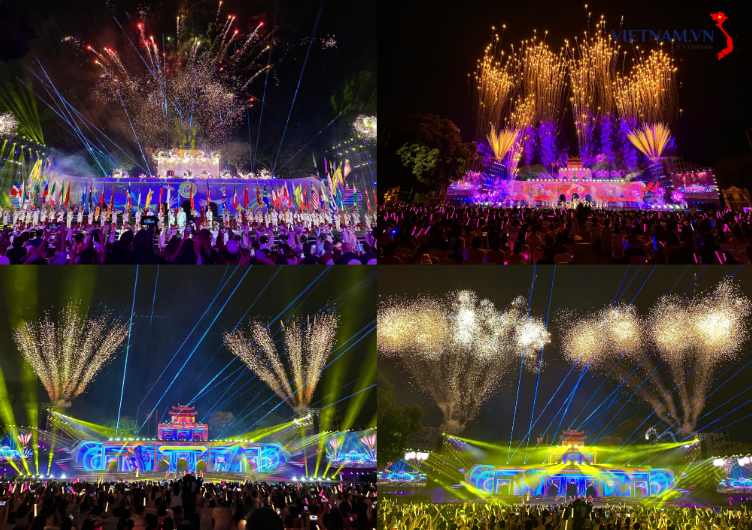
A spectacular fireworks display brought the 2026 World Cultural Festival to a close.
After four days, the second World Cultural Festival in Hanoi has affirmed its status as an international-scale cultural event, while also creating another attractive cultural meeting point in the life of the capital city.
The success of a festival is measured not only by its scale, the number of participating countries, or its outstanding artistic programs, but also by its ability to bring culture closer to the public, create experiences for tourists, and contribute to spreading the image of a Vietnam rich in identity, open, integrated, and proactively connecting with the world .
As the four-day festival concludes, the sounds and colors may subside, but the message "Gathering Heritage - Shaping the Future" continues to resonate, affirming that culture is one of the most enduring bridges connecting people, nations, and countries.
Vietnam.vn