
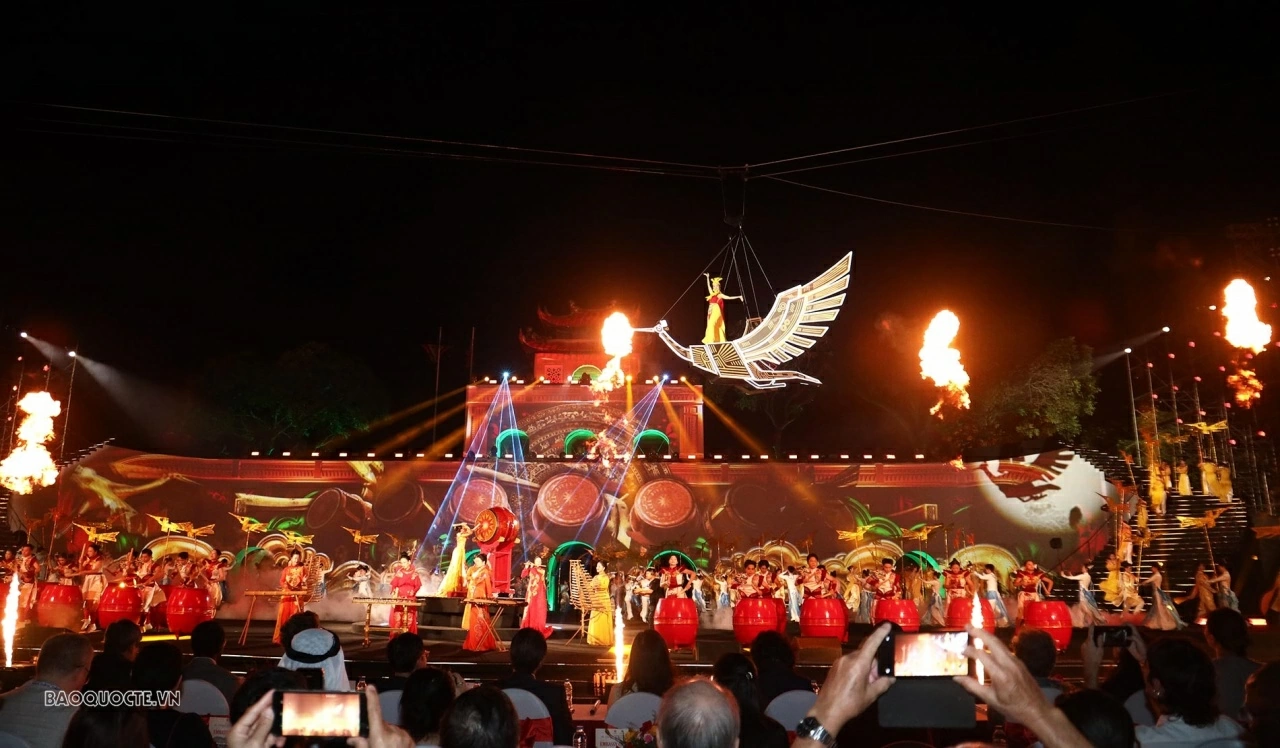
Taking place from October 1-4 at the Thang Long Imperial Citadel with the theme "Gathering Heritage - Shaping the Future," the second World Cultural Festival in Hanoi brought together representatives from 50 countries, with 45 cultural spaces, 19 international art troupes, 35 food stalls, and a program showcasing works from nearly 20 film industries.
|
The second World Cultural Festival in Hanoi brought together representatives from 50 countries. (Photo: Thanh Long) |
A meeting place for cultures
In recent times, Thang Long Imperial Citadel has become a meeting place, where different cultural values coexist and find points of intersection.
From its early days, the festival has transformed the appearance of the Thang Long Imperial Citadel heritage site. Cultural colors from many countries are present alongside the historical values of the ancient capital, creating a meeting point between the past and the present, between Vietnamese culture and the world.
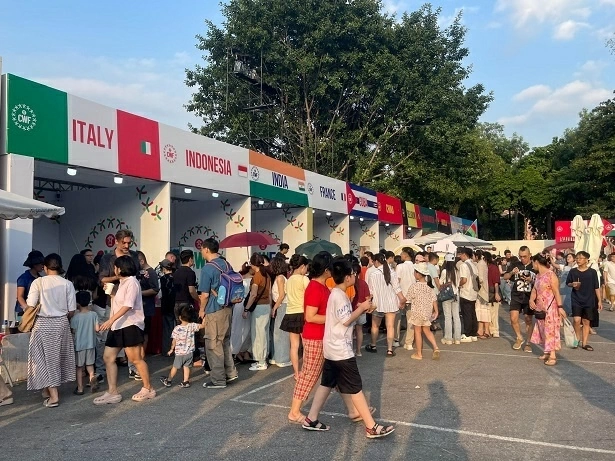
In cultural spaces, the public can learn about the customs, art, and distinctive products of various countries. Food stalls offer a more intimate approach to culture, as the story of a country and its people is told through food, cooking methods, and direct experiences.
|
The "Colors of Five Continents" street festival at the Hoan Kiem Lake pedestrian area. (Photo: Tran Huan) |
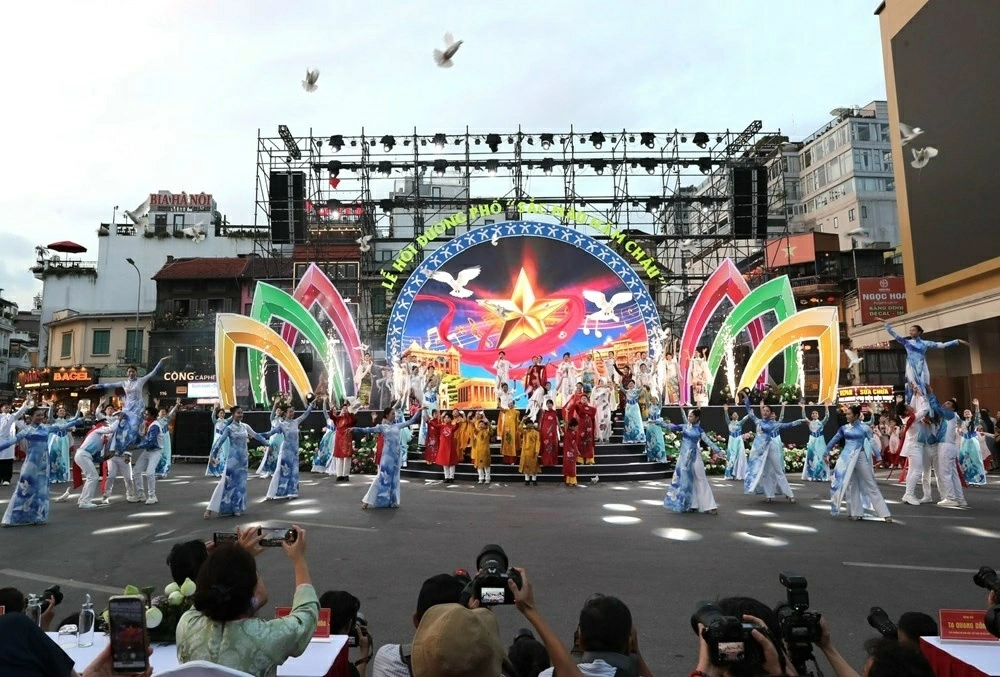
The arts programs continue to expand the space for exchange. Here, 19 international art troupes, along with Vietnamese artists, bring together diverse sounds, dances, and expressions. Language differences seem to lessen as art becomes a means for the public to meet and share.
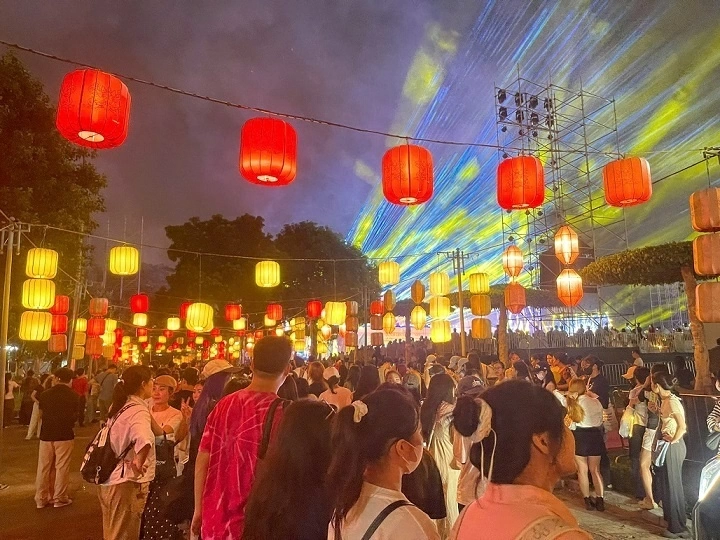
That atmosphere wasn't limited to the Imperial Citadel. Parades on the pedestrian streets brought the vibrant cultures of various countries closer to locals and tourists.
The opening and closing ceremonies were broadcast live on VTV, while Meta's partnership helped bring the festival's activities and stories closer to the public on digital platforms. By combining in-person and online communication methods, the Hanoi Festival transcended the boundaries of a physical event, connecting with a large domestic and international audience.
Seeking new values
The theme of this year's festival, "Convergence of Heritage – Shaping the Future," also raises a larger question about how culture is present in contemporary life. That is, how can heritage not only be preserved but also continue to live, be innovated, and create new values?
Speaking at the closing ceremony on the evening of October 4th, Minister of Culture, Sports and Tourism Lam Thi Phuong Thanh emphasized the significance of the festival in the year Vietnam celebrates its 50th anniversary of joining UNESCO. From the early days of joining UNESCO amidst many national difficulties, Vietnam has gradually become an active, responsible member, increasingly proactively contributing initiatives to common issues of the international community.
|
Minister of Culture, Sports and Tourism Lam Thi Phuong Thanh speaks at the closing ceremony. (Photo: Tran Dung) |
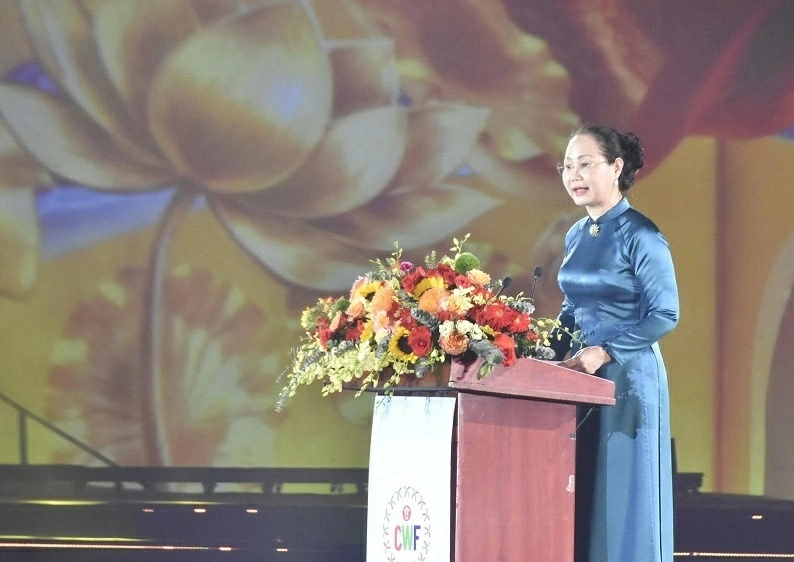
According to the Minister, for Vietnam, culture is both the spiritual foundation of society and a goal, driving force, and resource for national development. Therefore, preserving heritage is not just about retaining values from the past, but also about ensuring that heritage continues to be present in contemporary life, being creatively developed, generating new values, and passing them on to future generations.
Looking at the festival, this approach is quite evident. Heritage, performing arts, film, fashion, cuisine, tourism, and new creative forms all appear in one space. These seemingly disparate fields can complement each other, creating more diverse cultural experiences for the public.
This is also a concrete way to view the role of cultural industries – where identity, heritage, and creative capacity can be transformed into new products, experiences, and values, contributing to national endogenous strength and soft power.
|
The booths at the World Culture Festival in Hanoi attracted a large number of visitors. (Photo: Tran Dung) |
Director of the UNESCO World Heritage Centre Lazare Eloundou Assomo emphasized that the festival's theme reflects UNESCO's belief in the role of cultural diversity in promoting creativity, dialogue, and understanding.
In a world facing numerous upheavals, conflicts, and the impacts of climate change, the presence of over 50 countries at the Festival, sharing cultural values and the joy of peace, holds practical significance for the mission of building peace.
He argued that 50 years of cooperation between Vietnam and UNESCO demonstrates the ability of culture and heritage to connect communities, bridge gaps, and build trust; and affirmed that cultural festivals, through music, art, and stories associated with heritage, can create direct experiences, promote dialogue, and help the international community better understand the value of communities preserving heritage.
|
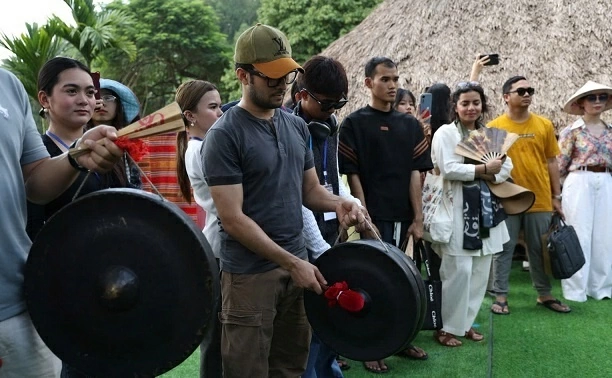
International delegates participate in activities to experience Vietnamese ethnic culture. (Source: Organizing Committee) |
Greetings from Hanoi, and the journey continues.
If the festival days are an opportunity for cultures to meet, then the closing night is the moment when those encounters are retold through the language of art. The program consists of two parts, "Colors Meet" and "Greetings from Vietnam," featuring performances by international art troupes and Vietnamese artists.
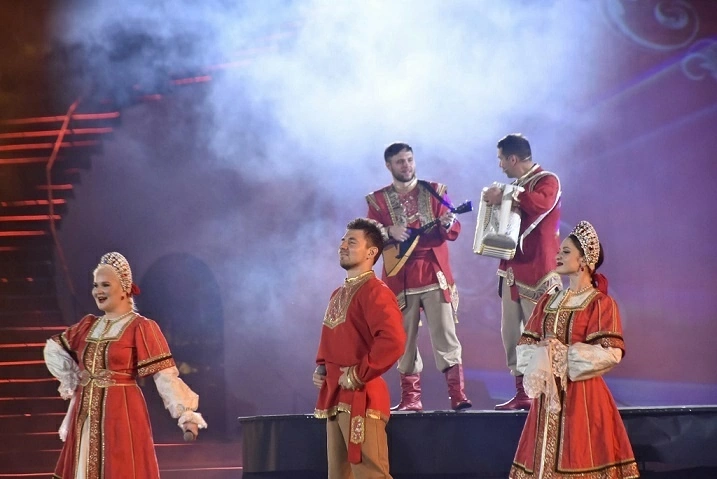
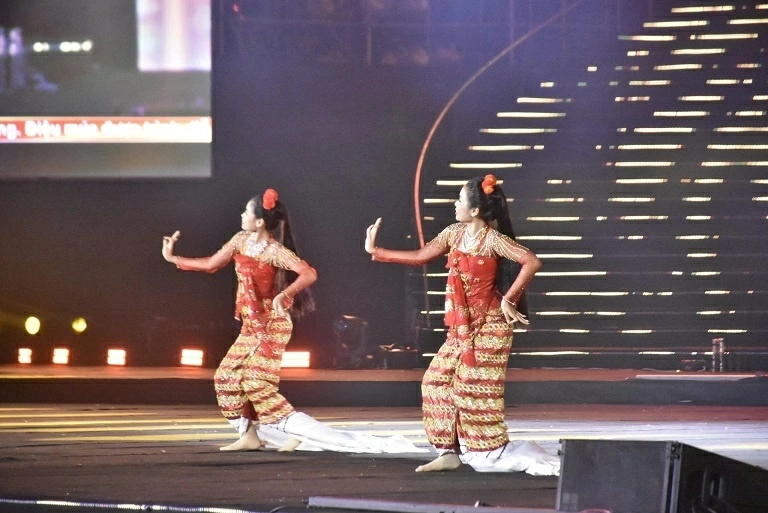
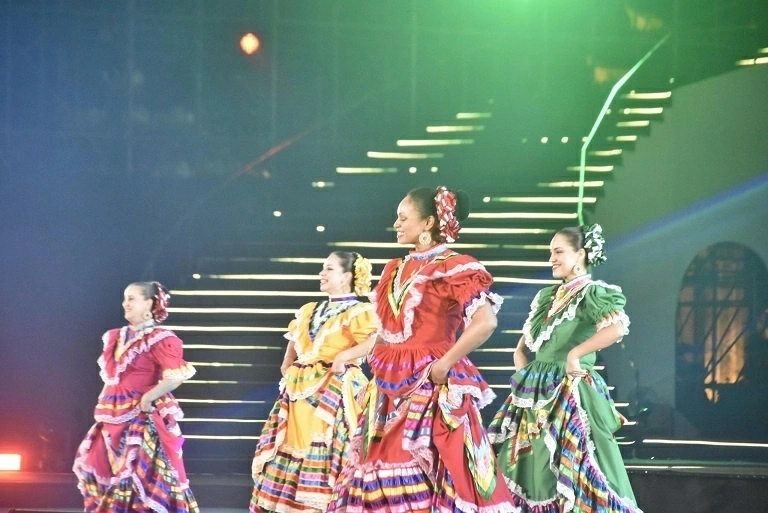
“Colors Meet” takes the audience on a journey through the sounds and dances of Iran, the Russian Federation, Mexico, Myanmar, and Belgium, along with the youthful energy of Vietnamese artists. Performances from diverse languages and traditions come together on one stage, creating a varied yet unified artistic tapestry of openness, respect, and sharing.
|
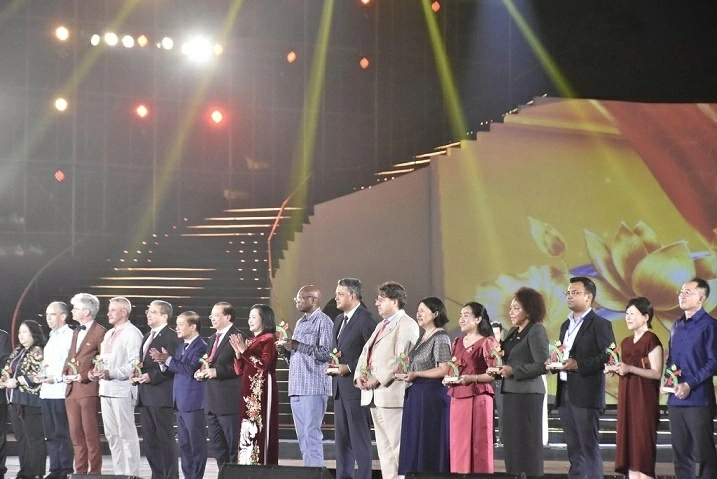
The organizing committee presented commemorative plaques of the Festival to the international delegations. (Photo: Tran Dung) |
Following the international colors is "Greetings from Vietnam," an artistic journey from its roots, through heritage regions, to contemporary Vietnam.
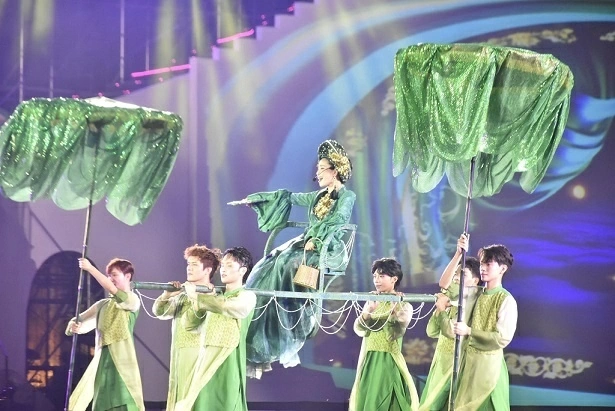
Traditional music and art from various regions are presented in a new way, conveying to international friends the image of a Vietnam rich in identity but not closed off, always seeking new ways to engage in dialogue with the world.
At the closing ceremony, the Organizing Committee presented commemorative plaques of the Festival to international delegations as a token of gratitude to the artists, artisans, and friends who brought their cultural identities to Hanoi.
|
|
|
Cultural performances from various countries were presented at the closing ceremony of the second World Cultural Festival in Hanoi. (Photo: Tran Dung) |
|
|
The dazzling atmosphere of the second World Culture Festival in Hanoi. (Photo: Tran Dung) |
In the coming period, the Ministry of Culture, Sports and Tourism will continue to coordinate with the Ministry of Foreign Affairs, the city of Hanoi, UNESCO, diplomatic missions and international partners to gradually build the World Cultural Festival in Hanoi into a prestigious international cultural exchange and cooperation platform, organized annually, with its own unique identity and producing concrete cooperation results year after year.
This goal also contributes to making Hanoi a meeting point of cultures, where initiatives on heritage, creativity, cultural industries, and sustainable development are shared, discussed, and used to build common values.
Source: https://baoquocte.vn/le-hoi-van-hoa-the-gioi-tai-ha-noi-mo-duong-cho-nhung-ket-noi-moi-452133.html