
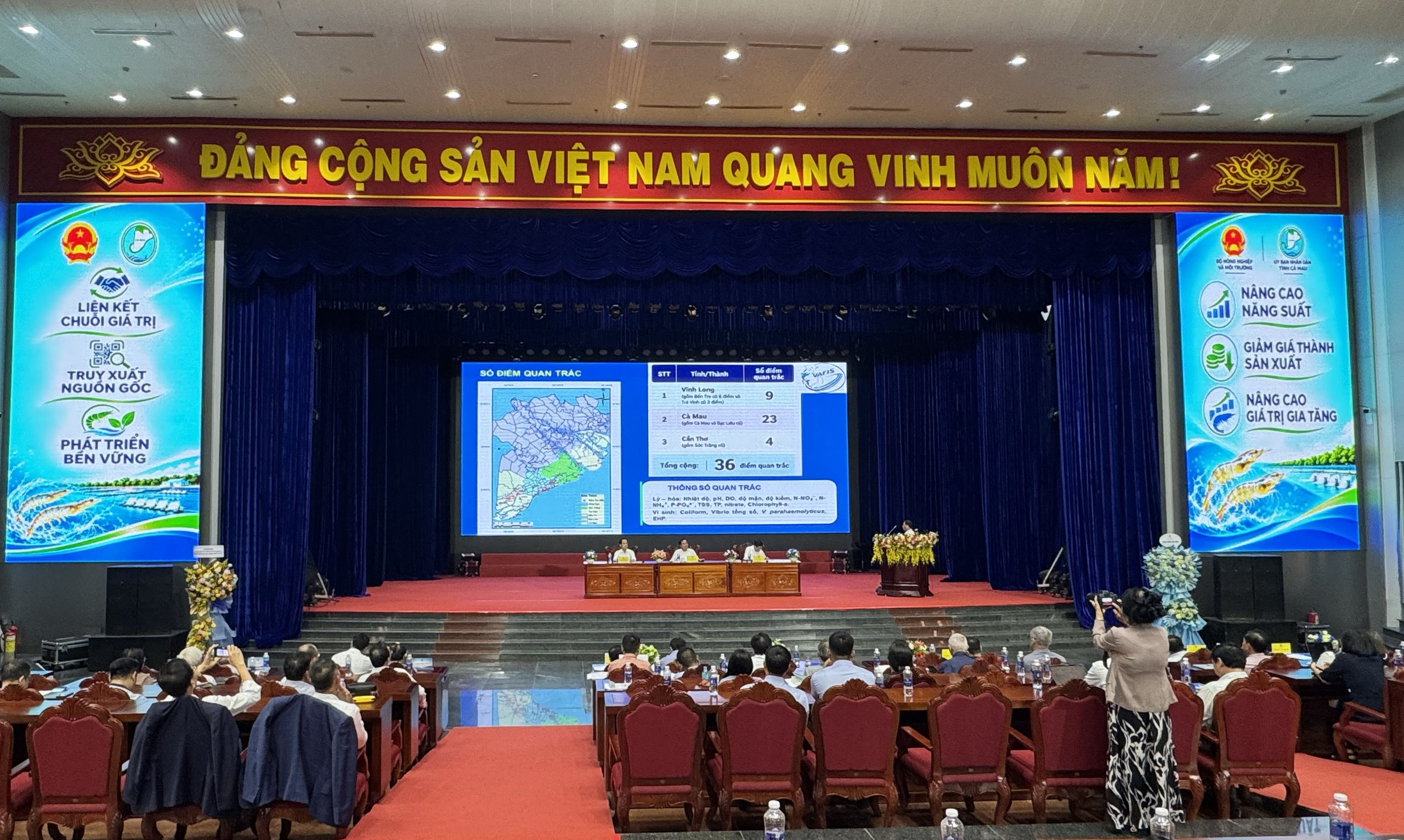
The conference was organized by the Ministry of Agriculture and Environment in coordination with the People's Committee of Ca Mau province - Photo: TUYET HANH
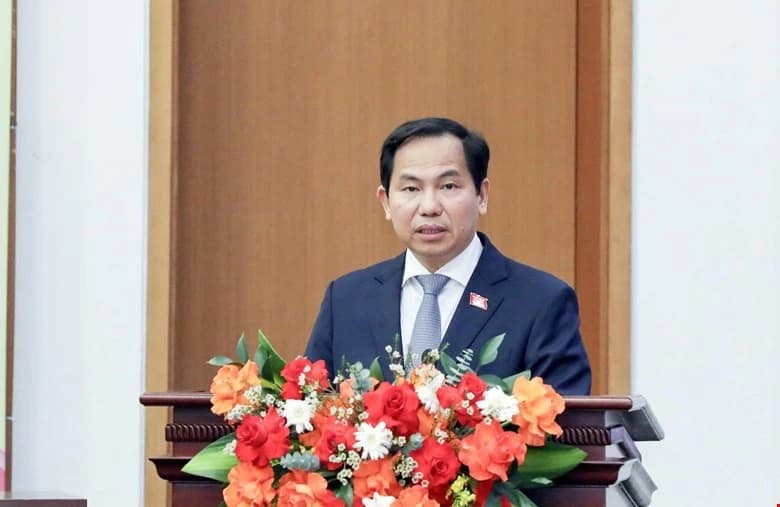
Deputy Minister of Agriculture and Environment Vo Van Hung raised this issue in his opening remarks at the conference summarizing the development of the brackish water shrimp industry in 2026 and the production plan for 2027, which took place on the afternoon of November 21st.
Clarifying the reasons why shrimp farming costs are high.
According to Mr. Hung, in 2026, despite facing many difficulties, the shrimp industry will still maintain positive growth momentum.
The production of brackish water shrimp reached approximately 1.47 million tons, exceeding the annual plan. Shrimp export revenue in the first 10 months is estimated at 4.22 billion USD, an increase of 9% compared to the same period last year.
These results reflect the tremendous efforts of local authorities, businesses, scientists , and especially shrimp farmers.
However, behind these growth results, the Vietnamese shrimp industry is still facing many bottlenecks, including high production costs, unstable farming success rates, and significant disparities in economic efficiency between different farming regions.
Looking ahead to 2027 and the period up to 2030, Mr. Hung believes that shrimp industry growth cannot rely solely on expanding acreage or increasing production at all costs, but must be based on productivity, quality, efficiency, science and technology, and added value.
The important thing is not just how much shrimp is produced, but whether the cost decreases, whether farmers earn better incomes, whether businesses improve their competitiveness, and whether Vietnamese shrimp products can establish a strong position in the international market. These should be the true measures of growth and sustainable development.
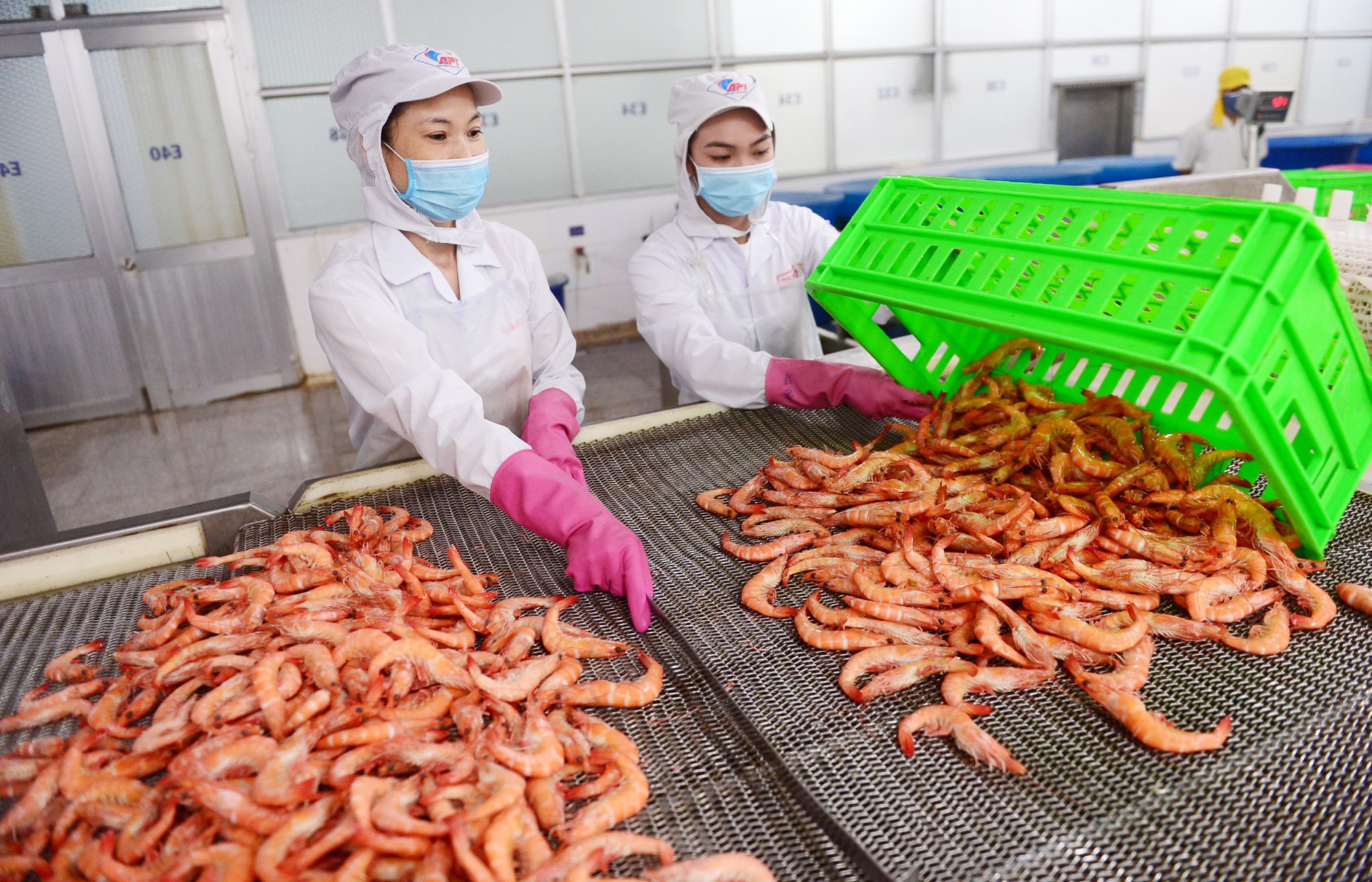
Processing shrimp for export at a company in Ho Chi Minh City - Photo: QUANG DINH
Therefore, Mr. Hung suggested that the conference focus on a thorough assessment of growth quality, clarifying the reasons why production costs remain high and the success rate of farming is not yet stable.
It is necessary to identify breakthroughs in breeding, science and technology, and aquaculture infrastructure to improve breeding quality, farming success rates, productivity, and reduce costs.
Overcome the problem of small-scale, scattered production, and establish stable, managed, traceable raw material areas that meet market demands.
At the same time, we need to find solutions to increase the added value, competitiveness, and positioning of Vietnamese shrimp products in the global market.
The bottleneck lies in the ability to effectively organize and manage the entire value chain.
According to the Department of Fisheries and Aquaculture Inspection, the results of brackish water shrimp industry development in 2026 show a 4.5% increase in production compared to 2025, while the farming area only increases by 0.6%, reflecting the trend of increasing average productivity per production area.
However, the available data is insufficient to determine the average profit level in 2026 or to confirm that farmers' income will increase proportionally with production.
The agency believes that the shrimp industry has established a relatively complete production system, from breeding, feed, and input materials to commercial farming, processing, and export.
However, the processes lack synchronized coordination, and the quality of raw materials, production costs, disease management, traceability, and profit sharing are not uniformly controlled throughout the entire chain.
"The shrimp industry is facing systemic bottlenecks that directly affect production efficiency, the ability to meet market demands, and the competitiveness of Vietnamese shrimp."
"In particular, the biggest bottleneck in the development of the shrimp industry today is not simply a lack of production capacity, but the ability to effectively organize and manage the entire value chain," the Department stated .
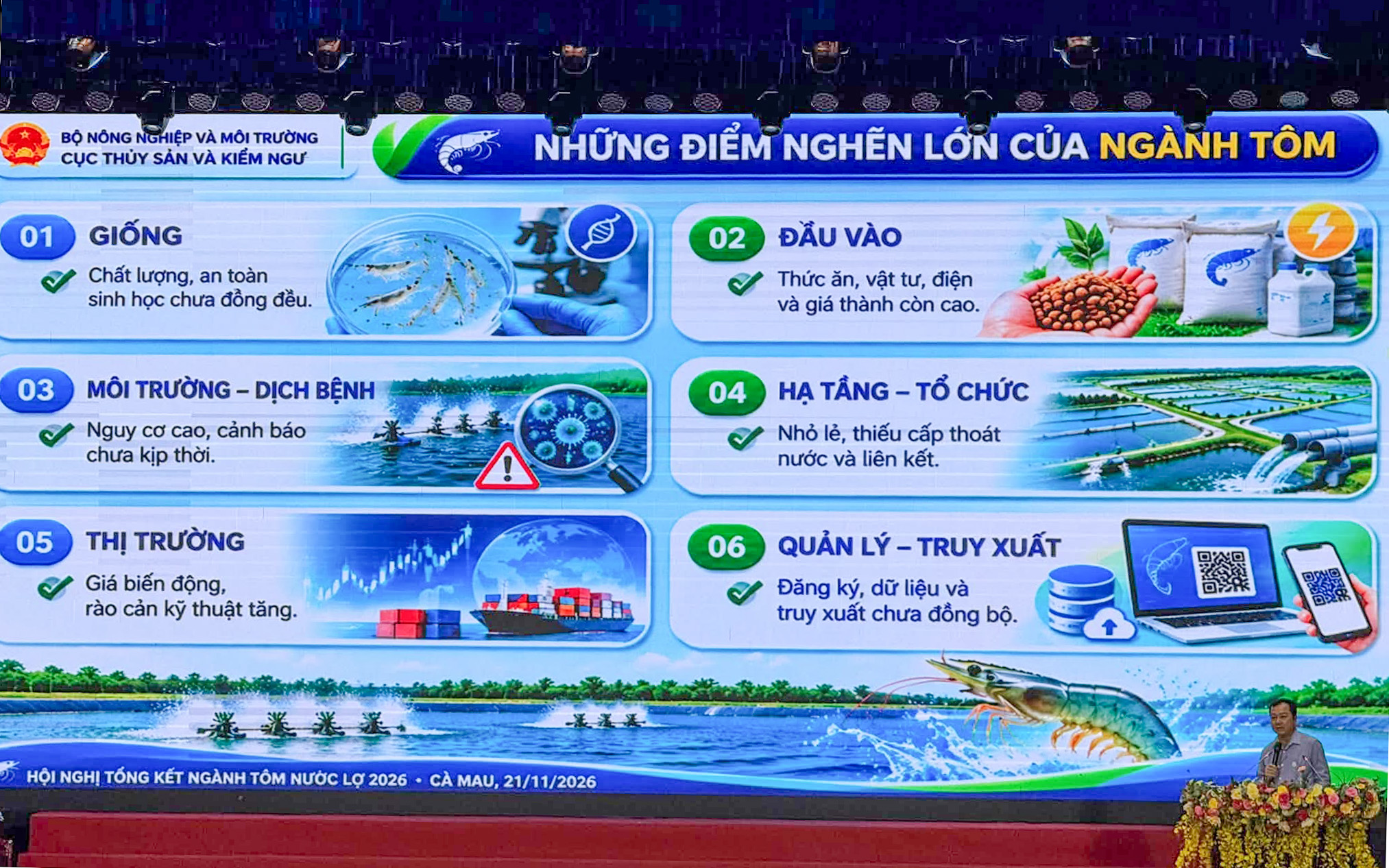
Major bottlenecks in the shrimp industry were highlighted by Tran Dinh Luan, Director of the Department of Fisheries and Fisheries Inspection, at the conference - Photo: P. Hue
To address these bottlenecks, the Department believes that synchronized coordination is needed among management agencies, localities, businesses, cooperatives, and farmers, with measurable targets.
Therefore, the development orientation for the shrimp industry in 2027 needs to shift from simply increasing production to improving efficiency and added value throughout the entire chain, with the main objectives being reducing costs, increasing the success rate of farming, stabilizing raw material quality, developing linkage contracts, and ensuring reliable traceability.
At the same time, it is necessary to build a system of indicators to monitor the effectiveness of the value chain, such as the cost of raw shrimp at the farm gate, the percentage of raw materials purchased according to contract, the price difference between certified and uncertified products, the percentage of raw materials traceable back to the farming facility, etc.
This provides a basis for evaluating the actual effectiveness of solutions, identifying priority areas for investment, and enhancing the sustainable competitiveness of Vietnam's shrimp industry.