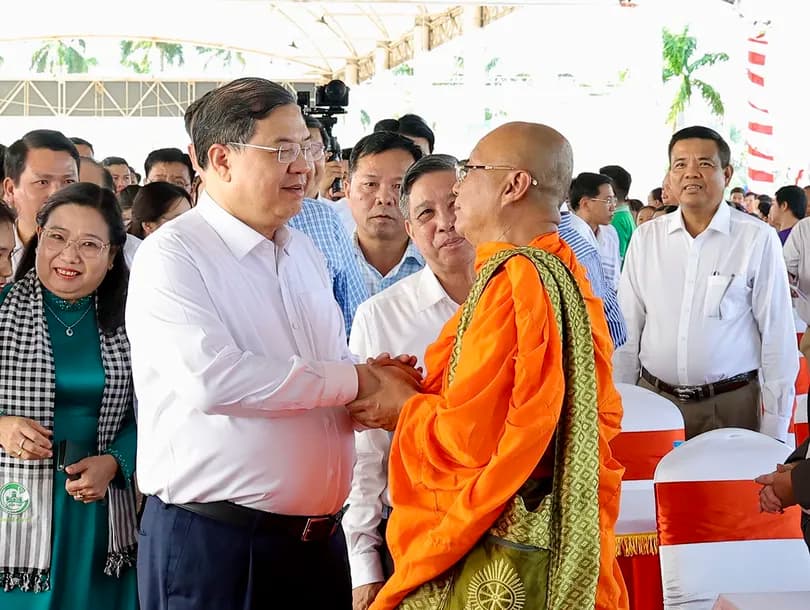

Ms. Ho Thi Cam Dao, Deputy Secretary of the City Party Committee and Chairwoman of the Vietnam Fatherland Front Committee of Can Tho City, along with leaders from various departments and agencies, attended the competition.

Ms. Ho Thi Cam Dao, Deputy Secretary of the City Party Committee and Chairwoman of the Vietnam Fatherland Front Committee of Can Tho City, along with other delegates, attended the opening ceremony of the "Art from Rice" competition.
The competition is organized to honor the cultural identity of rice farming, encourage artistic creativity from rice grains, rice stalks, and agricultural by-products. It creates a unique exhibition and exchange space, contributing to promoting the image of Vietnam's homeland, people, and rice to a wide audience both domestically and internationally.
The competition attracted the participation of many artisans, artists, designers, and students, with 10 entries from individual authors and groups of authors.

Visitors enjoyed admiring and capturing memorable moments alongside the unique artworks at the "Art from Rice" competition.
Using simple, familiar materials from the harvest season—rice grains, rice stalks, straw—the artists have created numerous works of art, models, handicrafts, and souvenirs bearing their own unique imprints.
The artworks not only possess high aesthetic value but also convey vivid messages about the circular economy model, green production, and sustainable development – an inevitable trend in modern agriculture.

Ms. Ho Thi Cam Dao, Deputy Secretary of the City Party Committee and Chairwoman of the Vietnam Fatherland Front Committee of Can Tho City, delivered a speech at the "Art from Rice" competition.
Speaking at the competition, Ms. Ho Thi Cam Dao emphasized that, over generations, rice farming has nurtured the lifestyle, customs, and cultural identity of the Vietnamese people. In the Mekong Delta, these values are preserved every day through the experience, diligence, and creativity of the farmers.
And when introducing Vietnamese rice to international friends, we have the opportunity to tell the story of the people who produced the rice, of the land that nurtured the rice plants, and of the changes in production methods to protect the soil, water, and environment.
Today's competition tells that story through the language of art. From grains of rice, rice stalks, straw, and familiar by-products, the artists have created paintings, models, handicrafts, and souvenirs bearing their own unique imprints.

Simple agricultural by-products like rice husks and straw have been transformed by artisans into works of art rich in cultural identity.

The judging panel is scoring the entries in the "Art from Rice" competition.
Each artwork shows us how the artist observes life and appreciates the simple materials around them. Incorporating straw and by-products into the creation also offers a closer understanding of the circular economy, demonstrating how, when used wisely, leftover materials after harvest can continue to create value.
Text and photos: KHANH TRUNG