
The meeting between EU member states and the European Commission (EC) took place shortly after the US called on its European allies to release strategic reserves "immediately" to contain the global fuel crisis. Prior to that, on October 1st, EC representatives, along with officials from Germany, France, Italy, the UK, and Ireland, also held urgent discussions to assess the situation and discuss the possibility of releasing reserves.
Pressure from Washington intensified sharply when US President Donald Trump, on September 30, raised the possibility of banning US diesel exports to lower domestic fuel prices ahead of the midterm elections in November. US Treasury Secretary Scott Bessent urged on social media: "Our European partners should accelerate the implementation of existing commitments and immediately provide additional supplies to address ongoing disruptions."

In addition, U.S. Energy Secretary Chris Wright stated on television: "This is the time to release diesel inventories in a coordinated manner as we enter the harvest season and the winter heating fuel season."
The White House's actions are pushing Europe into a thorny energy security dilemma ahead of winter. According to data from the European Statistical Agency (Eurostat), as of May 2025, the entire EU bloc is holding approximately 39 million tons of diesel and emergency heating oil; of which France possesses about 8.2 million tons and Germany maintains 5.6 million tons, accounting for 35% of the Union's total strategic reserves.
EU regulations require member states to maintain a minimum reserve equivalent to 90 days of net imports or 61 days of domestic consumption.
However, the release of stockpiles has raised concerns that it will deplete the energy safety buffer if the conflict in the Middle East continues. Europe currently produces about 70% of its domestic diesel consumption, but relies heavily on imports, with the US supplying about 32% of the EU's total non-EU diesel imports this year and accounting for 57% of diesel imports in Northwestern Europe.
In the UK, about a third of last year's diesel imports also came from the US. Meanwhile, supplies from the Middle East have been tightened due to fighting in the Strait of Hormuz, causing Gulf countries' exports to fall to 390,000 barrels per day in August, and Russia has extended its diesel export ban until the end of October after its refineries were attacked.
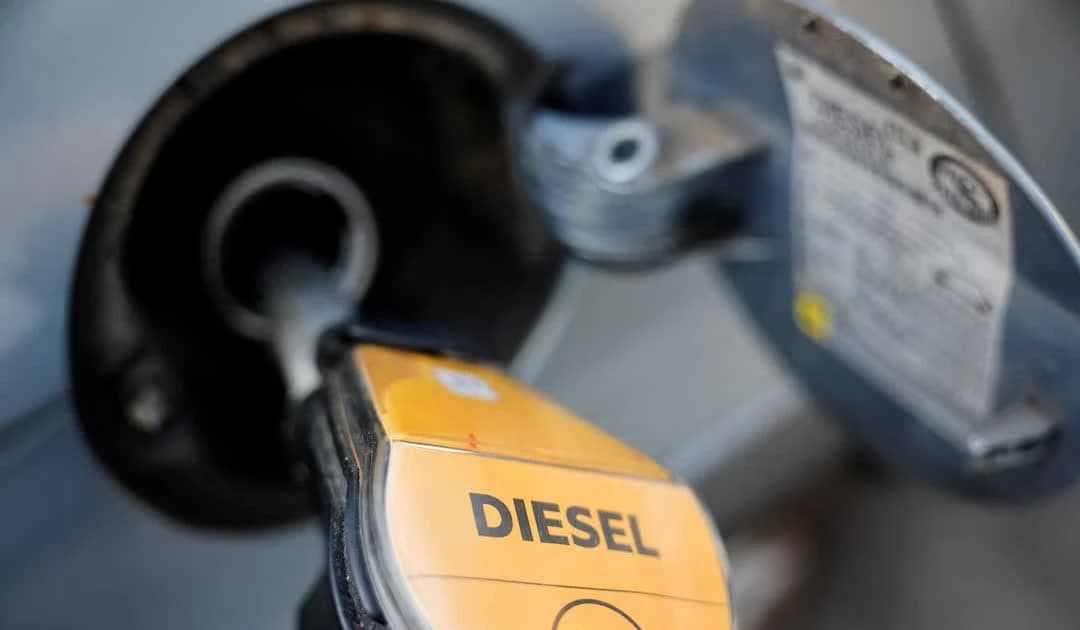
Supply shortages have driven diesel prices to record levels, shaking the European economy . The average retail price of diesel across the EU has reached a record €2.23 per litre, while 96% of trucks in circulation in the EU run on diesel, causing road transport costs to skyrocket. This fuel price crisis is now creating ripple effects of inflationary pressure on logistics, agriculture, and the lives of people across the Atlantic.
Source: https://congluan.vn/eu-hop-khan-ve-gia-dau-diesel-tang-vot-truc-suc-ep-tu-my-post362617.html