Iran attempts to break the deadlock.
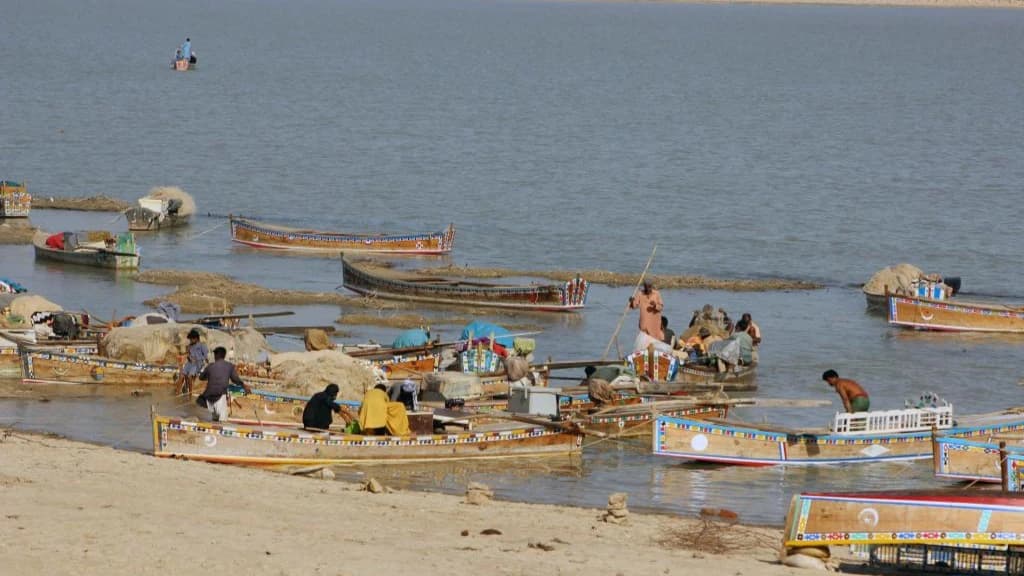
According to Western intelligence reports cited by international media, Iran is preparing to deploy more than 14 oil tankers from the Persian Gulf, through the Strait of Hormuz, to the Gulf of Oman. The ships are believed to have gathered near Kharg Island – a key Iranian oil export port – and completed refueling, crew assignments, and hoisting of the Iranian flag.
Iranian media, including the Fars news agency, have mentioned a plan dubbed "Operation Fereydoun," in which ships would openly sail under the Iranian flag, even announcing their destinations in advance. Some proposals even consider bringing journalists, civilians, and international activists on board to increase diplomatic pressure on Washington should it intervene.
This move comes amid a US naval blockade severely restricting Iran's oil exports. According to the United Against Nuclear Iran (UANI), since the blockade was reimposed in July, no Iranian crude oil tanker has successfully left the Gulf of Oman and escaped US control.
With declining oil revenues, depleted foreign exchange reserves, and a potentially worsening energy shortage, restoring exports has become a critical requirement for Tehran. According to energy data firm Kpler, revenue from Iran's crude oil and condensate exports could fall to zero by mid-December.
Therefore, the plan to deploy the oil tankers not only has economic significance but also represents an effort to break the deadlock in relations with Washington.
The gamble of deterrence and the risk of escalation.
According to experts, Iran's move appears to be aimed at three goals: restoring oil revenues, strengthening its deterrence capabilities, and forcing the US to reconsider its sanctions policy.
Tehran has warned it will attack energy facilities in Saudi Arabia, the United Arab Emirates (UAE), and Qatar if the US Navy intercepts the convoy. The message is that restricting Iranian oil exports could have repercussions for the entire Gulf region.
This calculation presented Washington with a difficult choice. Allowing the train to pass risked undermining the effectiveness and credibility of the blockade. Conversely, intervening militarily could trigger retaliatory actions targeting energy infrastructure in the region, driving up global oil and gas prices.
According to Ynet News ' analysis, the US Central Command (CENTCOM) could choose from several options, ranging from attacking and disabling the oil tanker to deploying forces for direct control. However, each option carries risks, including civilian casualties, oil spills, and the potential for direct confrontation with Iranian forces.
Notably, a naval confrontation could extend beyond the US-Iran conflict. If Tehran attacks oil and gas facilities in the Gulf, the conflict risks spreading, impacting regional energy security and international shipping lanes. A large-scale US counterattack could also draw Israel into a new military maelstrom.
According to Israeli intelligence assessments cited by Ynet News , if the US intercepts the convoy, Iran might first focus on retaliating against Gulf states instead of immediately attacking Israel. However, this scenario could change if Washington expands its military campaign against Tehran.


The door to diplomacy is not yet closed.
Recent statements from Iranian officials suggest Tehran wants a swift end to the prolonged standoff. Mohsen Rezaei, former commander of the Iranian Revolutionary Guard Corps (IRGC) and now head of Iran's Supreme National Security Council, said he has received instructions to bring the "neither war nor peace" situation to an end.
Foreign Minister Abbas Araghchi also stated that Iran intends to break the blockade. Meanwhile, Deputy Foreign Minister Kazem Gharibabadi affirmed that Tehran will take the necessary measures to end the situation. However, he also emphasized that Iran remains ready to negotiate through intermediaries, including Qatar.
This suggests that Tehran is still open to resolving tensions through diplomatic means, even as pressure increases on the ground. It cannot be ruled out that the concentration of oil tankers is also a move to improve its negotiating position with Washington, rather than preparing for a full-scale confrontation.
There is no confirmation yet that Iranian leaders have given the final order for the convoy to depart. However, developments around Kharg Island and the Strait of Hormuz are posing a crucial test of both sides' ability to manage tensions. Given the intertwined economic and security interests, an ill-calculated move could escalate bilateral confrontation into a regional crisis, with far-reaching implications for global energy markets.