Developing the collective economy , with cooperatives as its core, is becoming an important direction to help ethnic minority communities in Dong Nai change their production methods, increase their income, and gradually reduce poverty sustainably.

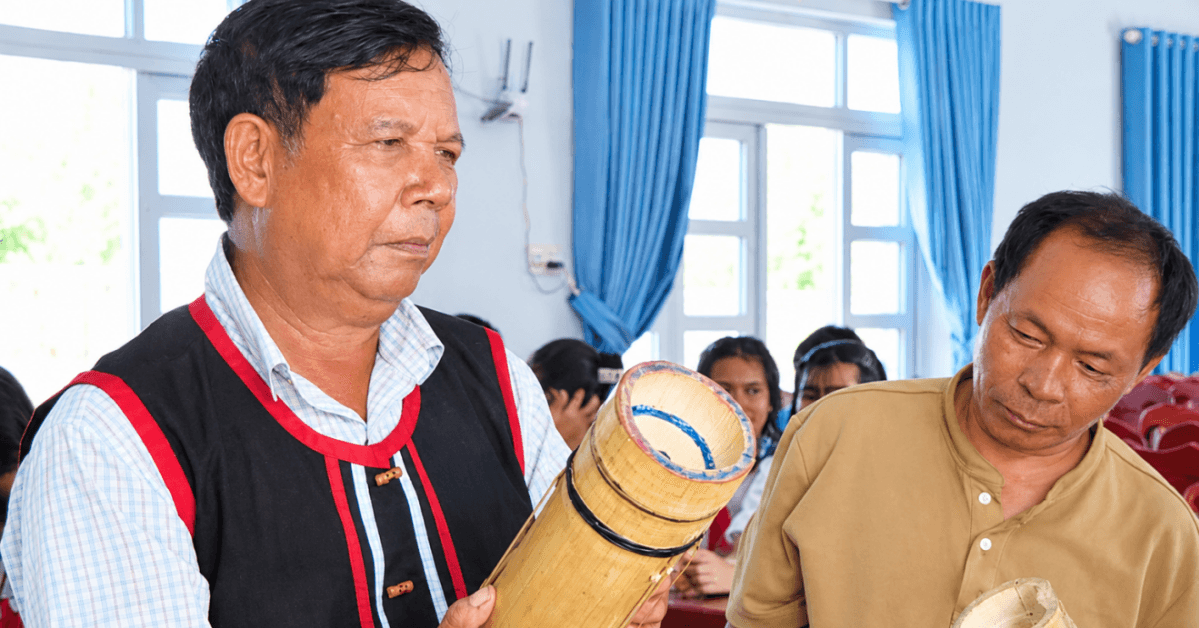
Dong Nai currently has over 421,000 people belonging to 37 ethnic minority groups, accounting for nearly 10% of the population. During the period 2026-2030, the province will have 46 communes inhabited by ethnic minorities and mountainous areas, including 3 communes in particularly difficult areas.
In these areas, the development of cooperatives and cooperative groups is expected to overcome the situation of small-scale production, lack of linkages, and dependence on traders.
Enhancing the value of agricultural products through the cooperative model.
A typical example is the Bu Lach Grassland Organic Agricultural Cooperative in Tho Son commune, where ethnic minorities account for approximately 48% of the population.
The cooperative has developed a model for growing organic water spinach under cashew trees, combined with processing, packaging, and distributing the product. Each year, the unit supplies approximately 16 tons of water spinach to restaurants and safe food stores in many provinces and cities. The product has been certified with a 3-star OCOP rating.
According to Ms. Thi Khui, a M'nong ethnic minority member and Director of the Bu Lach Grassland Organic Agricultural Cooperative, the unit focuses on quality control, ensuring food safety, investing in packaging, and building a brand to enhance the value of its products.
In the future, the cooperative will continue to collaborate with farmers, expand its clean raw material sourcing area, and develop more distribution channels.
The model of growing water spinach under cashew trees demonstrates the potential for utilizing cultivated land to develop additional products and generate income from intercropping.
In particular, the application of organic standards, branding, and the development of OCOP products have given local agricultural products more opportunities to access the market, instead of being consumed on a small scale as before.
Expanding linkages, creating sustainable livelihoods.
According to the Dong Nai Cooperative Alliance, the locality currently has about 670 active cooperatives, attracting more than 56,000 members. The collective economic sector is playing an increasingly important role in linking agricultural production and consumption.
Ms. Nguyen Thanh Hien, Deputy Director in charge of the Dong Nai Cooperative Alliance, believes that it is necessary to focus on building linkages from production to consumption, increasing the added value of products, instead of just focusing on increasing production volume.
In addition, cooperatives need support in accessing capital, applying science and technology, digital transformation, and expanding their consumer markets, thereby improving operational efficiency.
For ethnic minority areas, developing collective economic models that suit local production conditions and farming practices is significant in creating more job opportunities, increasing income, and stabilizing livelihoods.
Based on the model of the Bu Lach Grassland Organic Agricultural Cooperative, the organization of production linked to brand building and consumption linkages shows a direction for further research and replication in areas with suitable conditions.
This is also one of the solutions that contributes to promoting socio-economic development and creating sustainable livelihoods for ethnic minority communities in Dong Nai.