
During the 2026 European-Vietnamese Documentary Film Festival, Hanoi audiences will have the opportunity to meet Swedish director Gunilla Bresky through her film Sara and the Lives of Others (Sara med allt sitt väsen).
Drawing inspiration from the story of writer Sara Lidman, who visited Vietnam during the war years, the director opens up a perspective on Vietnam through her memories, diary entries, and the people she met.
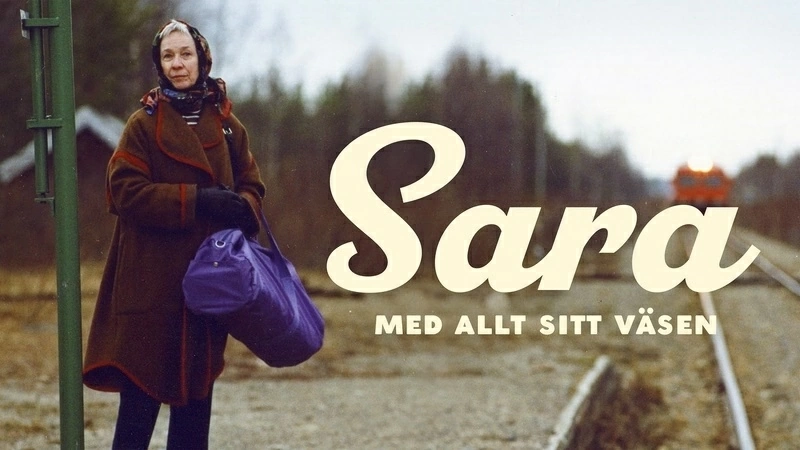 |
| Released in 2019, Sara and the Lives (Sara med allt sitt väsen) is a 75-minute documentary by director Gunilla Bresky, portraying the life of Swedish writer Sara Lidman. (Photo courtesy of the filmmaker) |
Behind the movie story
Instead of recreating an "anti-war icon," the film Sara and the Lives delves into the woman behind speeches, political viewpoints, and writings. It portrays Sara Lidman as passionate, courageous, yet conflicted, yearning for love and on a journey to find meaning in life.
Director Gunilla Bresky's connection with writer Sara Lidman also began in Vietnam. In 1971, when she was young, Gunilla Bresky drove Sara around Sweden for her speaking engagements. Sara's stories about Vietnam left a deep impression on her about the country and its people, especially the resilience, dignity, and culture of the Vietnamese people.
Years later, that memory became one of the driving forces behind Gunilla Bresky's film about Sara Lidman. For the director, it was also a way to revisit a meaningful encounter from her youth.
Sara Lidman (1923-2004) was born in Missenträsk, a small village in northern Sweden. She is known primarily as a writer, but Sara's impact on Swedish society extended beyond literature. She was deeply concerned with the marginalized, especially workers, those involved in strikes, and those with little voice in society.
Gunilla Bresky called Sara a "voice-giver for the marginalized," someone who consistently stood by workers and fought for justice and human rights. One of the stories she mentioned was Sara's interviews with miners working in harsh conditions, which led to the publication of her book, *The Mine*. A year later, a historic strike took place, paving the way for reforms to working conditions in Sweden.
For Sara Lidman, writing is not just about documenting reality, but also about bringing issues that were previously outside the center of public life into social debate. This concern has expanded to include environmental issues and workers' health.
What she witnessed during the chemical warfare in Vietnam led Sara Lidman to realize the connection to the types of forest sprays used in the Swedish forestry industry. According to Gunilla Bresky, Sara's outspokenness about the impact of these chemicals on workers' health contributed to their complete ban in Sweden.
| Sara and Human Lives received considerable recognition in Sweden and internationally, including a nomination for the Guldbagge Award – Sweden's leading national film award – in the Best Original Score category in 2020; the Gemma Firsova Award for Best Film on a Social-Philosophical Theme in 2020, along with several nominations and awards at national and international film festivals. |
Vietnam has since become an important part of Sara Lidman's social activism journey. She first visited Vietnam in 1965 to learn about the war. During her trips amidst the war, Sara didn't just observe from afar. She met with and interviewed those directly affected and recorded what she witnessed using the typewriter she always carried with her.
One detail is preserved in the film's documentation. Amidst the air raid sirens, when ordered to leave their belongings behind to save their lives and go down to the bomb shelter, Sara still clutched her typewriter. Thanks to it, she recorded conversations with street workers, people who were directly experiencing the realities of war.
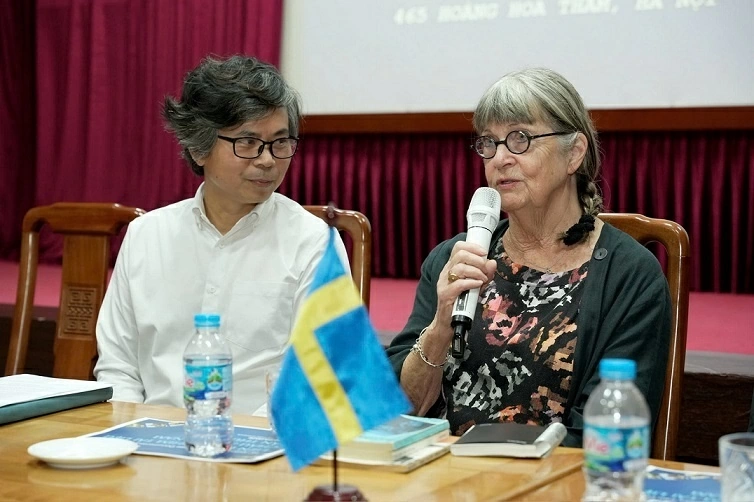 |
| Director Gunilla Bresky chose Sara Lidman's diary entries from her time in Vietnam as one of the key sources of material for the film. (Photo courtesy of the filmmaker) |
Following those trips, Vietnam became an integral part of Sara Lidman's work. She opposed the American war in Vietnam, shared her experiences with the Swedish public, and became a prominent voice in the anti-war movement in the country.
According to Gunilla Bresky, Sara Lidman's voice influenced public opinion and even major political leaders, including the late Prime Minister Olof Palme. Her interest in Vietnam was also part of a larger theme throughout her life: fighting for social justice and caring for those who often have little voice in society.
Bridges of Friendship
Director Gunilla Bresky was born in 1948 and grew up in northern Sweden. She began her career in journalism and broadcasting before moving into documentary filmmaking. Her early years in filmmaking took her to many locations in the Barents region, fostering a lasting interest in the history, war, memory, and people of northern Sweden, Norway , and Russia.
For Vietnamese audiences, Sara and the Lives of Others offers a glimpse into how Vietnam was once present in Swedish social life and political debates, told from the voice of a woman who was directly involved during the war.
More than half a century after her first meeting with Sara Lidman in 1971, Gunilla Bresky returns with the stories of her late friend. This time, she encounters Vietnam from a different perspective, not as the young person who once sat behind the wheel during Sara's speaking tour, but as a director who has spent years reflecting on the lives, memories, and people behind history.
“Making this film allowed me to reconnect with the romantic spirit and ideals of my youth. It was a time when young people like us genuinely believed we could change the world for the better.”
To make Sara and the Lives of Others , director Gunilla Bresky spent four years, three of which were dedicated to securing funding. Filming on location was also constantly changing, forcing the crew to adjust schedules according to circumstances and the readiness of the characters.
But those difficulties didn't change the director's approach to history. For her, great stories often begin with specific people, personal memories, and things that may not appear in official historical accounts. In that story, Vietnam emerges through the memories of a Swedish writer who visited during the war, through diary entries written during days living amidst a harsh reality, and through the perspective of a director who has been impressed by the country for decades.
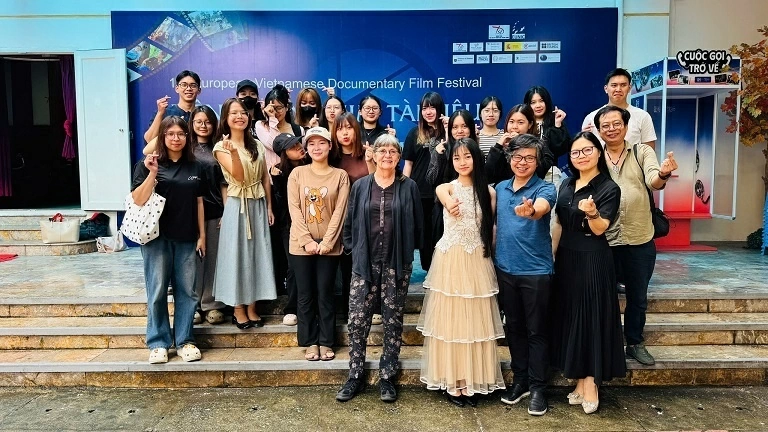 |
| Director Gunilla Bresky interacts and takes photos with the audience in Hanoi. (Photo courtesy of the director) |
Director Gunilla Bresky chose Sara Lidman's diary entries from her time in Vietnam as one of the key elements for the film. For her, these daily entries preserved Sara's authenticity, her most genuine and direct emotions—things that edited literary works would struggle to fully convey.
Therefore, the opportunity to come to Hanoi to introduce the film holds special significance for the female director. Today, the capital city appears before her eyes with the green of trees, the vibrant rhythm of motorbikes, the diverse cuisine, and above all, the hospitality and warmth of its people.
“Sara Lidman’s story reminds us that the relationship between Sweden and Vietnam is not just found in the pages of history or diplomatic documents. That relationship is also built on people meeting, listening to, and caring for each other.” Sara Lidman's connection with Vietnam has become a part of her life, and it has helped many Swedes see Vietnam and its people in a different light. Director Gunilla Bresky brings that story back to Vietnam, opening up a new opportunity for people from both countries to connect through cinema, history, and very human stories,” said Johan Ndisi, the Swedish Ambassador to Vietnam. |
Source: https://baoquocte.vn/dao-dien-thuy-dien-and-co-duyen-viet-nam-449725.html