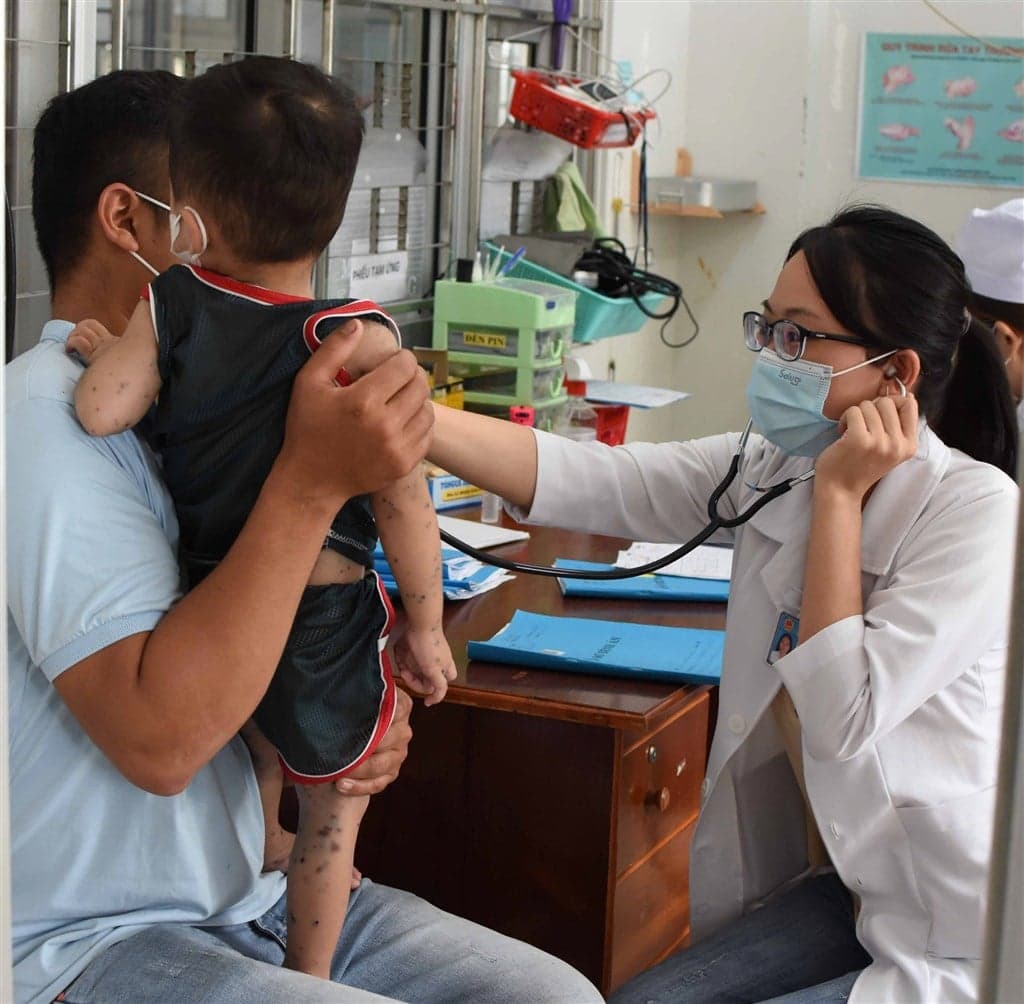
1. Early detection - Don't miss the "golden opportunity"
The virus that causes hand, foot, and mouth disease is primarily transmitted through the digestive tract (from saliva, nasal and throat secretions, ruptured blisters, and the feces of infected children) and through direct contact with infected individuals or contaminated toys and objects.
Parents and caregivers should pay particular attention to the following characteristic signs:
- Fever: Children may have a mild or high fever.
- Mouth ulcers: Red sores or small blisters appear on the roof of the mouth, gums, and tongue, causing pain, loss of appetite, refusal to breastfeed, and excessive drooling in children.
- Blistering rash: Commonly seen on the palms, soles, knees, or buttocks; the blisters are usually painless and do not break when pressed.
Warning of severe illness: Many children with mild cases can be cared for at home following medical instructions, but the illness can worsen rapidly within the first few days. Take your child to the doctor immediately if they have any of the following signs: persistently high fever (especially above 39°C or lasting more than 48 hours without responding to fever-reducing medication), startling or jerking (even while sleeping), unexplained crying, restlessness or lethargy, tremors, rapid breathing, difficulty breathing, or bluish discoloration of the skin.
2. Prevent illness through small daily habits.
Currently, there is no widely available vaccine for hand, foot, and mouth disease for all children, so maintaining personal hygiene and environmental sanitation is key to breaking the chain of transmission.
- Wash hands frequently with soap: Wash hands of both children and caregivers several times a day, especially before eating, holding or preparing food for the child; after using the toilet, changing diapers and cleaning the child.
- Clean eating and drinking, no sharing of utensils: Feed children cooked food and boiled water, ensuring food safety. Do not share cups, bowls, spoons, glasses, or towels between children.
- Disinfect spaces and toys: Regularly clean floors, doorknobs, tables, chairs, toys, and other surfaces children frequently touch with soap or a suitable disinfectant solution as directed.
- Keep children home from school when they are sick: Isolate children at home for at least 10 days from the onset of illness to prevent spreading the disease to the community; limit taking children to crowded places when they show suspicious symptoms.
- Improve physical condition: Ensure children have nutritious meals, drink enough water, and get enough sleep to boost their immune system.
3. Shared responsibilities of the family and the community
Effective prevention of hand, foot, and mouth disease doesn't lie in complicated measures, but in regularity and meticulous attention to detail in daily routines. Just a moment of carelessness in handwashing or cleaning toys can pave the way for the disease to spread.
- Close cooperation between family and school: Parents need to have frank discussions with teachers when their children show unusual symptoms (such as loss of appetite, drooling, red spots) so that the school can monitor and inform the family promptly. Conversely, schools need to maintain hygiene in classrooms and shared toys, and conduct health checks at the beginning of each day.
- Don't hide illness because you're afraid to take time off work: Some parents, due to busy schedules or reluctance to take time off work, still try to bring their children to school even when they are just starting to get sick. This can easily lead to the widespread spread of the virus in the classroom, causing prolonged outbreaks and negatively impacting the children's health.
But Spread accurate information and avoid panic: When a case is detected in a residential area or school, the community should update information from health authorities and maintain proactive hygiene instead of spreading rumors that cause panic, while also supporting and sharing with families whose children are undergoing treatment.
But Supporting children during sick leave: During home isolation, in addition to closely monitoring for signs of worsening condition and maintaining hygiene, parents should patiently soothe and feed their children small, soft, cool, and easy-to-swallow meals to reduce mouth pain, ensure adequate hydration, and promote faster recovery.
Be vigilant, proactively maintain hygiene, and closely monitor even the smallest changes in your child so that every day at school is filled with joy and safety.