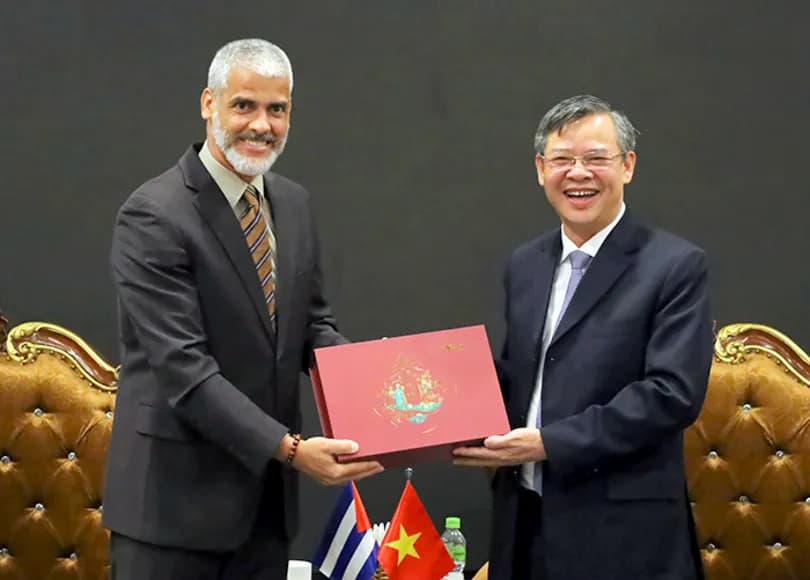
The two sides exchanged views during the meeting.
During the meeting, one of the topics of mutual interest was the potential application of MegaCell Factory microalgae production technology and bio-enhancer biological products to improve soil quality, supplement plant nutrition, and reduce emissions.
The Canadian side proposed connecting Net-Zero with the Rice Institute to test and evaluate the product's effectiveness on rice plants in Vietnam. The Rice Institute stated that it has sufficient capacity and facilities to conduct experiments in greenhouses and in the field, evaluating growth indicators, yield, and greenhouse gas emissions.

Dr. Tran Ngoc Thach, Director of the Mekong Delta Rice Research Institute, provided information on the Institute's potential for cooperation.
Both sides agreed to continue connecting specialized contacts, developing pilot plans, and researching appropriate coordination mechanisms. Through this, they aim to gradually introduce advanced technologies and solutions into production practices, contributing to the sustainable development of the Mekong Delta's rice industry, adapting to climate change, and reducing emissions.

Ms. Nguyen Hoai Chau, Senior Specialist at the Canadian Embassy in Vietnam, provided information on Canada's cooperation orientation and needs.
On this occasion, the Canadian Embassy introduced the GoRice project – developing a sustainable, low-emission, and climate-resilient rice value chain in the Mekong Delta. The project is funded by the Canadian Government and implemented in collaboration with Oxfam from 2025 to 2030, with a budget of 8 million Canadian dollars. The focus of the project is to promote sustainable rice production, reduce emissions, improve product quality; and support cooperatives and farmers in accessing and adopting low-emission farming practices.
Text and photos: NAM HUONG