I. A meeting amidst gunfire
At the end of 1946, the Democratic Republic of Vietnam was just over a year old. This fledgling state was grappling with internal and external enemies, an empty treasury, a recently concluded famine, and a persistent illiteracy problem. On November 20th, French troops opened fire in Hai Phong. Just four days later, on November 24th, 1946, the First National Cultural Conference was solemnly inaugurated at the Hanoi Grand Theatre.

That situation raised a question: should we be discussing culture at this time? One could argue that when the nation's fate is precarious, all resources must be focused on weapons and food. But the Party and Government chose a different approach. Over two hundred intellectuals and artists from the North, Central, and South were invited to the capital. Mr. Bui Bang Doan and several ministers were present at the opening session. President Ho Chi Minh attended and delivered the opening speech, a speech lasting about forty minutes. Choosing to discuss culture at that time was a silent declaration. It showed that this nation was not only fighting to defend its land. This nation was fighting to preserve its soul, its way of life, its way of being human. Land may be seized, houses may be burned, but a nation that retains its cultural identity has never been completely defeated.
II. Things He Told Us
That conference did not come from a void. Since 1943, during the long night of colonial rule, the Party had adopted the Outline on Vietnamese Culture, drafted by General Secretary Trường Chinh. The outline set forth three guiding principles: nationalization, scientification, and popularization. Nationalization to preserve the roots. Scientification to broaden the mind. Popularization so that culture belongs to the people, not the privilege of a few. These three words, after three years of war, had a public forum to be uttered in the capital of an independent nation. According to the Cứu Quốc newspaper, President Ho Chi Minh hoped for a new culture, one that took the happiness of the people and the nation as its foundation. He wanted to absorb the best of both East and West, neither closing himself off nor blindly following them. He said that culture was closely linked to politics . He instructed that culture must help correct corruption, laziness, and extravagance. He instructed the cultural sector to pay special attention to children, because children are the green shoots of the nation, and whether those shoots grow straight or crooked depends on how they are nurtured today. Then he uttered a sentence that, eighty years later, still resonates like a vow: "Culture must illuminate the path for the nation to follow." And he concluded with the wish to use culture to lead the nation in achieving independence, freedom, and self-determination. Think of that moment. The words were spoken when the guns had already fired in Hai Phong. Twenty-five days later, on December 19, 1946, the nationwide resistance war broke out. Amidst those days on the brink of war, the head of state still spoke of the lamp, not just the sword. He understood that a sword could only strike the enemy in front, while a lamp could only show the path ahead.
III. The invisible determines the visible.
The history of nations, when viewed over a long period, teaches the same lesson: visible strength is only the tip of the iceberg. The hidden part is culture. Guns, fortresses, wealth—these tangible things can be consumed, destroyed, or seized. But belief in justice, national pride, brotherhood, the way people treat each other, mother tongue, lullabies, family traditions—no one can take them away if they are deeply ingrained and rooted in one's heart. This intangible determines the tangible. In the same land, with the same resources, a nation that preserves its spirit can rebuild everything. A nation that loses its spirit, even with immense wealth, is like a rich person without a soul.
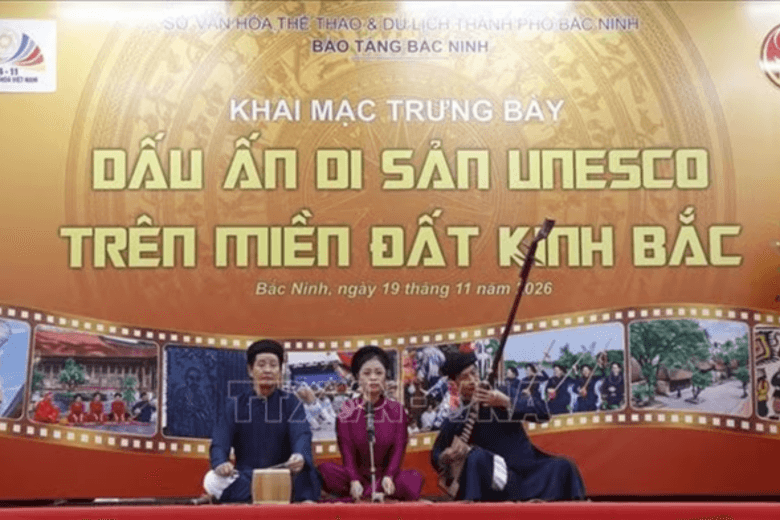
The inside determines the outside; the core determines the manifestation. A beautiful house is just an empty shell if the people inside don't love each other. A modern city is just a crowded place if its people are indifferent to each other. Development is not measured only by the numbers on reports, but also by the quality of the people living within those numbers. Look at culture: the ao dai, the conical hat, Quan Ho folk songs, the silversmithing craft, the spring village festivals... countless forms. But beneath it lies a solid, enduring foundation: compassion, solidarity, self-reliance, and the principle of "drinking water and remembering the source." Manifestations may change with the times; if the core is lost, the manifestation is merely decoration. That's why our ancestors built a nation on civilization before building fortifications. Our forefathers defeated invaders not only with swords and spears, but also with the courage, spirit, and cultural depth of an entire nation. As the poet once wrote:
When Nguyen Hue rode an elephant into the North Gate, Hung Dao King annihilated the Yuan army on the waves of Bach Dang; when Nguyen Trai wrote poetry and fought battles, Nguyen Du wrote the Tale of Kieu, the nation was transformed into literature.
Fighting wars and writing poetry, defending the land and preserving the language—it turns out they have never been separate. That is why those who want to subjugate a nation often begin by making that nation forget who it is. And a nation that wants to stand firm must cherish its language, value its craft, and preserve the traditions and morals passed down through generations.
IV. Soft power, a powerful weapon
Today's world calls culture "soft power." It's called soft because it doesn't impose, threaten, or require coercion. But soft doesn't mean weak. Water wears away stone, warmth melts thick ice, and a beautiful song can travel farther than an army. Soft power lies in its ability to inspire people to willingly love, trust, and dedicate their hearts to it. A nation with a beautiful culture doesn't need to talk much about itself, because its food, songs, clothing, smiles, and the behavior of its people tell their own story. People often say: Culture is what remains after everything else is lost. A country with a clear identity integrates without being assimilated, opens its doors without losing its home, because identity is the compass in the vast ocean. Culture is also a weapon in a deeper sense. Culture is a weapon of self-defense. It helps each individual, each family, each community to resist evil, falsehood, and inferiority. A society with a strong cultural foundation has people who know the difference between right and wrong, what should and shouldn't be done, and how to glean the best from diverse influences. Culture is a constructive weapon because it nurtures faith, ignites aspirations, and creates consensus so that the entire nation moves in the same direction. When each person has their own filter and resistance, that is the way to protect the homeland from the root: no need for ramparts, because the fortress is already built in the hearts of the people. The wars of resistance and the many ups and downs of history have proven this. Our nation has overcome loss, division, and poverty without collapsing, because within each Vietnamese person there is a flame that never goes out: fervent patriotism, love for humanity, and the will to rise above. That flame is culture, and the "guiding light" that President Ho Chi Minh mentioned years ago continues to burn brightly.
V. From Dao Gia to the present day: a long journey
In July 1948, amidst the resistance war, the Second National Cultural Conference was held in Dao Gia, Phu Tho . There were no magnificent theaters there, only the mountains and forests of the war zone and people who believed in the power of words, music, and poetry. Artists and writers at that time wielded their pens as they wielded guns, simultaneously creating and fighting. In 2021, the National Cultural Conference was again held on November 24th. Since then, the Politburo has unanimously chosen this day annually as Vietnam Culture Day. Then, in April 2026, the National Assembly passed a resolution granting all workers nationwide a day off on that day, coinciding with the 80th anniversary of the First National Cultural Conference.
A long journey has come to a beautiful conclusion. From a meeting of over two hundred people amidst gunfire to a celebration of tens of millions in peace. From the admonition of a President to the decision of the entire political system. From the aspiration that "culture will guide the way" to a belief that has become a reality: culture is the spiritual foundation, the intrinsic strength of sustainable development.
VI. The people's joy
The most valuable aspect of this day is that it's not just on paper. It resides in the hearts of the people.
It is the joy of a craftsman, after years of hard work, finally having a full day to return home, sit at the dinner table with his parents, and listen to his grandmother tell old stories. It is the joy of an artisan preserving a centuries-old craft in the village, seeing his sweat and dedication appreciated by society. It is the joy of a teacher, an artist, a guardian of heritage, when their silent efforts are recognized. It is the joy of children being taken by their parents to museums, libraries, and village festivals, to touch the beauty of their homeland for the first time. It is the joy of those far from home, hearing that their hometown has a day dedicated to culture, their hearts filled with nostalgia for their roots.
A day off, on the surface, seems like just time given back to people. But when that time is called Culture Day, it conveys a message to every citizen: you were not born only to work. You have the right to live beautifully, to enjoy, to create, to benefit from the spiritual values left by your ancestors and which you are continuing to write, in cities as well as in the countryside, in the lowlands as well as in the mountains. And there is another joy, quiet but profound, which is pride in being a citizen of a nation that knows how to put culture first, even in the most difficult times.
VII. Conclusion: Keep the lamp burning for the future.
Eighty years ago, over two hundred people sat in the Grand Theatre while gunfire echoed outside. They didn't know how long the war would last, or how many would return. But they believed in one simple yet profound truth: as long as culture is preserved, the nation will stand strong. That belief proved true. Today, the country is changing every day, integrating deeply into the global community, and technology is developing at a breakneck pace. In this flow, new challenges are emerging: the dominance of superficial things, the fading of traditional values, and the distance between people behind screens. It is at this moment that the advice from years ago becomes even more meaningful and valuable: culture must guide the way.

Each of us can be a keeper of the flame. We can do it with gentle words, with kind deeds; with afternoons spent teaching our children to love their homeland and cherish the crafts passed down from our ancestors; with a good book, a softly sung folk melody, and a home nurtured over the years. These small things, like tiny drops of water in a river, combine to form a gentle yet enduring force that no power can shake. Therefore, Vietnamese Culture Day is not just for rest or reflection. It is also a gentle reminder that the tangible may change, but the intangible is the enduring strength of the nation; the myriad colors are expressions, but the core is the soul. There is a song that always stirs our hearts: "The sky is as blue as the Heavenly Book of the Pacification of the Wu / Famous figures paint the landscape / The Declaration of Independence stands firm for a thousand years / Prosperous Vietnam shines brightly ..." (Bui Truong Linh). From Nguyen Trai's epic poem "Binh Ngo" of yesteryear to the songs of today, a continuous stream of cultural heritage has flowed for a thousand years, never ceasing.
Today, the whole nation dedicates a day to living slowly, living beautifully, and embracing culture. May the guiding light of our nation always shine warmly and brightly in every home, every village, and every Vietnamese heart, so that our people may march steadily towards independence, freedom, and happiness, with our gentle yet resilient spirit. Welcome to the new millennium!
Happy Vietnamese Culture Day!